A real-time customer data platform enables personalisation by unifying fragmented customer data into a single, continuously updated profile, then triggering relevant content across channels the moment behaviour signals intent. Rather than acting on yesterday’s data, marketers can respond to what a customer is doing right now. Below, we unpack the six questions that sit behind that answer.
What data does a real-time CDP actually collect and unify?
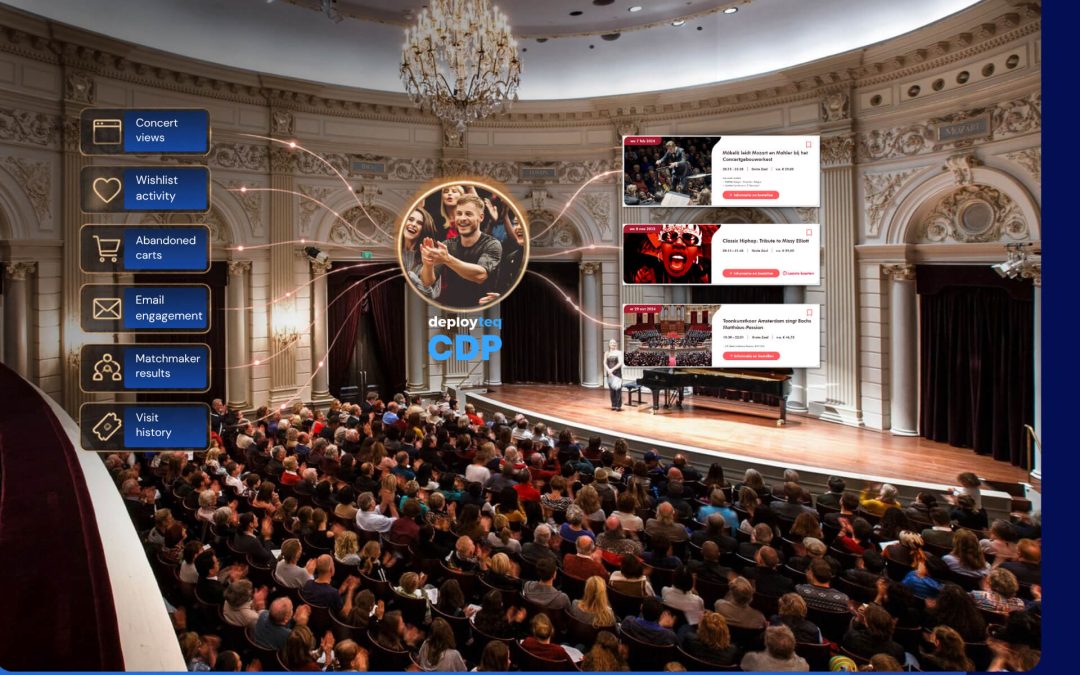
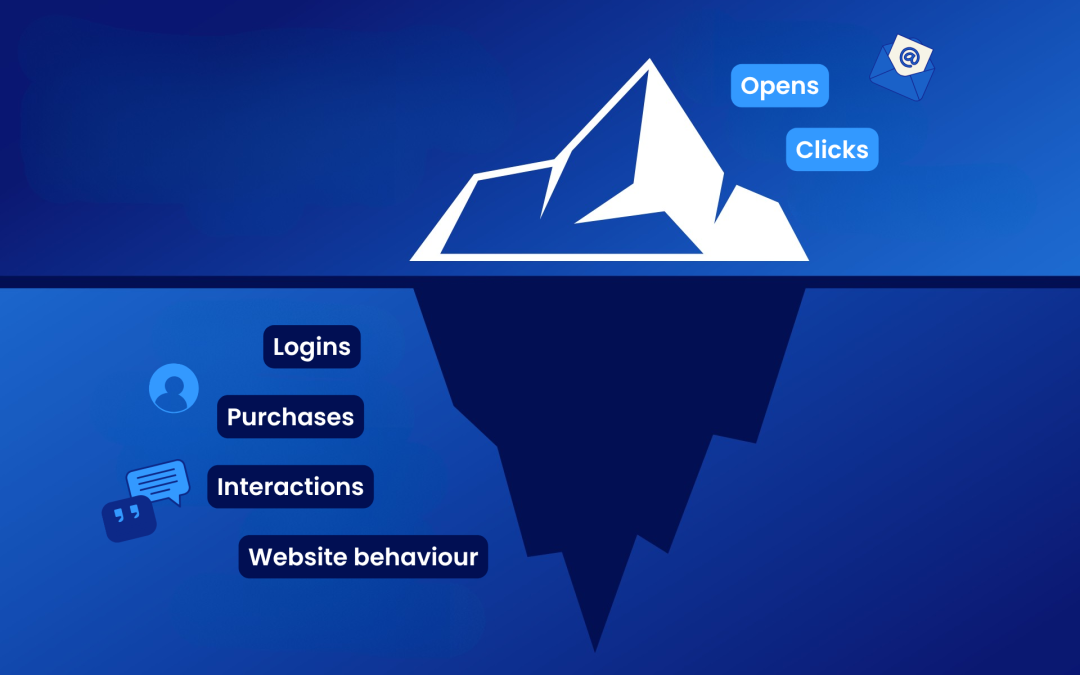
A customer data platform collects and unifies behavioural, transactional, demographic, and engagement data from every touchpoint a customer has with your brand. The result is a persistent, deduplicated customer profile that updates continuously, giving your marketing team a single source of truth rather than a patchwork of siloed records.
In practice, that means pulling together data from sources like:
- Website and app behaviour (page views, clicks, session depth)
- Email and SMS engagement (opens, clicks, unsubscribes)
- Purchase and transaction history
- CRM records and loyalty programme data
- Third-party and offline data via API integrations
The unification step is where a CDP earns its value. Identity resolution matches anonymous sessions to known profiles, so a customer who browses on mobile and converts on desktop is treated as one person, not two. For high-volume B2C brands, this is the foundation every personalisation strategy depends on.
How does real-time data processing differ from batch processing in a CDP?
Real-time data processing updates customer profiles and triggers actions the moment an event occurs, whereas batch processing collects data over a period and processes it in bulk, typically overnight or at set intervals. The practical difference for personalisation is significant: real-time lets you act on intent while it is still live; batch means you are always reacting to the past.
Consider a travel brand. A customer searches for flights to Barcelona, abandons the booking, and opens a promotional email an hour later. With real-time processing, that email can surface a Barcelona-specific offer based on the session that just happened. With batch processing, the same email arrives with a generic recommendation because the browsing data has not been processed yet.
Real-time processing also supports suppression logic. If a customer converts, a real-time CDP platform removes them from active acquisition flows immediately, protecting both the customer experience and your sending reputation.
Which personalisation use cases does a real-time CDP unlock?
A real-time CDP unlocks personalisation use cases that are impossible with static lists or basic segmentation tools, including predictive next-best-offer, lifecycle-stage messaging, RFM-based re-engagement, and triggered journeys built on live behavioural signals. These use cases share a common dependency: they require up-to-date, unified data to work accurately.
Across our five core sectors, the most impactful use cases tend to be:
- Retail and e-commerce: Cart abandonment triggers, back-in-stock alerts sent only to customers who viewed a specific product, and hyper-personalised recommendations based on purchase frequency
- Travel and leisure: Booking window nudges, loyalty tier upgrades triggered by spend milestones, and destination-specific offers served at the right moment in the research phase
- Finance: Timely product alerts tied to life events, trust-building drip sequences, and complex lifecycle automation that adapts based on engagement signals
- Entertainment: High-frequency content triggers based on viewing or listening behaviour, and re-engagement flows for lapsed subscribers
Intelligent modelling layers, such as RFM scoring (Recency, Frequency, Monetary value), make these use cases smarter over time. Rather than manually building segments, the CDP surfaces which customers are most likely to convert, churn, or respond to a specific offer.
How does a CDP connect to marketing channels to deliver personalisation?
A CDP connects to marketing channels through native integrations and APIs, pushing unified customer segments and real-time triggers directly into campaign execution tools for email, SMS, push notifications, WhatsApp, and web personalisation. The CDP does not send messages itself; it feeds the activation layer with the right audience data at the right moment.
This architecture matters because personalisation breaks down when the data layer and the execution layer are disconnected. If your email platform is working from a segment that was exported three days ago, the personalisation logic is already stale.
When a CDP is natively integrated with your marketing automation platform, the gap closes. Segments update automatically, triggers fire based on live profile changes, and suppression logic applies across every channel simultaneously. For brands running cross-channel campaigns at scale, this is what separates genuine personalisation from the appearance of it.
What’s the difference between a CDP and a CRM for personalisation?
A CRM manages relationships and records interactions with known customers, primarily for sales and service teams. A CDP unifies data from all sources, including anonymous and digital behavioural data, to build a complete customer profile that powers real-time marketing activation. The key distinction is that a CRM is relationship-focused and largely manual, while a CDP is data-focused and built for automated, high-volume personalisation.
CRMs are excellent at storing contact records, tracking sales pipelines, and logging service interactions. They are not designed to ingest anonymous web behaviour, resolve identity across devices, or trigger a campaign the moment a customer crosses a spend threshold.
A CDP fills that gap. It ingests data that a CRM never sees, resolves it against known profiles, and makes it actionable for marketing teams without requiring a data engineering request for every new segment. For B2C marketers managing hundreds of thousands of customers, that operational speed is the real differentiator.
How do you measure whether CDP-driven personalisation is working?
You measure CDP-driven personalisation effectiveness by tracking uplift in conversion rate, engagement metrics, revenue per customer, and churn reduction across personalised versus non-personalised journeys. The goal is not to measure the CDP in isolation but to attribute outcomes to the quality of the data and the precision of the targeting it enables.
Practical metrics to monitor include:
- Segment accuracy: Are the right customers entering the right journeys? Audit segment membership against actual customer behaviour.
- Trigger latency: How quickly does a behavioural event produce a response? Lower latency typically correlates with higher conversion.
- LTV uplift: Are customers who receive personalised journeys showing higher lifetime value over a 90-day or 180-day window?
- Suppression effectiveness: Are converted customers being removed from acquisition flows quickly enough to avoid over-messaging?
- Channel engagement by segment: Which segments respond best to which channels? This informs both personalisation strategy and budget allocation.
The most reliable measurement approach is a controlled test: run a personalised journey against a control group receiving standard messaging and measure the delta. Over time, this builds an internal evidence base that justifies further investment in data quality and CDP capability.
How Deployteq powers real-time personalisation with its CDP
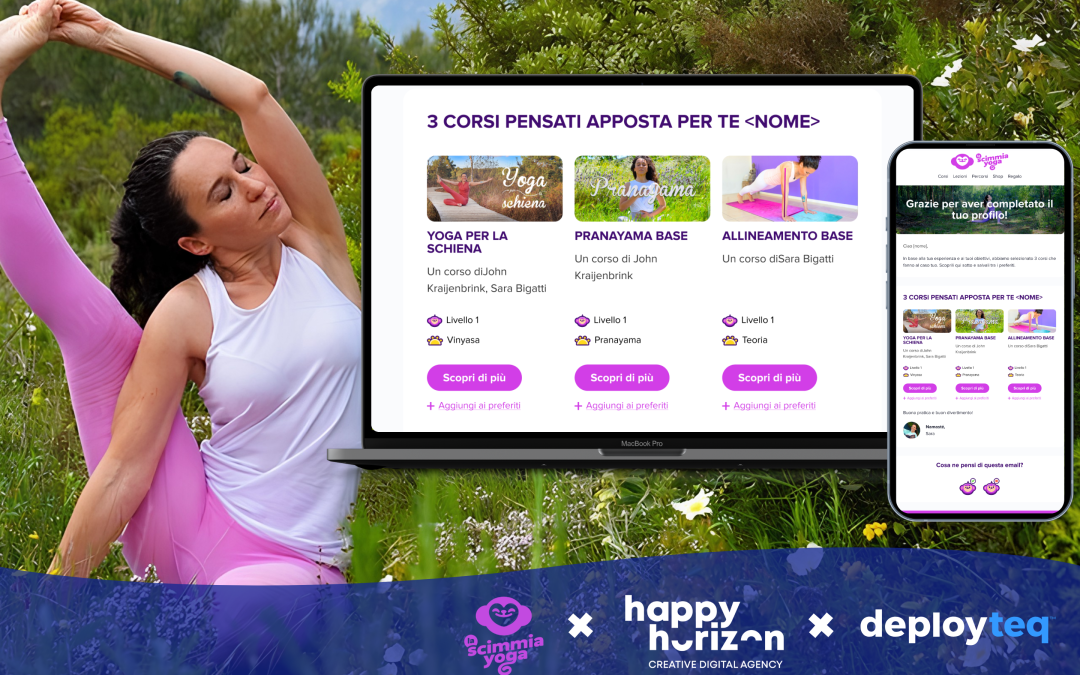
We built our Customer Data Platform to close the gap between data and action. Rather than treating the CDP as a separate data tool, we have integrated it directly into the Deployteq campaign environment, so your unified profiles activate immediately across email, SMS, WhatsApp, push, and web, without a separate export or data engineering step.
Here is what that looks like in practice:
- 360-degree single customer view: Every profile consolidates behavioural, transactional, and engagement data into one visual record your team can actually use
- Intelligent modelling built in: RFM scoring, next-best-offer logic, and predictive insights surface automatically, so you spend less time building segments manually
- Native cross-channel activation: Segments and triggers flow directly into your live campaigns across every channel we support
- Full lifecycle visibility: From first visit to loyal customer, every stage is mapped, measured, and actionable
If you are ready to see how unified data translates into campaigns that actually convert, book a personalised demo and we will walk you through exactly what this looks like for your sector.