A 360-degree customer view is a unified, single profile of each customer that consolidates every data point — purchase history, browsing behaviour, email engagement, support interactions, and more — into one accessible record. A Customer Data Platform delivers this by ingesting data from multiple sources in real time, resolving duplicate identities, and making that unified profile available for activation across every marketing channel.
This matters most for B2C marketers managing high-volume customer bases, where fragmented data leads to missed triggers, poor personalisation, and wasted spend. The questions below unpack exactly how a CDP builds that view and what it means for your marketing in practice.
How does a CDP build a 360-degree customer view?
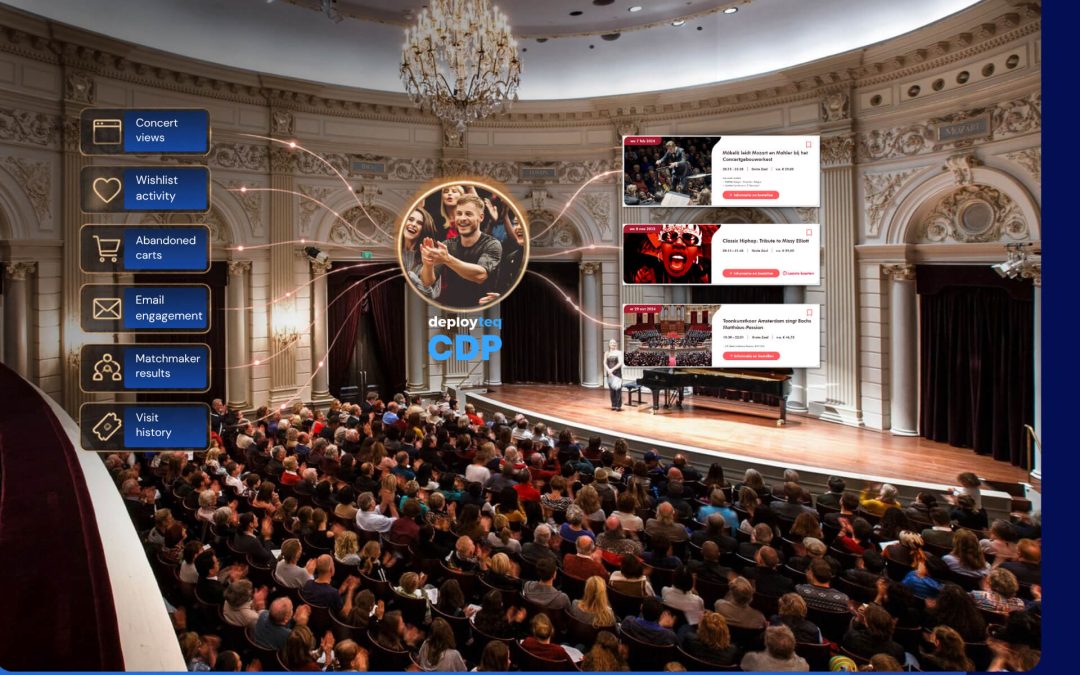
A real-time customer data platform builds a 360-degree customer view by collecting raw data from every touchpoint, resolving it to a single customer identity, and continuously updating that profile as new interactions occur. The result is one living record per customer — not a static snapshot, but a dynamic profile that reflects behaviour right now.
The process works in three stages. First, the CDP ingests data from connected sources via APIs, webhooks, or native integrations. Second, it applies identity resolution to match records across devices and channels — so the person who browsed on mobile yesterday and opened an email today is recognised as the same individual. Third, it structures that data into unified profiles that are immediately available for segmentation and campaign activation.
What separates a CDP from older data tools is the activation layer. The profile is not just stored — it is usable. Segments update in real time, and intelligent modelling such as RFM scoring, next-best-offer logic, and lifecycle predictions can be applied directly to those profiles without needing a data science team to run queries.
What data sources feed into a 360-degree customer profile?
A 360-degree customer profile draws from every system that records a customer interaction. This typically includes transactional data, behavioural data, engagement data, and declared preference data — all unified into a single record.
In practice, the most common data sources are:
- E-commerce and POS systems — purchase history, order value, return rates, product categories
- Website and app behaviour — pages visited, time on site, products viewed, cart activity
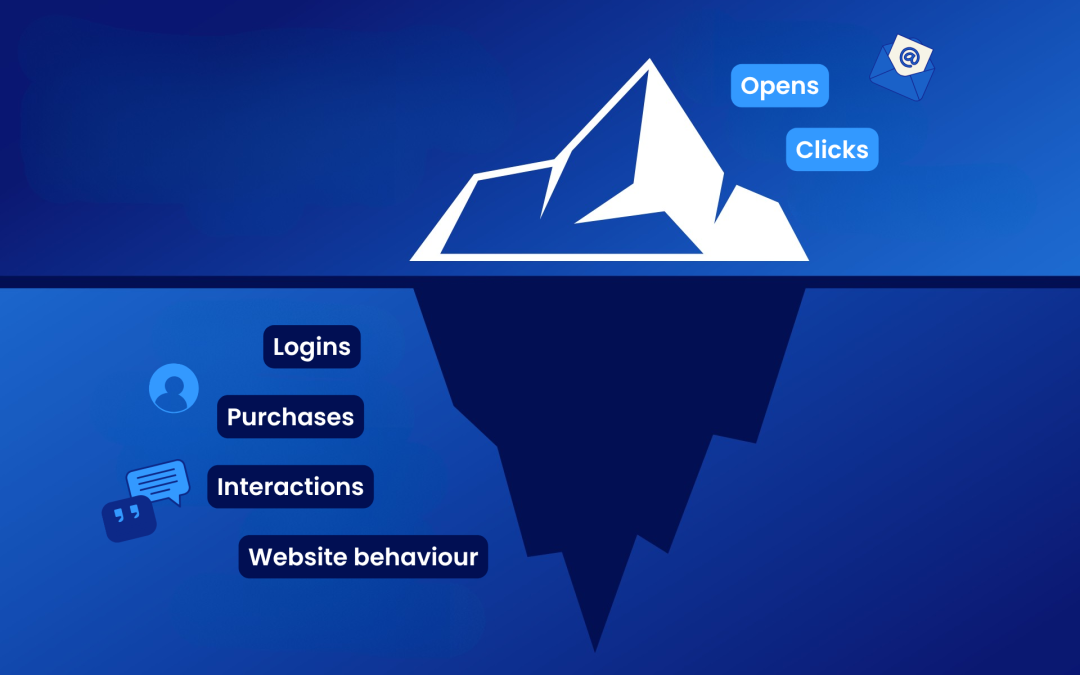
- Email and messaging engagement — opens, clicks, unsubscribes, response patterns across email, SMS, and push
- CRM records — contact details, account history, loyalty status, support tickets
- Social and ad platforms — campaign interactions, audience membership, paid engagement signals
- Offline touchpoints — in-store visits, call centre interactions, event attendance
The richer the data sources connected to your CDP platform, the more accurate the customer profile becomes. For a travel brand, this might mean combining booking data, destination preferences, and loyalty tier into a single profile that triggers the right offer at the right moment in the booking window.
What’s the difference between a CDP, a CRM, and a DMP?
A CDP, CRM, and DMP each handle customer data differently and serve distinct purposes. A CRM manages known customer relationships and sales interactions. A DMP handles anonymous, third-party audience data primarily for ad targeting. A CDP unifies first-party data from all sources into persistent, individual profiles built for real-time marketing activation.
CRM vs CDP
A CRM is built around the sales and service relationship. It stores contact records, deal histories, and communication logs — but it is typically updated manually or through direct interactions. It does not ingest real-time behavioural data at scale, and it is not designed for high-volume campaign segmentation. A CDP sits alongside the CRM, enriching those contact records with live behavioural signals and making them actionable across marketing channels.
DMP vs CDP
A DMP works with anonymous, cookie-based data — largely third-party audience segments used to target paid advertising. The data is aggregated, not individual, and has a short shelf life. As third-party cookies decline, DMPs are losing relevance. A CDP, by contrast, is built entirely on first-party data and creates persistent, identifiable profiles that become more valuable over time.
How does a unified customer view improve marketing personalisation?
A unified customer view improves personalisation by giving every channel access to the same accurate, up-to-date customer profile. Instead of each system holding a partial picture, your email platform, SMS tool, and web personalisation layer all draw from one source of truth — so the experience you deliver is consistent, contextual, and timely.
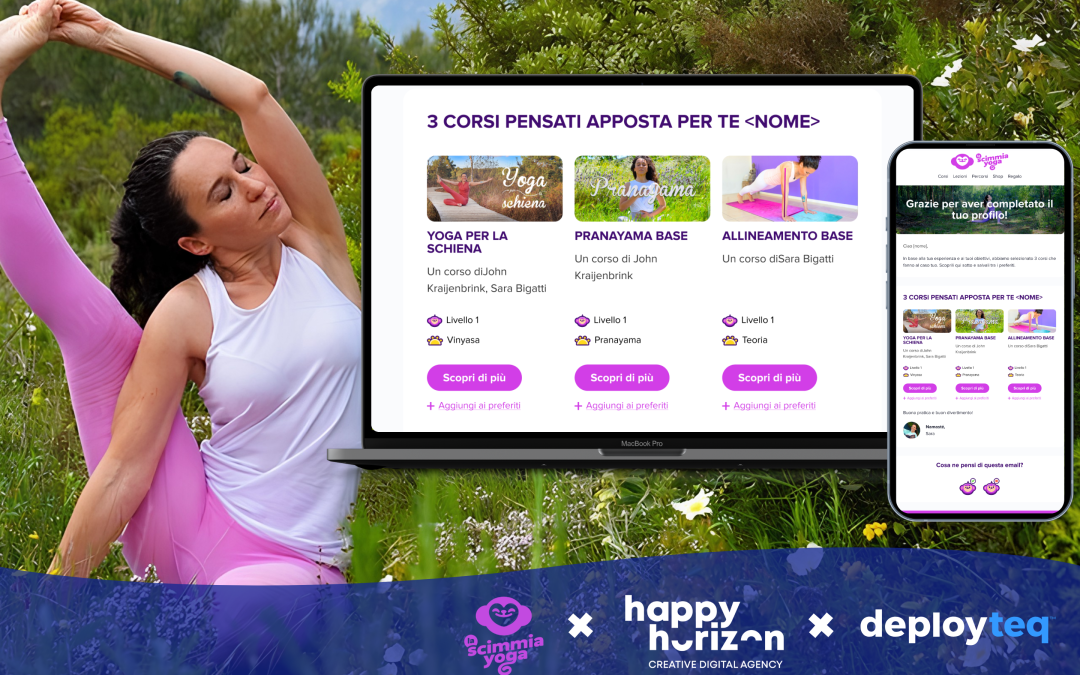
The practical impact is significant. When a customer abandons a cart, a unified profile tells you not just what they left behind, but their purchase history, their preferred channel, their LTV segment, and whether they have already received a discount recently. That context changes the message you send, the channel you use, and the offer you include.
For retail and e-commerce marketers, this means product recommendations that reflect real purchase intent rather than last-click behaviour. For finance brands, it means lifecycle communications that account for where a customer actually is in their relationship with the product. The email marketing channel in particular benefits enormously — segmentation becomes sharper, triggers become more precise, and relevance scores improve across the board.
Which teams benefit most from a 360-degree customer view?
Marketing teams benefit most directly, but a 360-degree customer view creates value across CRM, data, product, and customer experience functions. Any team that makes decisions based on customer behaviour gains when that behaviour is fully visible and accurate.
- CRM and email marketers — sharper segmentation, real-time triggers, and lifecycle automation that reflects actual customer behaviour
- CMOs and marketing managers — clearer attribution, better LTV modelling, and the ability to prove campaign ROI against unified customer data
- Data and analytics teams — a single clean data layer that eliminates reconciliation work between disconnected systems
- Customer experience teams — consistent context across every touchpoint, so customers are never served irrelevant or contradictory messages
- Product teams — behavioural signals that reveal how customers actually use and engage with products over time
In organisations that operate across multiple channels and markets, a CDP platform removes the internal friction caused by teams working from different data sources. Everyone pulls from the same profile, which means decisions are faster and campaigns are more coherent.
When should a business invest in a CDP?
A business should invest in a CDP platform when fragmented data is visibly limiting marketing performance. The clearest signals are: personalisation is shallow because customer context is incomplete, real-time triggers are not firing because data is delayed or siloed, or teams are spending significant time reconciling data across systems rather than activating it.
For high-volume B2C brands in retail, travel, hospitality, or finance, these friction points tend to appear at scale. When your customer base grows beyond what a single CRM or email platform can meaningfully segment, and when cross-channel behaviour is influencing purchase decisions in ways your current tools cannot capture, a CDP becomes a strategic necessity rather than a nice-to-have.
Businesses upgrading from simpler platforms also benefit from a CDP early in the transition. Rather than rebuilding the same data gaps in a new tool, a CDP gives you the unified foundation that makes every subsequent marketing investment more effective.
How Deployteq delivers a unified customer view
We built our Customer Data Platform to give marketers the unified, actionable customer profiles that real personalisation demands. Here is what that looks like in practice:
- Single customer view — all first-party data unified into one profile, with identity resolution across devices and channels
- Intelligent modelling built in — RFM scoring, next-best-offer logic, and predictive lifecycle insights applied directly within the platform
- Seamless campaign activation — profiles connect directly to email, SMS, WhatsApp, push, and web without needing a separate data export step
- Real-time segmentation — segments update as customer behaviour changes, so your triggers fire at the right moment every time
- No data science team required — the modelling and activation layer is built for marketers, not engineers
If your current setup is leaving customer data in silos and your personalisation is suffering because of it, we would love to show you what a unified profile looks like in action. Book a demo and see how quickly you can move from fragmented data to campaigns that actually land.