Bad data does not just slow down your campaigns. It quietly dismantles them. Wrong names, duplicate records, siloed profiles, and stale contact details all chip away at deliverability, relevance, and ultimately revenue. In 2026, with customer expectations higher than ever, scattered customer data is one of the most costly problems a marketing team can face. Here are eight mistakes that are likely breaking your campaigns right now, and how to fix them.
How bad customer data silently kills campaigns
Most campaign failures are not creative failures. They are data failures. When your contact database is messy, your segmentation becomes unreliable, your personalisation falls flat, and your automations fire at the wrong moment or to the wrong person. The result is lower open rates, higher unsubscribe rates, and wasted budget.
The challenge is that data problems are invisible until the damage is done. A poorly timed email to a churned customer, a loyalty offer sent to someone who already redeemed it, a cart recovery message triggered twice because of a duplicate record. These are not edge cases. They are symptoms of a data foundation that needs attention.
Knowing how to unify customer data starts with understanding where it breaks down. Below are the eight most common mistakes.
1: Collecting data without a clear purpose
Collecting every data point you can get your hands on feels like due diligence. In practice, it creates noise. When your database is full of fields that nobody uses, the data that actually matters gets buried.
Before adding a new data capture point, ask one question: which campaign or trigger will this enable? If the answer is vague, do not collect it. Purposeful data collection keeps your profiles clean, your storage lean, and your team focused on signals that drive action.
For retail and e-commerce teams especially, this matters. Knowing a customer’s preferred category, last purchase date, and average order value is far more useful than knowing their middle name or a self-reported interest they ticked in a sign-up form three years ago.
2: Ignoring duplicate records in your database
Duplicate records are one of the most damaging and underestimated data problems. A single customer appearing twice in your database means they receive duplicate communications, skew your segment counts, and distort your reporting.
Duplicates typically emerge when data flows in from multiple sources without a matching or deduplication layer. A customer who buys in-store and online, or who signs up via two different landing pages, can easily end up as two separate profiles.
The fix is a consistent identity resolution process. Match records on email, phone number, or a unique customer ID before they enter your main database. Catching duplicates at the point of ingestion is far easier than cleaning them up after the fact.
3: Relying on outdated or stale contact data
Contact data decays fast. People change jobs, switch email providers, move house, and update their phone numbers. Research consistently shows that a significant portion of any B2C database becomes unreliable within twelve months if left unmanaged.
Stale data inflates your list size while reducing your effective reach. Worse, sending to invalid or abandoned addresses damages your sender reputation, which affects deliverability for your entire database, not just the bad records.
Build a regular data hygiene process into your calendar. Suppress contacts who have not engaged in a defined window, run re-engagement flows before removing lapsed subscribers, and validate email addresses at the point of capture where possible.
4: Siloing data across disconnected platforms
This is where the scattered customer data solution conversation gets real. When your CRM, e-commerce platform, loyalty programme, and email tool all hold different pieces of the same customer’s story, you cannot build a complete picture. And without a complete picture, true personalisation is impossible.
Data silos mean a customer who browsed a holiday package last week gets a generic newsletter instead of a tailored destination offer. A finance customer who just opened a new account gets a prospecting email instead of an onboarding sequence. The intent signals are there. The problem is that the platforms cannot talk to each other.
Solving this requires a centralised data layer that pulls from all sources and creates a single, unified profile per customer. That is the core promise of data unification, and it is the foundation every other fix on this list depends on.
5: What happens when you skip consent management?
Consent is not just a legal requirement. It is a data quality issue. When your database contains contacts whose consent status is unclear, unrecorded, or expired, you are building campaigns on shaky ground.
Sending to non-consented contacts increases spam complaints, triggers regulatory risk, and erodes trust with customers who did not ask to hear from you. In sectors like finance and insurance, the consequences of poor consent management are particularly serious.
Treat consent as a data field, not an afterthought. Record the source, date, and type of consent for every contact. Build suppression logic that automatically excludes contacts whose consent has lapsed or been withdrawn. Your marketing automation should enforce this, not rely on manual checks.
6: Using the wrong data for segmentation
Segmentation is only as smart as the data behind it. If you are building segments on demographic data alone, you are missing the signals that actually predict behaviour. Age and location tell you something. Recent purchase history, browsing behaviour, and engagement patterns tell you far more.
The mistake is not always using bad data. Sometimes it is using the right data in the wrong way. Segmenting by “last purchase date” without combining it with category preference or LTV can produce segments that look logical but perform poorly.
Think about what behaviour you want to influence, then work backwards to identify which data points predict that behaviour. For travel brands, booking window and destination affinity are powerful. For retail, category preference and purchase frequency drive the most relevant segments.
7: Failing to enrich data with behavioural signals
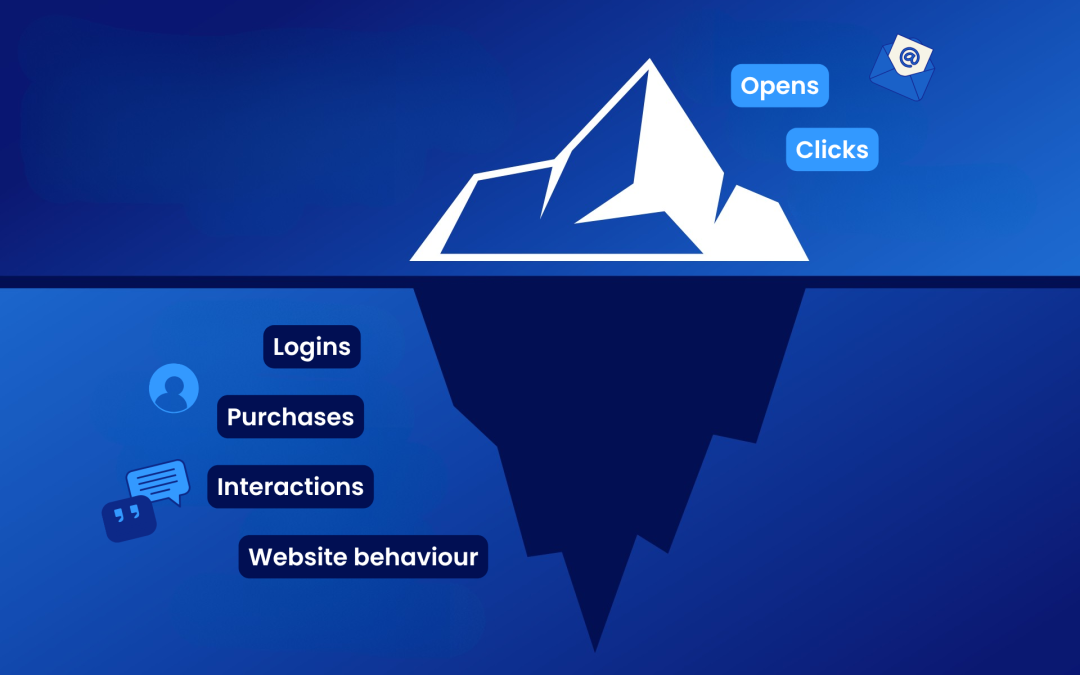
Declared data, the information customers give you directly, is a starting point. Behavioural data is where the real insight lives. What pages did they visit? Which emails did they open? Did they abandon a basket, watch a product video, or click through to a pricing page?
Marketers who rely only on declared data miss the real-time intent signals that make campaigns feel timely and relevant. A customer who visited your insurance renewal page three times this week is telling you something. If that signal never reaches your campaign logic, you will send the wrong message at the wrong moment.
Connecting on-site behaviour, app activity, and email engagement to your customer profiles is how you move from reactive campaigns to genuinely predictive ones. This is what separates a basic email marketing platform from a full marketing automation setup built on unified data.
8: Never auditing your data for accuracy
Data quality is not a one-time project. It is an ongoing discipline. Platforms change, integrations break, field mappings drift, and new data sources get added without proper governance. Over time, even a well-structured database degrades.
Without regular audits, you will not notice the problem until it shows up in your campaign metrics. A sudden drop in open rates, an unexpected spike in unsubscribe rates, or a segment that behaves differently than expected are often symptoms of a data quality issue that has been building quietly.
Schedule quarterly data audits as a standard part of your marketing operations. Check for field consistency, validate key segments against expected behaviour, and review integration logs for errors. Treat your database like a live system that needs maintenance, because it is.
How Deployteq helps you unify and activate your customer data
Every mistake on this list points to the same underlying problem: fragmented, incomplete, or unmanaged customer data. That is exactly the problem we built our Customer Data Platform (CDP) to solve.
Here is what Deployteq’s CDP does for your data foundation:
- Unifies all customer data into a single, intelligent profile, pulling from every source including CRM, e-commerce, loyalty, and web behaviour
- Eliminates silos so every channel, email, SMS, WhatsApp, push, and web, works from the same complete customer view
- Powers smart segmentation using behavioural signals, RFM modelling, and next-best-offer logic built directly into your campaigns
- Supports consent management at the profile level, so suppression and compliance are built into your data, not bolted on
- Enables predictive insights including full lifecycle modelling, so you can act on intent before customers disengage
If your campaigns are underperforming and you suspect the data is the root cause, the best next step is to see the platform in action. Book a personalised demo and we will show you exactly how Deployteq turns scattered customer data into campaigns that actually convert.