The marketing automation features you actually need depend on your channel mix, data maturity, and how complex your customer journeys are. For most B2C marketing teams, the non-negotiables are advanced segmentation, a flexible journey builder, cross-channel delivery, and real-time personalisation. This article breaks down the key questions practitioners ask when evaluating marketing automation software, so you can cut through the noise and invest in what moves the needle.
What features should you prioritise in a marketing automation platform?
Prioritise the marketing automation features that directly reduce manual effort and increase personalisation at scale. For most teams, that means a powerful journey builder, smart segmentation, cross-channel delivery, and reliable data integration. Everything else is secondary until those foundations are solid.
When evaluating marketing automation tools, start with these core capabilities:
- Journey builder: Flexible enough to handle complex, branching logic without requiring developer support
- Segmentation engine: Real-time, behaviour-based, and capable of handling large customer databases
- Cross-channel delivery: Email, SMS, push, WhatsApp, and web from a single platform
- Data integration: Clean, unified customer profiles that trigger automations without manual data prep
- Reporting and analytics: Campaign-level and journey-level performance visibility
The features you prioritise should also reflect your sector. A retail brand will lean heavily on cart recovery triggers and stock alert automation. A travel business needs booking window logic and loyalty loop management. Finance teams need precise lifecycle triggers and compliance-safe communication flows. Map your use cases first, then score platforms against them.
What’s the difference between basic and advanced marketing automation?
Basic marketing automation handles simple, rule-based triggers: send a welcome email when someone subscribes, follow up after a purchase. Advanced marketing automation goes further, using behavioural data, predictive modelling, and multi-step logic to deliver hyper-personalised experiences across multiple channels in real time.
What basic automation covers
Basic platforms like entry-level email tools handle linear sequences well. You get fixed drip campaigns, simple A/B testing, and standard list segmentation. These work fine for low-volume senders with straightforward customer journeys. However, they quickly become a bottleneck as your database grows or your personalisation requirements increase.
What advanced automation unlocks
Advanced marketing automation software introduces dynamic branching, real-time segment updates, predictive scoring, and cross-channel orchestration. Rather than sending the same sequence to everyone, you can build journeys that adapt based on what a customer does or does not do. A travel brand, for example, might trigger a destination-specific email sequence the moment a user browses a particular region, then shift to SMS if the email goes unopened within 24 hours.
The practical difference comes down to data depth and journey flexibility. Advanced platforms ingest more data points, act on them faster, and give marketers the control to build journeys that mirror how customers actually behave.
How does segmentation affect marketing automation performance?
Segmentation is the single biggest lever on marketing automation performance. Better segments mean more relevant messages, higher engagement rates, and lower unsubscribe rates. Broad, undifferentiated segments produce generic content that customers tune out. Precise, behaviour-based segments produce communication that feels personal and timely.
The impact shows up clearly in email marketing automation. A well-segmented campaign sent to an engaged, high-intent audience will consistently outperform a large broadcast to a mixed list. This is not about volume; it is about the match between message and moment.
Effective segmentation in 2026 goes beyond demographics. The most performant segments combine:
- Behavioural signals: Browse history, purchase frequency, content interactions
- Lifecycle stage: New subscriber, active buyer, lapsed customer, loyalty member
- Predictive attributes: Likelihood to churn, next-best-offer scores, LTV bands
- Real-time triggers: In-session activity, cart abandonment, stock availability
For high-volume B2C teams, the ability to build and update segments automatically, without manual exports or batch processing, is essential. Static lists age quickly. Real-time segmentation keeps your automation relevant as customer behaviour shifts.
Which marketing automation features are essential for email marketing?
For email marketing automation specifically, the essential features are advanced segmentation, dynamic content personalisation, automated send-time optimisation, robust template tooling, and deliverability management. These are the capabilities that separate a high-performing email programme from one that flatlines at average open rates.
Dynamic content is particularly important. Rather than building multiple versions of the same email for different audiences, dynamic blocks let you serve personalised content within a single send. A retail brand can show each recipient a product recommendation based on their last browse session. An entertainment platform can surface content based on viewing history. This level of email personalisation drives measurable uplift in click-through and conversion.
Beyond content, pay close attention to:
- Deliverability infrastructure: IP reputation management, authentication protocols, and bounce handling
- A/B and multivariate testing: Subject lines, send times, content blocks, and CTAs
- Suppression and preference management: Automated handling of unsubscribes and fatigue rules
- Triggered sends: Transactional, behavioural, and lifecycle emails firing without manual intervention
CRM automation integration also matters here. When your email platform connects cleanly to your CRM data, you can trigger communications based on CRM events, such as a contract renewal date or a loyalty tier change, without building manual workarounds.
Should you use a marketing automation platform with a built-in CDP?
Yes, if you are managing large, fragmented customer databases across multiple channels, a marketing automation platform with a built-in Customer Data Platform gives you a significant operational advantage. It eliminates the data latency and integration overhead that comes from stitching together separate tools, and it means your segments and triggers always work from a single, unified customer view.
Without a CDP, data typically lives in silos. Your email platform holds one slice, your CRM another, your web analytics a third. Getting those sources to talk to each other requires engineering resources, ongoing maintenance, and constant reconciliation. The result is delayed triggers, inconsistent personalisation, and segments built on incomplete data.
A native CDP within your marketing automation platform solves this by consolidating customer data in one place and making it immediately actionable. You can build segments, trigger journeys, and apply predictive models like RFM scoring or next-best-offer logic directly from unified profiles, without waiting for a nightly data sync.
For teams in retail, travel, or entertainment managing millions of customer records, this is not a nice-to-have. It is the difference between automation that reacts in real time and automation that is always one step behind.
When is it time to switch marketing automation platforms?
It is time to switch marketing automation platforms when your current tool is limiting what you can build, not just what you have built so far. The clearest signals are: you are manually compensating for platform gaps, your segmentation is static rather than dynamic, cross-channel campaigns require multiple disconnected tools, or your team spends more time managing workarounds than building journeys.
Other indicators that a switch is overdue:
- You cannot personalise beyond basic merge tags without developer support
- Data from your CRM or ecommerce platform does not sync in real time
- Reporting does not give you journey-level or revenue attribution visibility
- Your platform struggles to handle your database size without performance issues
- You are running email, SMS, and push from entirely separate platforms with no unified view
Many teams outgrow simpler platforms like Mailchimp or ActiveCampaign as their customer base scales and their personalisation requirements increase. The switch feels daunting, but staying on an underpowered platform has a real cost: missed revenue, increased manual effort, and customer experiences that fall short of what your data could deliver.
The right time to evaluate alternatives is before the pain becomes critical. If you are already hitting limits, the migration conversation is already overdue.
How Deployteq helps you get the right marketing automation features
We built Deployteq to give B2C marketing teams exactly what they need: powerful automation without the complexity. Here is what that looks like in practice:
- Advanced segmentation: Build real-time, behaviour-based segments without manual data exports or developer involvement
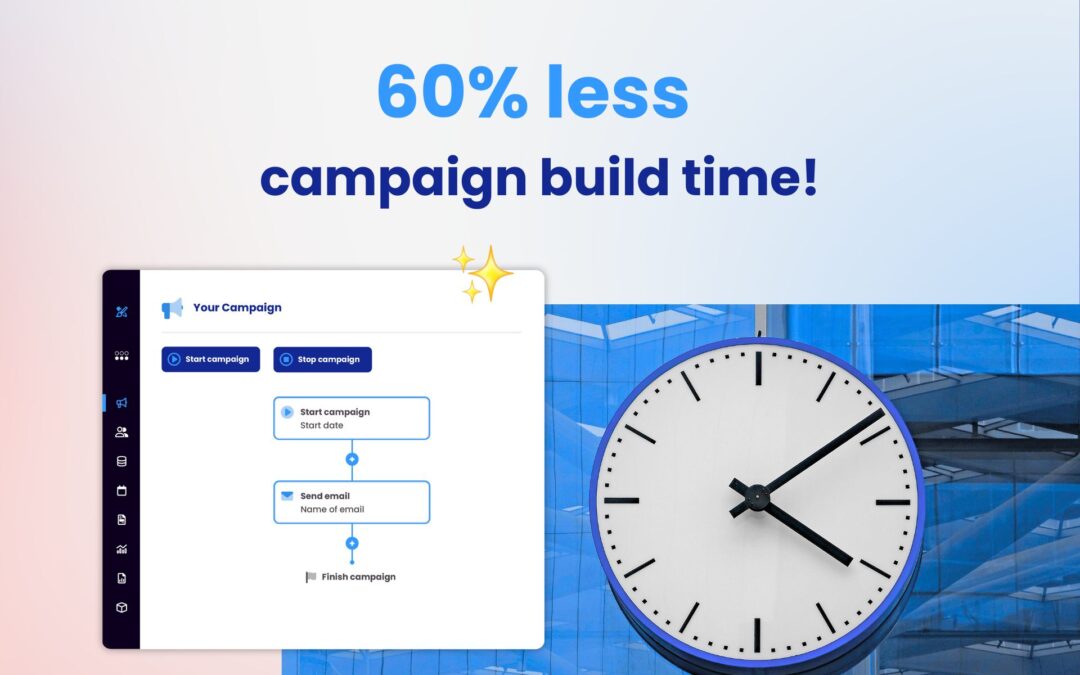
- Flexible journey builder: Design complex, multi-step customer journeys with full branching logic across email, SMS, WhatsApp, push, and web
- Native CDP: Unify your customer data in one place and activate it directly in campaigns, with intelligent modelling including RFM, next-best-offer, and predictive insights
- Superior email marketing tools: Advanced templates, dynamic content, deliverability management, and send-time optimisation built in
- Cross-channel delivery: Manage every channel from a single platform, with a single customer view driving every decision
Whether you are scaling up from a simpler tool or looking to consolidate a fragmented stack, we are here to help you build automation that actually performs. Book a demo and see how Deployteq works for your specific use case.