The Authors

Jon Burke
Deliverability Manager, Deployteq

Ties Postma
Support Engineer, Deployteq
For years, email marketing was straightforward: an open meant someone had read your message. A click meant interest. Marketers built segments, campaigns, customer journeys, and reports around those assumptions. For more than two decades, they worked reasonably well.
But reality is changing.
Not because email is becoming less relevant, but because the way people receive, read, and secure email has fundamentally changed.
Why opens are becoming less meaningful
The first major shift came with Apple’s Mail Privacy Protection (MPP).
Where a tracking pixel used to load only when someone actually opened an email, images are now often prefetched through Apple’s proxy servers. As a result, an open can be recorded even when the recipient never viewed the email.
This created an uncomfortable truth:
An open is no longer automatically a sign of interest.
Clicks are now under pressure too
After the introduction of MPP, many marketers shifted their focus to clicks. That seemed like a logical alternative.
However, we’re now seeing another development.
Security solutions such as Microsoft Defender, Proofpoint, and Mimecast increasingly inspect links automatically before a user takes any action. At the same time, AI systems are analysing emails, generating summaries, and determining what content is relevant before someone even reads the message.
This doesn’t mean clicks have become worthless.
It does mean that a click no longer automatically equals human engagement.
The next challenge: regulation
Alongside technological developments, regulatory scrutiny is increasing.
French and Italian privacy regulators have indicated that tracking pixels may, in certain situations, fall under ePrivacy regulations and require consent. As a result, the discussion is gradually shifting from:
“Can we measure opens?”
The good news: customer behaviour isn’t disappearing
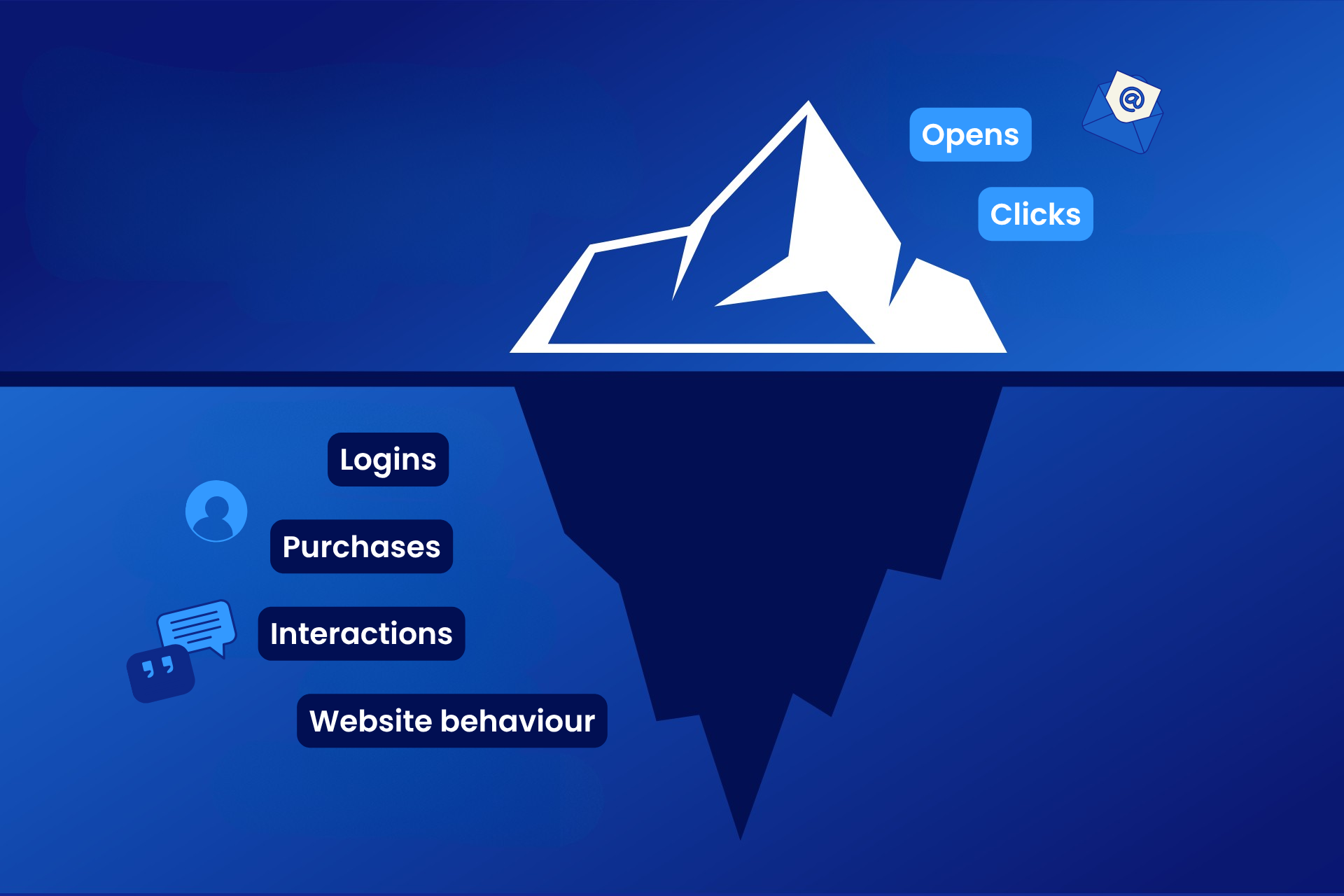
A lot is changing. And this is where things get interesting. Because if opens are becoming less reliable and clicks are under pressure, what are you left with?
The answer is surprisingly simple:
Focus on the behaviors that truly matter to your organisation.
- People still log in.
- People still buy products.
- People still request quotes.
- People still book appointments.
- People still take valuable actions on websites and apps.
A new way of thinking
The shift happening now is less technical than many people think. It’s primarily about a different way of looking at engagement.
What is still possible, however, is identifying contacts who have shown no meaningful behavior over an extended period of time. You might decide to engage this group less frequently, engage them differently (for example via SMS, WhatsApp, direct mail, or phone), or exclude them altogether.
As a result, the focus shifts from:
- Who opened my email?
- Who clicked?
To:
- Who logged in?
- Who made a purchase?
- Who genuinely interacted with my brand?
- Who has not shown any relevant behaviour for months?
This often provides a much more valuable picture.
Why this matters for deliverability
List quality remains important.
When large groups of contacts consistently fail to engage with your communications, it affects the performance of your programs. Not only can analyses and ROI calculations become distorted, but deliverability can also gradually decline.
That is why it is becoming increasingly important to work with signals that genuinely reflect customer activity.
Not because traditional metrics will disappear completely, but because they can no longer be your only compass.
What can you do today?
Organizations do not need to wait for new regulations or future developments.
You can take action right now:
- Ensure consistent UTM tagging.
- Measure website behavior, logins, and purchases alongside email interactions.
- Include key business events in your segmentation strategies.
- Review engagement rules that rely solely on opens or clicks.
- Explore bot detection capabilities on landing pages.
Conclusion
Over the past few years, privacy measures, security solutions, and AI have changed the reliability of traditional email metrics. That is not a comfortable message for anyone.
But it does not mean marketing is becoming impossible to measure.
It simply means the focus is shifting toward signals that are closer to real customer value.
Organizations that make this shift don’t lose visibility. Instead, they replace outdated assumptions with new, stronger indicators of success.
And perhaps that is the most important lesson of all.
What can we do for you?
Every organization is different.
For a retailer, purchases may be the most important indicator. For a publisher, website visits or subscriptions may matter most. For B2B organizations, quote requests, logins, or product usage may be the key signals.
Moving from opens and clicks toward first-party data does not require a one-size-fits-all solution. It requires an approach that aligns with your business objectives.
Together, we can explore:
- Which customer signals are most valuable for your organization.
- How to make those signals measurable.
- How to use them within Deployteq for segmentation, personalization, and automation.
- How to build reporting that better reflects actual business outcomes.
Would you like to discuss this further? Contact your Account Manager. We’d be happy to help.