Marketers have never had more tools at their disposal, and yet so many teams still find themselves queuing up IT tickets just to launch a campaign. A simple segmentation update, a new automation trigger, a personalised landing page, and suddenly you need a developer. In 2026, that bottleneck is costing you speed, agility, and ultimately, revenue.
Reducing IT dependency in marketing is not about cutting IT out of the picture entirely. It is about giving your marketing team the autonomy to move at the pace your customers expect. This guide walks you through six practical steps to build genuine marketing autonomy, from auditing your current workflows all the way to scaling your independence over time.
Audit Which Marketing Tasks Still Require IT Involvement
Before you can reduce IT dependency, you need to understand exactly where it lies. Many teams underestimate how deeply IT is embedded in their day-to-day operations, often because the reliance has built up gradually over years.
- List every recurring marketing task that required an IT ticket or developer input in the last 90 days. Include campaign builds, data pulls, segment updates, template changes, and integration requests.
- Categorise each task by frequency (weekly, monthly, ad hoc) and by the reason IT was needed (data access, technical build, permissions, infrastructure).
- Identify which tasks are genuinely technical and which ones are technical only because your current tools require it.
After this audit, you should have a clear map of your IT dependency. The goal is to distinguish between tasks that will always need engineering support and tasks that a better toolset or process would hand back to marketing. Most teams find the second category is far larger than expected. That gap is your opportunity.
Consolidate Your Data onto a Single Platform
Fragmented data is one of the biggest drivers of IT dependency. When customer data lives across a CRM, an email platform, an analytics tool, and a separate data warehouse, marketing cannot act on it without help. Consolidation is the foundation of self-serve marketing.
- Map all the data sources your team currently uses to build segments or personalise campaigns, including transactional data, behavioural data, and preference data.
- Identify where data is duplicated, siloed, or only accessible via IT-run queries.
- Evaluate whether your current stack can unify these sources through a customer data platform, or whether you need a dedicated solution.
- Work with IT once to define the data model and connections, then ensure marketing has read and activation access going forward.
The objective is a single, unified customer view that marketing can query and act on without raising a ticket. Once your data is consolidated, the downstream steps become significantly easier. Segmentation, personalisation, and automation all depend on clean, accessible data sitting in one place.
Switch to No-Code Campaign Building Tools
No-code marketing tools have matured enormously. Today, marketers can build sophisticated multi-channel campaigns, dynamic email templates, and automated journeys without writing a single line of code. If your current platform still requires developer input to build or edit campaigns, it is time to reassess.
When evaluating no-code tools, look for drag-and-drop journey builders that support conditional logic, visual template editors with dynamic content blocks, and native integrations that do not require custom API work to connect your core systems. The best platforms let you build complex automation visually, so the logic is transparent to any marketer on the team, not just the person who built it.
- Identify the three to five campaign types your team builds most frequently and confirm your chosen tool can handle them without developer input.
- Run a pilot build of your most complex campaign in the new tool before fully committing to migration.
- Document the build process so any team member can replicate or adapt it independently.
After switching to no-code tools, campaign launch times typically drop significantly. More importantly, your team stops waiting. A retail marketer can react to a stock alert the same day. A travel brand can trigger a destination-specific offer within hours of a booking window opening. Speed becomes a competitive advantage.
Set Up Self-Serve Segmentation and Personalisation
Segmentation is where IT dependency often bites hardest. If building or updating a segment requires a data query written by a developer, your campaigns will always lag behind your strategy. Self-serve segmentation means marketers can define, build, and activate audiences directly, using the unified data you consolidated in step two.
- Define a library of core segment criteria your team uses regularly, such as purchase recency, product category affinity, lifecycle stage, or engagement level.
- Ensure these criteria are available as selectable filters within your platform, without requiring SQL or custom scripts.
- Set up dynamic segments that update automatically as customer behaviour changes, so you are not manually refreshing lists before every send.
- Build personalisation rules that reference segment membership or individual data attributes, such as first name, last purchase, or loyalty tier, directly within your campaign templates.
Verify this is working by building a new segment and activating a test campaign end-to-end without involving IT. If you can do that in under an hour, your self-serve segmentation is functioning as it should. If you hit a wall, trace it back to either a data access issue or a tool limitation and address it at the root.
Define Governance Rules to Maintain Control Without IT
Marketing independence does not mean a free-for-all. Without governance, self-serve access can lead to inconsistent branding, data compliance risks, and duplicated efforts. The goal is structured autonomy, where marketers have the freedom to move fast within clearly defined guardrails.
- Define role-based permissions within your platform so different team members have access appropriate to their responsibilities. A junior email marketer does not need access to edit master data schemas.
- Create approved template libraries and brand-compliant content blocks that anyone can use without needing design or developer sign-off.
- Document a clear approval workflow for campaigns that touch sensitive data, large audiences, or high-value customer segments.
- Establish naming conventions and folder structures so campaigns, segments, and assets are consistently organised and auditable.
Good governance actually accelerates marketing independence because it removes the ambiguity that causes teams to default to IT for reassurance. When everyone knows the rules and the tools enforce them, marketers can act with confidence. Loop IT in during the governance design phase, then step back and let marketing operate within the framework.
Measure and Expand Marketing Independence Over Time
Reducing IT dependency is an ongoing process, not a one-time project. Once the foundations are in place, the focus shifts to measuring how independent your team has become and identifying where further autonomy is possible.
- Track the number of IT tickets raised by marketing each month and set a target reduction over the next two quarters.
- Measure campaign launch velocity, specifically the time from brief to live, and monitor whether it improves as self-serve capabilities bed in.
- Conduct a quarterly review of any tasks that still require IT input and assess whether a tool, process, or training update could transfer them to marketing.
- Celebrate wins with the team. When a marketer builds and launches a complex automation independently for the first time, that is a meaningful milestone worth acknowledging.
With your governance framework in place and metrics tracking progress, you can expand marketing independence systematically. Add new channels, more complex personalisation logic, or predictive segmentation as your team’s confidence grows. The aim is a marketing team that operates with genuine marketing team independence, fast, data-driven, and in control of its own output.
How Deployteq Helps You Reduce IT Dependency
We built Deployteq specifically for marketing teams who are done waiting on IT. Every capability in the platform is designed to put control back in the hands of marketers, without sacrificing sophistication or data quality. Here is what that looks like in practice:
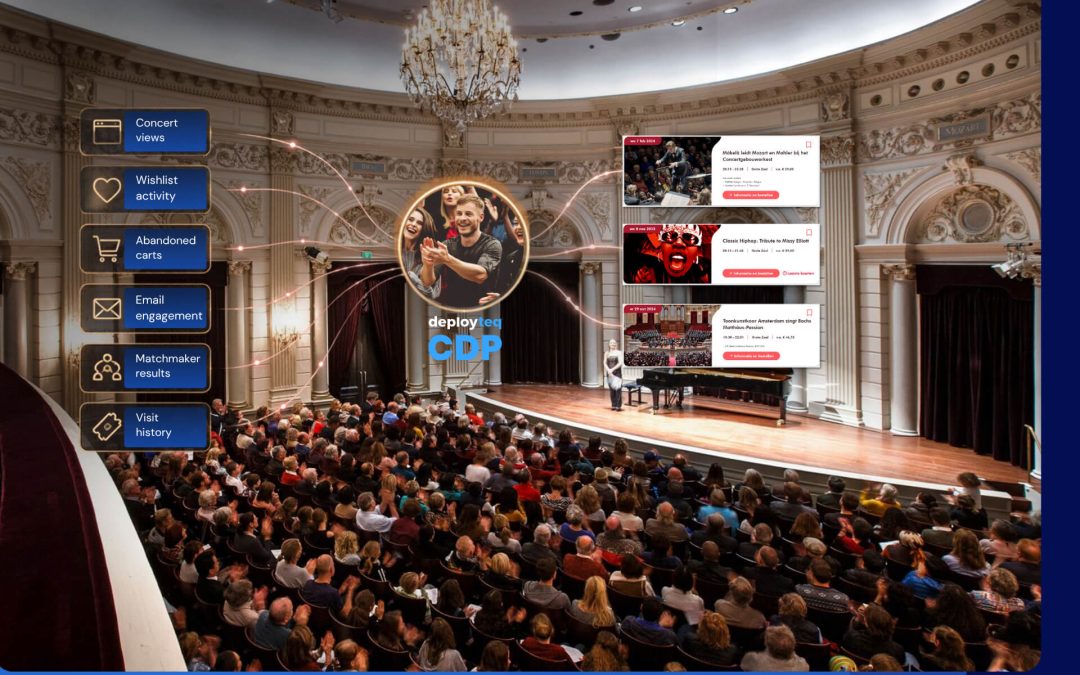
- Unified customer data: Our CDP consolidates data from across your stack into a single, marketer-accessible profile, so segmentation never requires a developer query again.
- No-code journey builder: Build complex, multi-channel automations using a visual drag-and-drop interface. Conditional logic, branching paths, and dynamic content are all configurable without code.
- Smart segmentation: Create real-time, hyper-personalised segments using RFM modelling, predictive insights, and next-best-offer logic, all directly within the platform.
- Role-based permissions and governance tools: Define exactly who can access, edit, and approve what, keeping your team agile while maintaining compliance and brand consistency.
- Cross-channel activation: Deploy campaigns across email, SMS, WhatsApp, push, and web from a single platform, with no additional integrations or IT involvement required.
Brands like Wickes, Virgin Media, and Center Parcs use Deployteq to move faster, personalise smarter, and reduce their reliance on technical teams. If your marketing team is ready to operate with real autonomy, do a self-guided demo and see how quickly you can get there.