Predictive personalization promises more relevant experiences, higher conversion rates, and stronger customer loyalty. But when it goes wrong, it does not just underperform. It actively damages the relationship between your brand and your customers. In 2026, with AI personalization tools more accessible than ever, the gap between brands doing this well and brands doing it poorly has never been wider. Here are nine mistakes that are quietly killing your customer engagement, and what to do instead.
When personalization backfires on engagement
Personalization should feel effortless to the customer. When it feels clunky, repetitive, or intrusive, something has gone wrong upstream. Most of the time, the root cause is not the algorithm. It is a strategic or operational mistake made before the model ever runs. These nine mistakes are the most common culprits.
1: Relying on too little data to predict behavior
Predictive models are only as good as the data behind them. If you are feeding your personalization engine a thin dataset, such as a few purchase events or a handful of email opens, your predictions will be little more than educated guesses. Behavioral breadth matters. The more signals you collect across touchpoints, the more accurately you can anticipate what a customer needs next.
For a retail brand, this might mean combining browsing history, purchase frequency, loyalty tier, and seasonal trends before making a product recommendation. Relying on purchase history alone will give you a one-dimensional view of a three-dimensional customer. Prioritize data collection across every channel before you scale your prediction models.
2: Ignoring real-time signals in your segmentation
Static segments built on last month’s data are already out of date. Customer intent shifts fast. A travel customer who browsed ski resorts on Monday and flight deals on Wednesday is telling you something important in real time. If your marketing automation is still responding to who they were last quarter, you are missing the moment entirely.
Real-time segmentation means updating customer profiles dynamically as new signals come in. It means triggering communications based on live behavior, not batch-processed snapshots. If your platform cannot respond to what a customer is doing right now, your personalization will always feel slightly off.
3: Over-personalizing until it feels intrusive
There is a line between feeling understood and feeling watched. Referencing a specific product a customer browsed once, in a push notification, three days later, can cross that line. AI personalization should create relevance, not surveillance anxiety. When customers feel like you know too much, trust erodes and engagement drops.
The fix is to personalize the outcome, not the evidence. Instead of saying “We saw you looking at this,” surface the product naturally in context. Relevance without reference. Keep personalization signals implicit rather than explicit wherever possible, and you will maintain trust while still delivering tailored experiences.
4: Treating all channels with the same model
A model trained on email engagement data will not automatically translate to SMS or push. Each channel has its own behavioral patterns, frequency norms, and customer expectations. What drives a click in an email campaign might trigger an unsubscribe in a push notification. Channel-agnostic personalization models flatten these differences and produce mediocre results across the board.
Build channel-specific logic into your personalization strategy. Consider cadence, message length, timing, and intent differently for each channel. A finance customer might welcome a detailed email about their account options but find a WhatsApp message on the same topic intrusive. Match the model to the medium.
5: Skipping RFM and next-best-offer modeling
RFM (Recency, Frequency, Monetary value) modeling remains one of the most reliable frameworks for understanding customer value and predicting future behavior. If you are not using it, you are likely treating your highest-value customers the same as your at-risk ones. That is a costly mistake, both in terms of revenue and retention.
Next-best-offer modeling takes this further by predicting which product, service, or message is most likely to resonate with a specific customer at a specific moment. For an entertainment brand with a high-frequency content cycle, this can mean the difference between a loyal subscriber and a canceled account. These are not advanced-only tools. They are table stakes for serious customer data activation in 2026.
6: Letting prediction models go stale
Customer behavior changes. Seasons shift. Economic conditions move. A model trained on data from eighteen months ago may be confidently predicting the wrong thing. Stale models do not fail loudly. They just quietly underperform, eroding engagement over time without triggering any obvious alarms.
Set a regular cadence for reviewing and retraining your models. Monitor prediction accuracy against actual outcomes. When engagement rates on personalized campaigns start to drift, that is often the first signal that your model needs refreshing. Treat your prediction models like your creative assets: they need regular updates to stay effective.
7: What happens when you personalize without testing?
Personalization without testing is just assumption at scale. Even a well-constructed model can produce recommendations that miss the mark for specific segments. Without structured testing, you have no way of knowing whether your personalization is adding value or simply adding noise.
Run controlled experiments. Compare personalized experiences against control groups. Test different personalization depths, such as category-level versus product-level recommendations, and measure the impact on conversion, retention, and LTV. For a hospitality brand, testing whether personalized destination suggestions outperform curated editorial content can unlock significant uplift. The data will tell you what your assumptions cannot.
8: Siloing customer data across platforms
If your CRM, email platform, web analytics tool, and loyalty system are not talking to each other, your personalization engine is working with an incomplete picture. Siloed data produces siloed experiences. A customer who just called your support team should not receive a promotional email about the product they just complained about. That kind of disconnect signals that your systems are not unified.
Unified customer data is the foundation of effective predictive personalization. Every interaction, across every channel, should feed a single customer profile. This is not just a technical requirement. It is a strategic one. Brands that consolidate their data deliver more coherent, more relevant experiences, and they retain customers longer as a result.
9: Measuring personalization success with vanity metrics
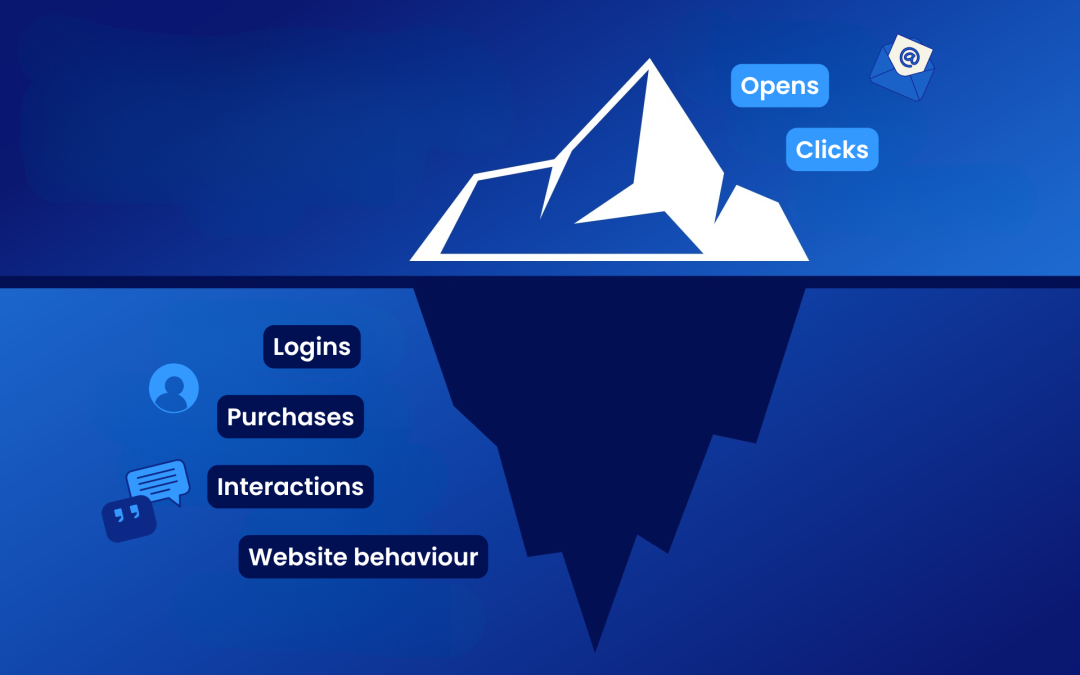
Open rates and click-through rates tell you something, but they do not tell you whether your personalization is actually driving value. A highly personalized email campaign might generate strong opens but weak conversions. If you are optimizing for the wrong metric, you will keep improving the wrong thing.
Tie your personalization measurement to outcomes that matter: conversion rate, repeat purchase rate, average order value, churn reduction, and LTV. For a retail brand, the question is not “did they open the email?” It is “did they buy, and did they come back?” Build your reporting framework around those outcomes, and your personalization strategy will sharpen accordingly.
How Deployteq helps with predictive personalization
We built Deployteq specifically to help marketing teams close the gap between data and action. Predictive personalization is not just a feature in our platform. It is embedded into how we help brands design smarter customer journeys from day one.
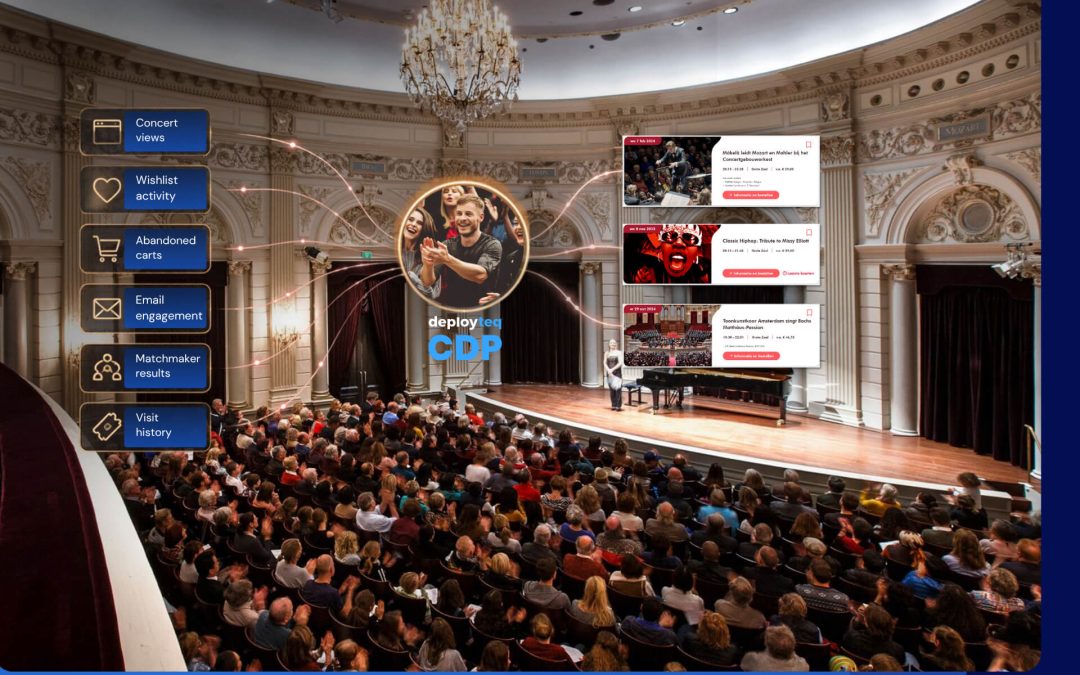
- Unified customer data: Our Customer Data Platform consolidates data from every touchpoint into a single customer profile, eliminating silos and enabling real-time personalization across every channel.
- Built-in RFM and next-best-offer modeling: We offer intelligent modeling frameworks out of the box, so you can segment smarter and predict what each customer needs next without building models from scratch.
- Real-time segmentation: Our platform updates customer segments dynamically based on live behavioral signals, so your campaigns always respond to what customers are doing now.
- Cross-channel activation: Deploy personalized experiences across email, SMS, WhatsApp, push, and web from a single platform, with channel-specific logic built in.
- Outcome-focused analytics: Track the metrics that matter, from conversion and LTV to churn reduction, so you can measure what your personalization is actually delivering.
If your current platform is making these mistakes harder to fix rather than easier to solve, it might be time to see what a purpose-built solution looks like. Do a self-guided demo and see how Deployteq puts smarter personalization within reach.