Predictive personalization is a marketing approach that uses machine learning and historical customer data to anticipate what each individual wants next and deliver it automatically, before they even ask. Instead of reacting to behaviour, it gets ahead of it. It applies to any brand managing large customer bases across multiple channels, from retail to travel to finance.
The core idea is straightforward: the more you understand about how a customer has behaved in the past, the more accurately you can predict what they will do, buy, or respond to next. That predictive layer is what separates AI personalization from standard rule-based automation. The sections below unpack how it works, what data it needs, and when it makes commercial sense to invest.
How does predictive personalization actually work?
Predictive personalization works by applying machine learning models to historical customer data to generate individual-level predictions about future behaviour. These predictions then trigger personalized content, product recommendations, or messaging automatically across your marketing channels. The system improves over time as more data flows in and models are retrained.
At its core, the process runs in three stages. First, data is collected and unified from across your channels: purchase history, browsing behaviour, email engagement, app activity. Second, models analyse patterns in that data to produce scores or predictions for each customer: likelihood to purchase, predicted next category, churn risk, and so on. Third, those predictions are activated in real time, dynamically adjusting what each customer sees in an email, on your website, or via push notification.
The “predictive” element is what makes this different from standard automation. A standard rule says: “If a customer bought X, send them Y.” A predictive model says: “Based on everything we know about this customer, they are most likely to respond to Z right now.” That shift from reactive to anticipatory is where the commercial value lives.
What types of data does predictive personalization rely on?
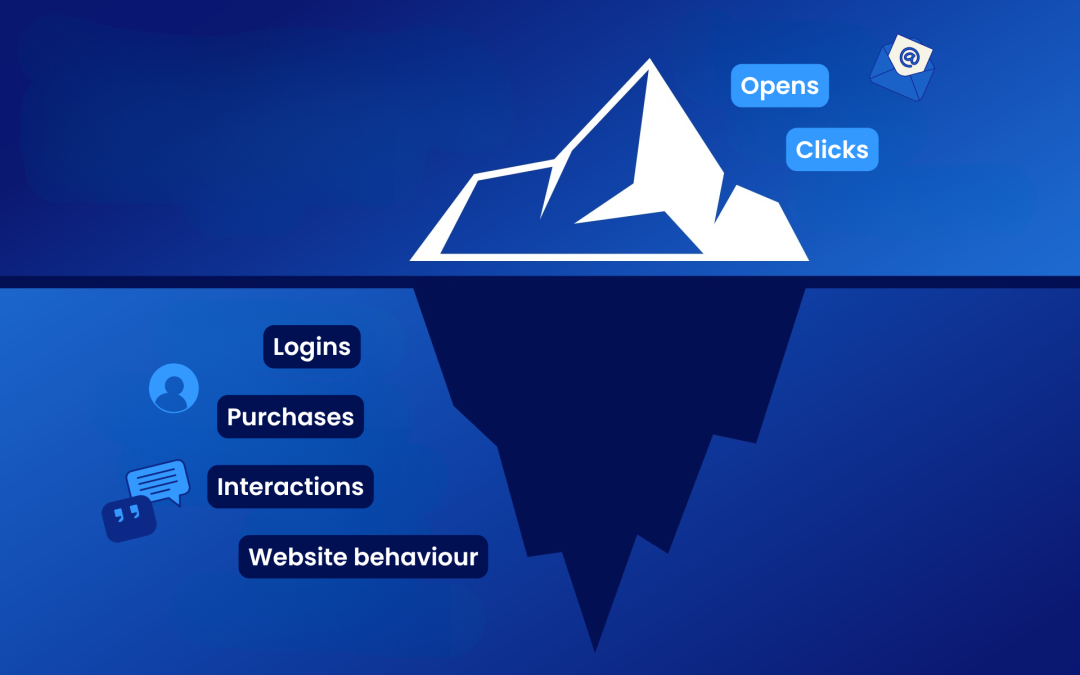
Predictive personalization relies on three core data types: behavioural data (what customers do), transactional data (what they buy), and contextual data (when, where, and how they engage). The richer and more unified this data, the more accurate and actionable your predictions become.
- Behavioural data: Page views, email opens, click patterns, app sessions, and search queries. This reveals intent signals in real time.
- Transactional data: Purchase history, order value, frequency, and product categories. This is the foundation for models like RFM (Recency, Frequency, Monetary value).
- Contextual data: Device type, time of day, location, and channel preference. This shapes when and how to deliver personalized content.
- Demographic and CRM data: Customer lifecycle stage, loyalty tier, and profile attributes. This adds structural context to behavioural patterns.
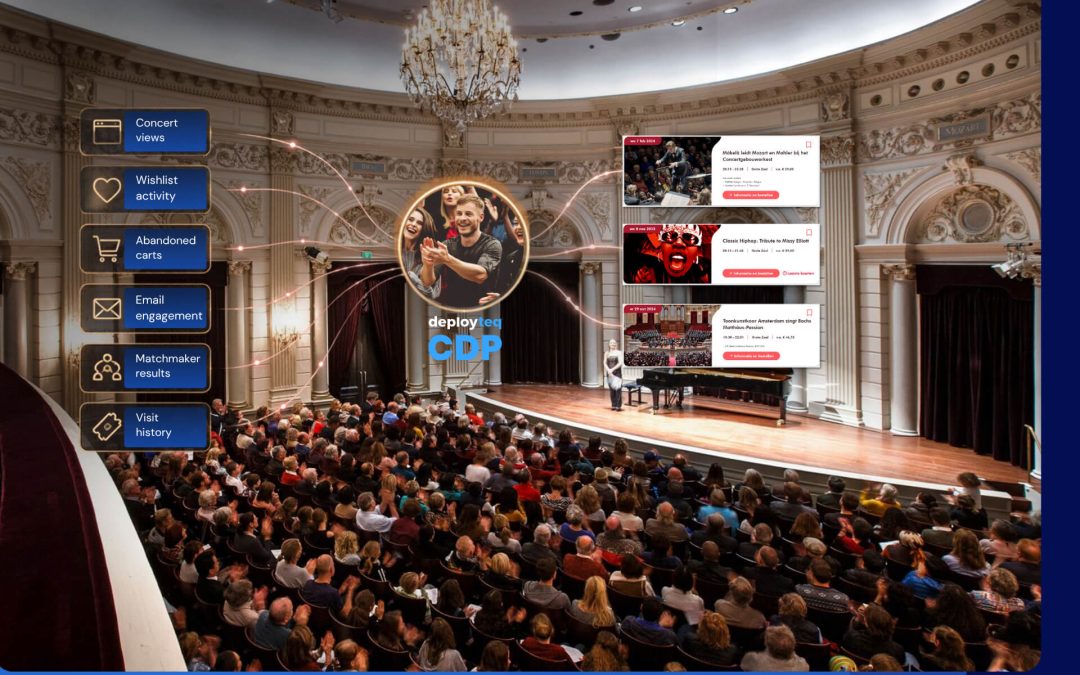
The critical factor is data unification. Predictive models fail when data sits in silos: your email platform does not talk to your CRM, which does not connect to your web analytics. A customer data platform solves this by consolidating all sources into a single, actionable customer profile that your models can actually learn from.
What are the most common use cases for predictive personalization?
The most common use cases for predictive personalization include next-best-offer recommendations, churn prevention, dynamic send-time optimisation, and personalized content sequencing. These applications span retail, travel, finance, and entertainment, any sector where customer lifetime value matters.
Next-best-offer and product recommendations
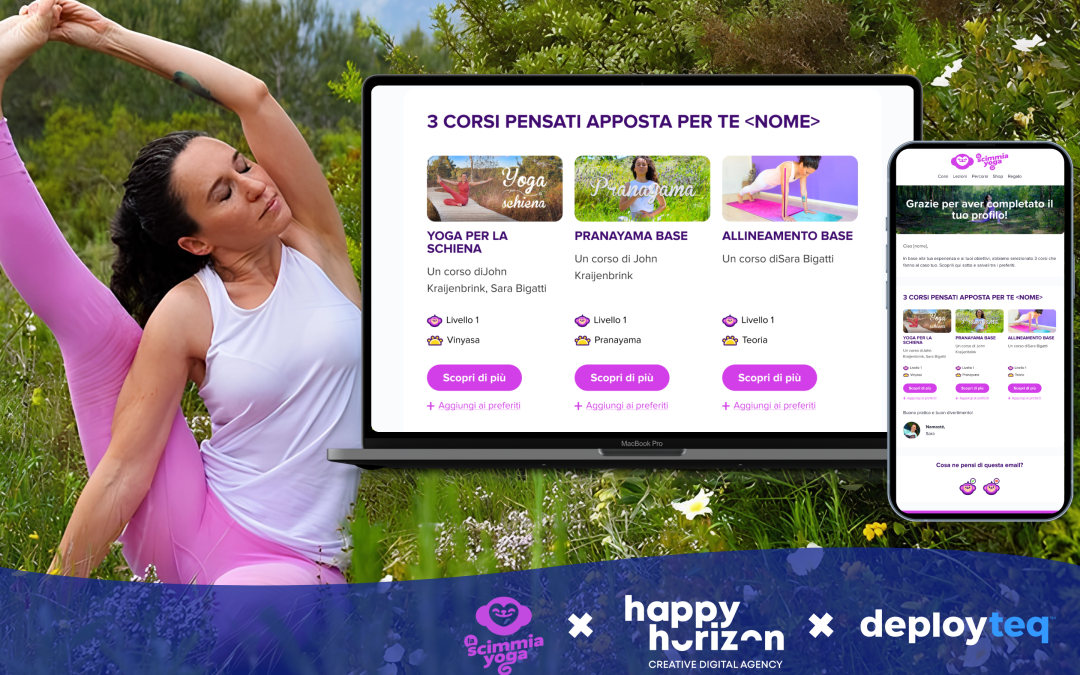
This is the highest-volume use case. Rather than showing every customer the same promotional banner, predictive models identify which product, category, or offer each individual is most likely to convert on. For a retail brand, this means a customer who buys running shoes sees trail socks and hydration packs, not a generic sale banner. The model learns which combinations drive conversion and refines recommendations continuously.
Churn prediction and win-back campaigns
Predictive models can score customers by their likelihood to lapse before they actually go quiet. A travel brand, for example, might identify high-LTV customers whose booking frequency is dropping and trigger a personalized win-back sequence, a tailored destination offer based on their past trips, weeks before they would have churned. Acting early is far more cost-effective than re-acquiring a lapsed customer.
Send-time and channel optimisation
Predictive personalization also applies to delivery mechanics. Models analyse when each individual customer is most likely to open and engage, then schedule sends accordingly. Across a database of hundreds of thousands, this can meaningfully lift open rates without changing a single line of copy.
How is predictive personalization different from traditional segmentation?
Traditional segmentation groups customers by shared attributes, age bracket, purchase category, geographic region, and sends the same message to everyone in that group. Predictive personalization operates at the individual level, generating unique predictions and content variations for each customer based on their specific behaviour and history.
The practical difference is precision. A traditional segment might be “customers who bought in the last 90 days.” A predictive model goes further: “this specific customer has a 78% probability of purchasing again in the next two weeks, and their next most likely category is homeware.” That granularity changes what you send, when you send it, and what you offer.
Traditional segmentation is also static between campaigns. You build the segment, run the campaign, then rebuild. Predictive personalization is dynamic: scores update in real time as customer behaviour changes, so your targeting stays current without manual intervention. That is the core reason brands managing large, high-frequency customer bases move toward marketing automation with predictive capabilities built in.
What tools and platforms support predictive personalization?
Predictive personalization is supported by platforms that combine customer data unification with built-in machine learning models. These typically include customer data platforms (CDPs), advanced marketing automation platforms, and dedicated AI personalization engines. The most practical setups are those where prediction and activation live in the same platform.
When evaluating tools, look for these capabilities:
- Unified data layer: The platform must consolidate data from all your channels into a single customer profile. Without this, models are working from incomplete information.
- Built-in predictive models: Look for RFM scoring, next-best-offer modelling, churn prediction, and send-time optimisation as native features rather than add-ons requiring a data science team.
- Real-time activation: Predictions are only valuable if they trigger personalized content immediately across email, SMS, push, and web without manual steps between insight and execution.
- Cross-channel orchestration: The platform should manage the full customer journey, not just a single channel, so predictions inform the right touchpoint at the right moment.
Platforms that separate data, modelling, and activation into different tools create friction and slow down execution. The most effective setups for marketing teams, particularly those without in-house data science resource, are those where the predictive intelligence is embedded directly into the campaign workflow.
When should a brand start investing in predictive personalization?
A brand should start investing in predictive personalization when it has a sufficiently large and unified customer dataset, clear LTV goals, and the operational capacity to act on predictions across at least one channel at scale. For most B2C brands, that threshold arrives earlier than expected, often when a team is already managing segmented email campaigns and noticing diminishing returns.
The practical signals that you are ready include:
- Your customer database exceeds a meaningful volume where individual-level targeting would outperform broad segments
- You have transactional and behavioural data that is already being collected, even if not yet unified
- Your team is spending significant time manually building and refreshing segments
- You are seeing engagement drop-off that rule-based automation is not recovering
- Churn or lapse rates are a priority commercial problem
The common mistake is waiting until data is “perfect.” In practice, models improve as they run, starting with the data you have and refining over time is more valuable than delaying. The cost of inaction is continued reliance on broad segmentation while competitors move toward hyper-personalized experiences that convert better and retain longer.
How Deployteq powers predictive personalization
We built predictive personalization directly into our platform so marketing teams can act on intelligence without needing a data science team sitting next to them. Here is what that looks like in practice:
- Built-in CDP: Our Customer Data Platform unifies data from every channel into a single customer profile, giving predictive models the complete picture they need to generate accurate scores.
- Native predictive models: RFM scoring, next-best-offer recommendations, and predictive insights are available directly within the platform, no third-party tools, no complex integrations.
- Real-time activation: Predictions trigger personalized campaigns across email, SMS, WhatsApp, push, and web automatically, the moment a customer’s score changes.
- Smart segmentation: Dynamic segments update in real time based on predictive scores, so your targeting stays accurate between campaigns without manual rebuilds.
- Journey builder: Design customer journeys that branch based on predictive signals, serving the right content at the right moment, across every channel.
If you are ready to move beyond rule-based automation and see what AI personalization looks like inside a platform built for marketers, do a self-guided demo and explore it at your own pace.