You should move from email marketing to omnichannel marketing when email alone can no longer sustain the growth your customer base demands. For most brands, that moment arrives when open rates plateau, engagement drops outside the inbox, and you can see customers interacting with your brand across multiple touchpoints but your data does not connect those dots. The questions below will help you work out exactly where you stand and what to do next.
What are the signs your email marketing has hit its limits?
Email marketing has hit its limits when you are seeing diminishing returns despite strong list hygiene, solid subject lines, and well-timed sends. If your open rates are stable but revenue per email is falling, or if customers are engaging on social and web but not converting through email, the channel is no longer doing the full job on its own.
Watch for these specific signals:
- Engagement is channel-specific: Customers open emails but ignore them at the point of purchase, or they browse your app without ever clicking through from a campaign.
- Segmentation has hit a ceiling: You have exhausted your email list segments, and personalisation feels shallow because you only have inbox behaviour to work with.
- Re-engagement campaigns are failing: Lapsed subscribers are not responding to win-back flows, but they are still active on other channels.
- You are sending more to get the same results: Volume is creeping up while revenue per send stays flat or declines.
- Customer journeys feel fragmented: A customer abandons a cart, you send an email, they ignore it, and you have no way to follow up via SMS or push without starting a separate, disconnected workflow.
None of these signals mean email is broken. They mean email needs company. marketing automation that spans multiple channels gives you the reach to pick up where email leaves off.
What is the difference between multichannel and omnichannel marketing?
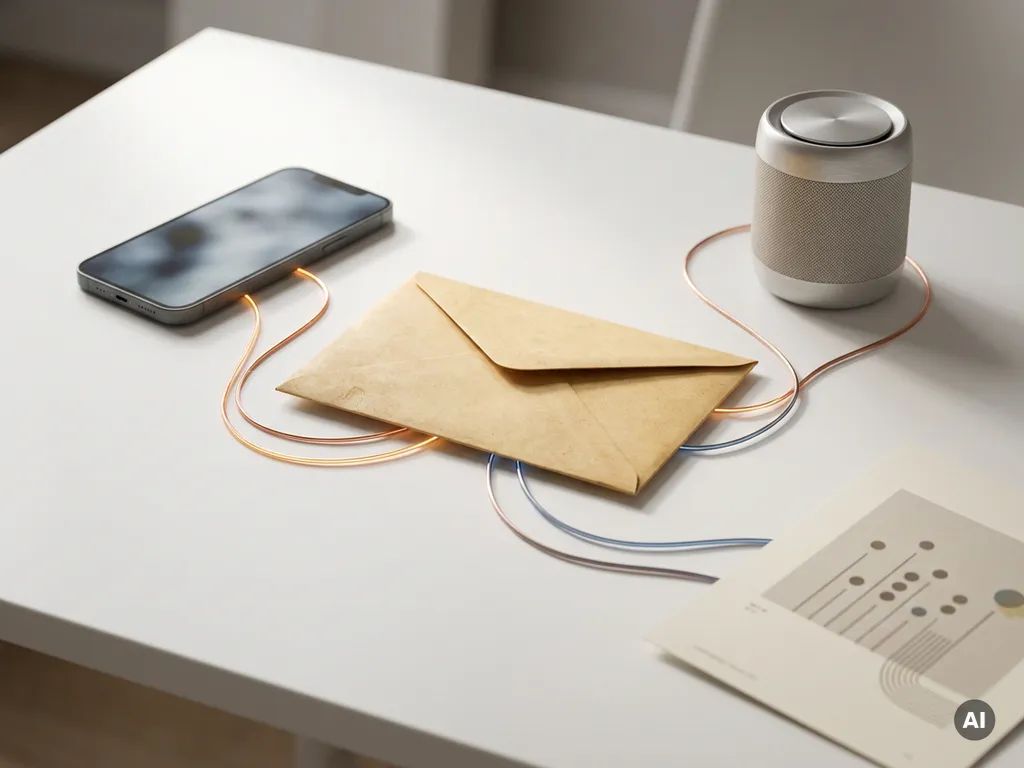
Multichannel marketing means being present on several channels. Omnichannel marketing means those channels share data, logic, and context so the customer experience is consistent and continuous regardless of where the interaction happens. The difference is not the number of channels; it is whether those channels talk to each other.
In a multichannel setup, your email team runs email, your social team runs paid ads, and your SMS platform fires transactional messages. Each channel works independently. A customer who clicks an email and then visits your site may get the same generic ad they would have seen anyway, because the channels do not share that signal.
In a true cross-channel marketing setup, that click triggers a suppression on the paid ad, updates the customer’s profile in real time, and informs the next touchpoint, whether that is a personalised push notification, an SMS follow-up, or a tailored landing page. The customer feels like your brand knows them. That is the practical difference.
Which industries benefit most from omnichannel marketing?
Omnichannel marketing delivers the strongest results in industries where customers have long consideration cycles, high lifetime value, or frequent repeat interactions. Travel and leisure, retail and e-commerce, financial services, and entertainment all see outsized gains because their customers move across multiple touchpoints before and after converting.
- Travel and leisure: A customer researches a holiday on desktop, opens a price-drop email on mobile, and books via app. Omnichannel connects those moments so you can trigger the right message at the right stage of the booking window.
- Retail and e-commerce: Cart abandonment, back-in-stock alerts, and post-purchase loyalty flows all perform better when email, SMS, and push work together rather than in isolation.
- Financial services: Complex product lifecycles and trust-sensitive decisions mean customers need consistent, timely communication across every channel they use, not a fragmented set of messages from separate teams.
- Entertainment: High-frequency engagement, content-based triggers, and subscription renewals all benefit from coordinated cross-channel messaging that adapts to what a customer has already consumed.
How does customer data change when you go omnichannel?
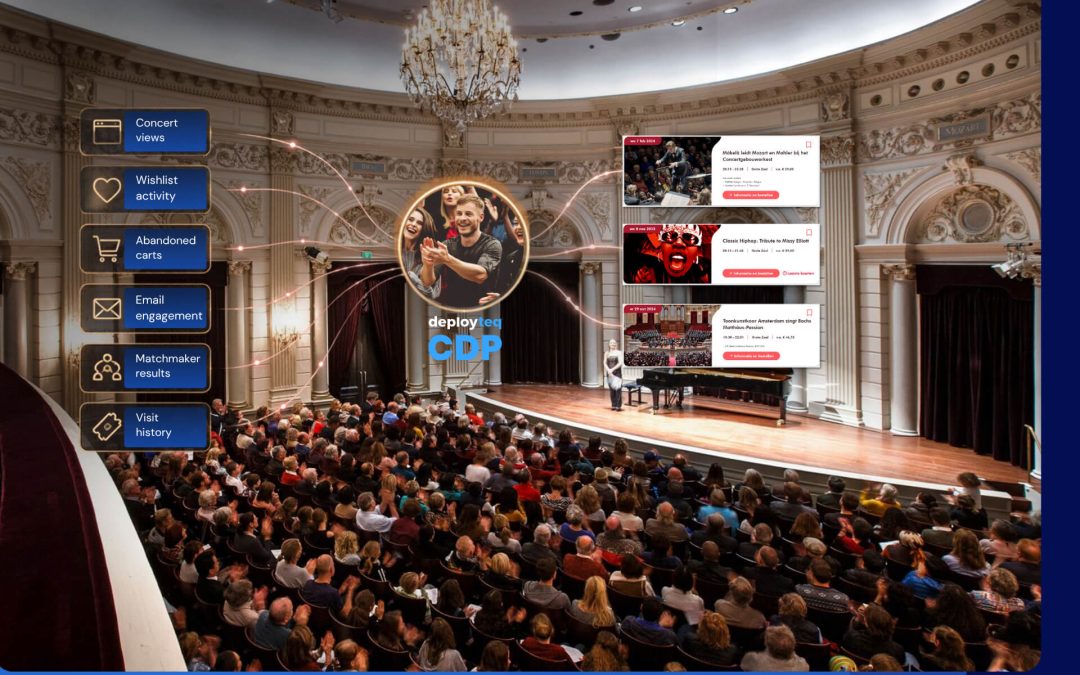
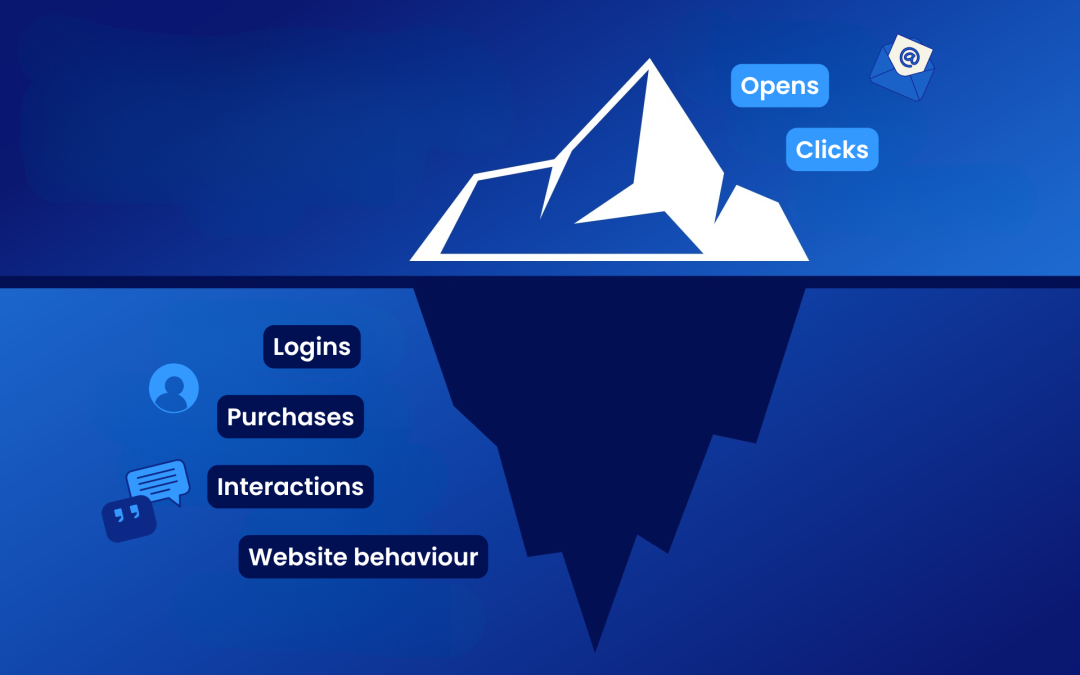
When you go omnichannel, customer data shifts from channel-specific records to a unified profile that captures behaviour, preferences, and history across every touchpoint. Instead of an email open rate and a separate web session log, you build a single view of each customer that updates in real time as they interact with your brand anywhere.
This has practical implications for how you segment and personalise. With siloed data, your segments are limited to what a single channel can observe. With unified data, you can build segments based on combined signals, for example, customers who have browsed a product category three times in the last seven days but have not purchased, regardless of whether those sessions happened via email click, direct web visit, or app browse.
A customer data platform is typically the infrastructure that makes this possible. It consolidates identities across channels, resolves duplicate records, and makes that enriched data available for real-time segmentation and journey triggering. Without it, omnichannel is a channel strategy without a data strategy, and the two are inseparable.
Should you replace email or add channels around it?
You should add channels around email, not replace it. Email remains one of the highest-ROI channels available to marketers, and the goal of omnichannel marketing is not to dilute that; it is to extend your reach and fill the gaps email cannot cover on its own. Email is your foundation; omnichannel is the structure you build on top of it.
Think of it this way: email excels at delivering detailed, considered content to customers who have opted in. SMS excels at time-sensitive nudges. Push notifications are powerful for in-the-moment triggers when a customer is already in your app. Social retargeting catches customers who have gone quiet in the inbox. Each channel has a job to do, and email does not do all of them.
The practical approach is to start with your highest-value journeys, cart abandonment, post-purchase, loyalty re-engagement, and identify the moments where email alone is not converting. Then add the channel that fits the moment, rather than building out every channel at once. This keeps complexity manageable and lets you prove value incrementally.
What tools do you need to run an omnichannel marketing strategy?
To run an effective omnichannel marketing strategy, you need three core capabilities: unified customer data, a cross-channel campaign execution layer, and a journey builder that can apply logic across all active channels simultaneously. Without all three, you have a multichannel setup rather than a genuinely omnichannel one.
- Unified customer data: A customer data platform or equivalent data layer that consolidates profiles, resolves identities, and makes behavioural data available in real time for segmentation and triggering.
- Cross-channel execution: The ability to send and manage email, SMS, push notifications, WhatsApp, and web personalisation from a single platform, not a patchwork of separate tools connected by fragile integrations.
- Journey builder with smart logic: A visual workflow tool that can branch based on channel behaviour, apply suppression logic across channels, and trigger next-best-action steps without manual intervention.
- Predictive and RFM modelling: Intelligent models that help you prioritise which customers to engage, through which channel, and with what offer, so your automation decisions are data-driven rather than instinct-driven.
- Reporting that spans channels: Attribution and performance data that shows how channels work together, not just how each one performs in isolation.
The simpler your tech stack, the easier it is to keep data consistent and journeys coherent. A single platform that handles data and execution together is almost always preferable to assembling multiple point solutions.
How Deployteq powers your omnichannel marketing strategy
We built Deployteq to solve exactly the challenges this article describes. Our platform gives marketing teams a single place to unify customer data, build intelligent journeys, and execute across every channel that matters, without the complexity of stitching together separate tools.
Here is what that looks like in practice:
- Unified customer profiles: Our CDP consolidates data from every touchpoint, resolves identities, and makes enriched segments available for real-time activation across campaigns.
- Cross-channel execution in one platform: Email, SMS, WhatsApp, push notifications, and web personalisation, all managed from a single interface with consistent logic and suppression rules applied across every channel.
- Smart journey builder: Build sophisticated cross-channel workflows with real-time triggers, conditional branching, and next-best-action logic. No manual handoffs between platforms.
- Predictive modelling built in: RFM analysis, next-best-offer recommendations, and predictive insights help you prioritise the right customers and the right moments automatically.
- Sector-proven performance: Trusted by brands in travel, retail, finance, and entertainment, including Wickes, Virgin Media, and Center Parcs, we understand the complexity of high-volume, multi-touchpoint customer bases.
If your email marketing has hit its ceiling and you are ready to build something bigger around it, book a personalised demo and we will show you exactly how it works for your sector and your data.