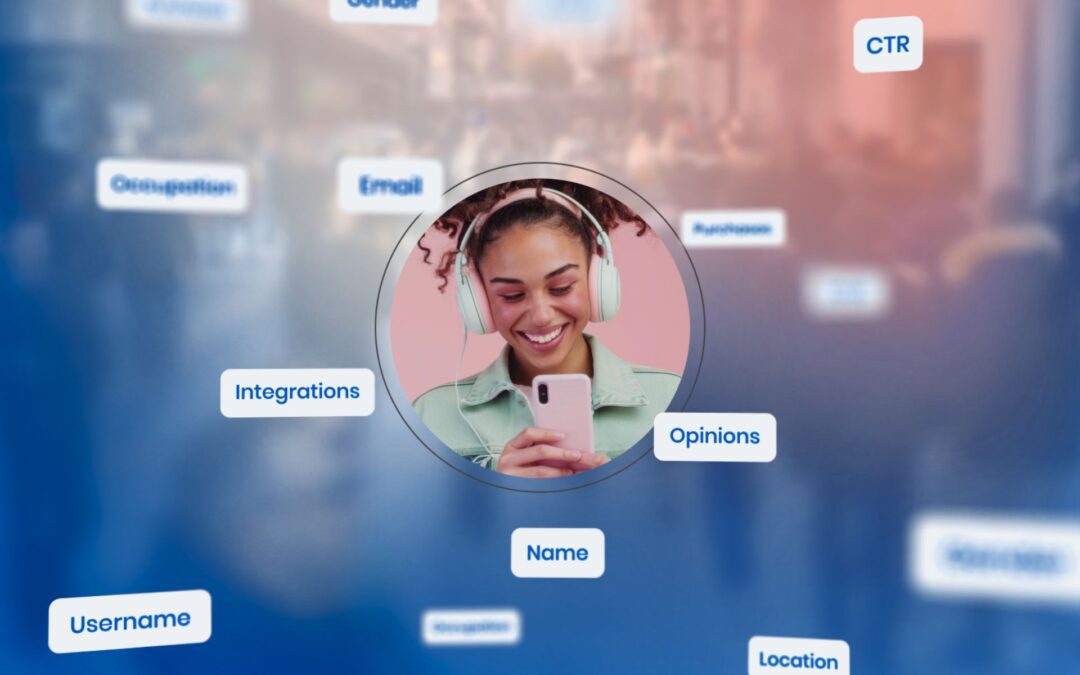
Your data is everywhere. CRM in one tool, email engagement in another, web behaviour tracked separately, and purchase history buried in your ecommerce platform. On paper, you have plenty of customer data. In practice, none of it talks to each other. This is the reality of customer data silos, and in 2026, it is one of the most damaging and most overlooked conversion killers in B2C marketing.
If you are serious about data unification and want to understand exactly where fragmented data is costing you revenue, this is where to start.
How fragmented data quietly kills your conversions
Scattered customer data does not just create operational headaches. It actively undermines your ability to convert. When your systems hold disconnected snapshots of the same customer, every decision you make downstream, from segmentation to automation to personalisation, is built on incomplete information.
The result is not just inefficiency. It is lost revenue, frustrated customers, and marketing spend that misses its mark. Here are the eight ways it plays out in practice.
1: Incomplete customer profiles distort segmentation
Segmentation is only as good as the data feeding it. When customer records are spread across disconnected platforms, you are building segments on partial profiles. A customer who bought twice last quarter, browsed three product categories this week, and opened your last four emails looks very different from a lapsed customer. But if your email platform cannot see their purchase history, you treat them the same way.
Distorted segments produce campaigns that miss the mark. High-value customers receive generic re-engagement messages. New customers get loyalty offers they have not earned yet. The mismatch erodes relevance, and relevance is what drives clicks and conversions. Knowing how to unify customer data across your stack is the first step to fixing this at the source.
2: Repeated messaging drives unsubscribes
Without a unified view, your channels operate in silos. Email sends a promotional offer. SMS sends the same one two hours later. Push notification fires the next morning. From your side, it looks like thorough coverage. From your customer’s side, it looks like spam.
Frequency fatigue is a direct consequence of scattered data. When suppression lists, send histories, and engagement signals are not shared across channels, you lose the ability to orchestrate communication intelligently. Unsubscribe rates climb. Complaint rates follow. And once a customer opts out, recovering them is expensive and slow.
3: Personalisation fails without a unified data view
Personalisation at scale requires a single, accurate picture of each customer. Their purchase history, browsing behaviour, preferred channels, lifecycle stage, and real-time intent all need to be visible in one place before you can act on them meaningfully.
When that data lives in separate tools, personalisation becomes surface-level. You can merge a first name into a subject line, but you cannot trigger a next-best-offer based on last week’s browsing session if your email platform cannot see your website data. For retail and travel brands managing complex customer lifecycles, this gap is where conversion opportunities disappear. A proper customer data platform closes that gap by connecting behavioural, transactional, and demographic data into one actionable profile.
4: Slow data syncs mean missed conversion windows
Conversion windows are short. A customer who abandons a cart, searches for a flight, or opens a product page has a narrow window of high intent. If your data sync runs on a nightly batch, that window is already closed by the time your automation fires.
Delayed data does not just slow your campaigns. It makes them irrelevant. A cart recovery email sent 18 hours after abandonment is far less effective than one triggered within the hour. Real-time data activation is not a luxury in 2026. It is the baseline for competitive marketing automation that actually converts.
5: Attribution becomes guesswork across channels
If you cannot connect a conversion back to the specific touchpoints that drove it, you cannot optimise your spend. Siloed data makes attribution almost impossible. You know email drove opens. You know paid social drove clicks. But which combination, in which sequence, actually produced the purchase? Without unified data, you are guessing.
Poor attribution leads to poor budget decisions. Channels that assist conversions get defunded. Channels that appear to convert but mostly capture last-click credit get over-invested. Your marketing mix shifts based on incomplete evidence, and your overall conversion rate suffers for it.
6: Journey automation breaks at data handoff points
Automated journeys depend on data flowing cleanly between systems. When a customer completes a purchase, that signal needs to reach your email platform, your SMS tool, and your segmentation engine simultaneously. When it does not, journeys break. Customers receive post-purchase onboarding emails for products they have already returned. Loyalty triggers fire for customers who have already churned.
These failures are not just embarrassing. They damage the customer experience at moments that matter most. Every broken handoff is a signal to your customer that you do not actually know them, which undermines the trust your marketing has worked to build.
7: Compliance risk rises with scattered data
GDPR and similar data regulations require you to know exactly what data you hold, where it lives, and how it is being used. When customer data is scattered across multiple platforms, that visibility disappears. Consent records in one system may not reflect opt-outs recorded in another. Data retention policies applied in your CRM may not extend to your email tool.
A scattered customer data solution is not just a marketing problem. It is a legal exposure. Regulators do not accept “our systems were not connected” as a defence. Centralising your data is one of the most practical steps you can take to reduce compliance risk while also improving marketing performance.
8: What does inconsistent data do to customer trust?
Customers notice when you get it wrong. Receiving a discount offer for a product they already purchased. Being addressed by the wrong name. Getting a re-engagement email the same day they made a purchase. Each of these moments signals that your brand does not have a coherent view of who they are.
Trust is hard to build and easy to lose. Inconsistent data creates inconsistent experiences, and inconsistent experiences erode the confidence customers have in your brand. In sectors like finance and travel, where customers are making high-stakes decisions, that erosion directly translates to lost conversions and reduced LTV.
How Deployteq helps you unify customer data
We built our Customer Data Platform specifically to solve the problems outlined above. It is not a bolt-on tool. It is a unified layer that brings together all your customer data, connects the dots, and makes that intelligence immediately actionable across every channel you run.
Here is what that looks like in practice:
- 360-degree single customer view: Every interaction, purchase, browsing session, and engagement signal unified into one intelligent profile, in real time.
- Intelligent modelling built in: RFM scoring, next-best-offer recommendations, and predictive lifecycle insights are available directly within your campaigns, with no data science team required.
- Seamless cross-channel activation: Trigger personalised messages across email, SMS, WhatsApp, push, and web from a single data source, so your channels work together instead of against each other.
- Smarter segmentation: Build hyper-precise segments based on real behaviour and real intent, not partial data snapshots.
- Compliance confidence: Centralised data means centralised consent management, making it easier to stay compliant without slowing down your campaigns.
If scattered data is costing you conversions, the fix starts with getting your data into one place. Book a demo and see how Deployteq turns fragmented data into a genuine competitive advantage.
Related Articles
- 6 reasons to replace your ESP with a customer data platform
- What makes customer data truly actionable for marketing teams?
- Can a CDP replace your existing marketing automation platform?
- How does marketing automation impact customer privacy expectations?
- Top 8 email marketing compliance mistakes that cost businesses
This content was generated with the help of AI — it may contain mistakes