Your ESP got you started. It handled the basics, sent campaigns, and kept things moving. But in 2026, the gap between what an email service provider can do and what your customers actually expect has never been wider. If you’re hitting walls with segmentation, struggling to connect data across channels, or relying on manual workarounds to make your campaigns feel personal, your tool is the problem, not your strategy. A customer data platform changes that entirely. Here are six reasons why making the switch is worth it.
When your ESP starts holding back growth
Most ESPs were built to send emails. That’s it. They’re not designed to unify data, power cross-channel journeys, or give you the predictive intelligence modern marketers need to compete. When your team spends more time exporting CSVs and stitching together data than actually building campaigns, that’s a signal. Growth stalls not because of effort, but because the platform can’t keep up.
A CDP is built differently. It centralises customer data, connects your channels, and puts real-time intelligence directly inside your campaign workflow. The result is faster execution, smarter targeting, and campaigns that actually reflect how your customers behave.
1: Unify all customer data in one place
Fragmented data is one of the most common barriers to effective marketing. When customer information lives across your CRM, ecommerce platform, loyalty system, and ESP in separate silos, building a complete picture of any individual customer becomes nearly impossible.
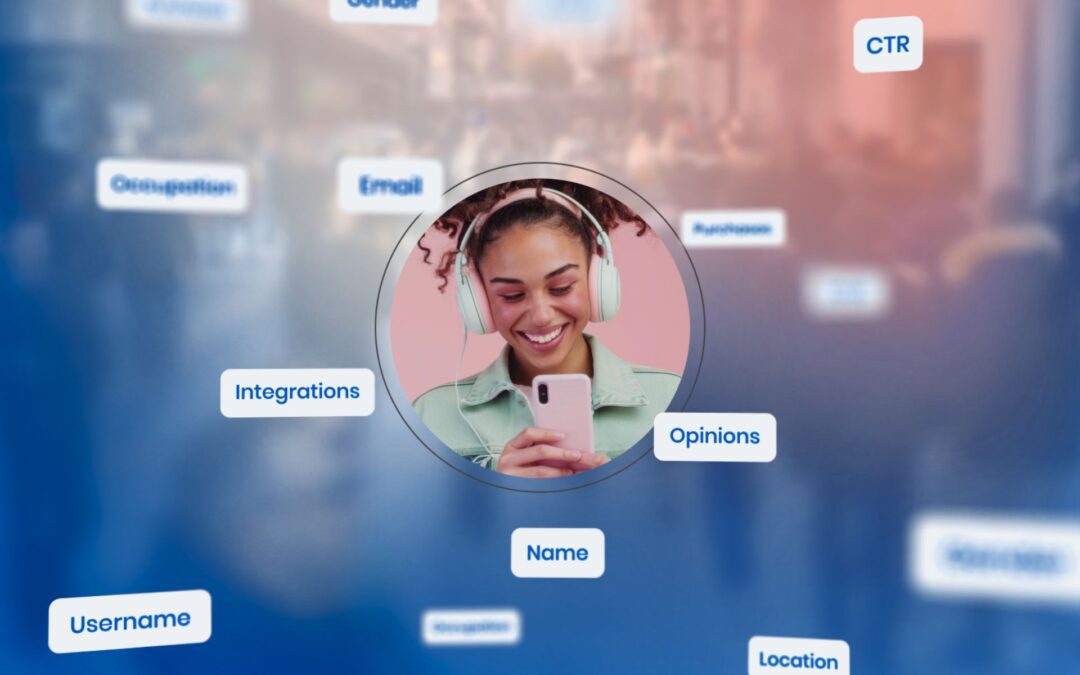
A CDP pulls all of that together into a single customer profile. Every purchase, browse, click, and interaction is consolidated into one unified view. For a travel brand, this means connecting booking history, loyalty tier, destination preferences, and email engagement into one profile you can actually act on.
With a unified customer view, your segments become more accurate, your triggers fire at the right moment, and your team stops wasting time reconciling data from five different sources.
2: Build segments that actually reflect behaviour
Static lists and basic demographic filters were fine when email was the only channel. But today’s customers expect relevance, and relevance requires behavioural data. An ESP typically segments on what you know. A CDP segments on what customers do.
Real-time behavioural segmentation lets you group customers based on actions taken in the last hour, not the last month. A retail brand can identify customers who browsed a category three times this week but haven’t purchased, and trigger a targeted sequence before that intent disappears.
This level of precision isn’t a nice-to-have. It’s the difference between campaigns that convert and campaigns that get ignored.
3: Activate campaigns across every channel
Your customers don’t live in their inboxes. They interact with your brand across email, SMS, WhatsApp, push notifications, and web. An ESP manages one of those channels well. A CDP manages the relationship across all of them.
Cross-channel activation means a customer who opens an email but doesn’t convert can receive a follow-up via SMS or a personalised web banner the next time they visit your site. The message stays consistent, the timing stays relevant, and the experience feels joined up rather than disjointed.
For entertainment and hospitality brands managing high-frequency engagement, this kind of cross-channel automation is what separates brands that retain customers from those that constantly chase new ones.
4: Personalise beyond first-name tokens
Inserting a first name into a subject line is not personalisation. It’s table stakes. Real personalisation means delivering content, offers, and timing that reflect where each individual customer is in their lifecycle, what they’ve bought, what they’ve browsed, and what they’re likely to want next.
A CDP makes this possible at scale. Instead of manually building separate campaigns for different audience groups, you define the logic once and let the platform do the heavy lifting. A finance brand can serve different content to a new account holder versus a long-term customer nearing renewal, automatically, without building two separate journeys from scratch.
Hyper-personalised campaigns consistently outperform generic ones. The mechanics are simpler than most teams expect once the data infrastructure is in place.
5: Use predictive insights to drive decisions
One of the most powerful shifts a CDP enables is moving from reactive to predictive marketing. Rather than responding to what customers have already done, you can anticipate what they’re likely to do next and act before the moment passes.
Models like RFM (recency, frequency, monetary value), next-best-offer, and churn prediction give your team the intelligence to prioritise the right customers at the right time. A retail brand can identify high-LTV customers showing signs of disengagement and launch a retention campaign before they lapse, rather than trying to win them back after the fact.
This kind of intelligence used to require a dedicated data science team. A modern CDP implementation guide will show you that much of this modelling is now built directly into the platform, accessible to marketers without writing a single line of code.
6: Take full ownership of your customer data
Data ownership is increasingly important, both for compliance and for competitive advantage. When your customer data lives inside a third-party ESP with limited export options and opaque data structures, you’re effectively renting access to your own audience.
A CDP puts you in control. Your data is yours, structured the way you need it, accessible across your stack, and portable if your needs change. For brands operating across multiple markets or under GDPR obligations, this isn’t just a technical preference. It’s a business requirement.
Owning your data also means you can build on it. Richer profiles, better models, and more sophisticated journeys all become possible when you’re not working around the limitations of someone else’s data architecture.
Is it time to make the switch?
If any of the six reasons above sound familiar, the answer is probably yes. The right time to move isn’t when things break completely. It’s when you can see clearly that your current tool is capping what your team can achieve.
A practical CDP implementation guide starts with three questions: Where does your customer data currently live? Which channels do you need to activate? And what decisions do you want the platform to help you make? If your ESP can’t answer all three, you already know what’s next.
How Deployteq helps with replacing your ESP with a CDP
We built our Customer Data Platform specifically for marketers who are ready to move beyond the limitations of a standard ESP. Here’s what that looks like in practice:
- Unified customer profiles: All your data sources consolidated into a single, actionable 360-degree view of every customer.
- Intelligent modelling built in: RFM analysis, next-best-offer recommendations, and predictive lifecycle insights are available directly inside your campaign workflow, with no data science team required.
- True cross-channel activation: Run coordinated campaigns across email, SMS, WhatsApp, push, and web from one platform, with consistent logic and real-time triggers.
- Advanced segmentation: Build real-time, behaviour-based segments that update automatically as your customers interact with your brand.
- Full data ownership: Your data stays yours, structured for portability, compliance, and long-term flexibility.
Trusted by brands like Wickes, Virgin Media, and Center Parcs, we help marketing teams move faster, personalise smarter, and drive measurable results across every channel. Ready to see what it looks like for your brand? Book a personalised demo and we’ll show you exactly how it works.