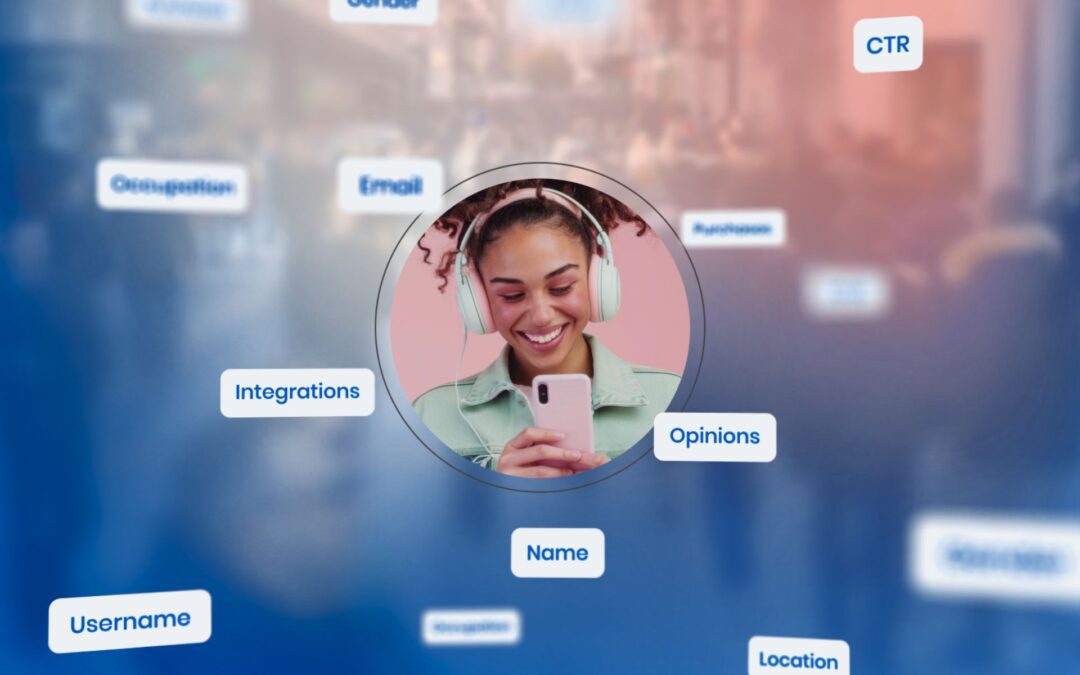
Segmentation is only as good as the data behind it. If your customer profiles are incomplete, siloed, or delayed, even the most carefully built segments will miss the mark. A customer data platform changes that by giving you a single, unified view of every customer and the tools to act on it in real time. Here are five concrete ways a CDP sharpens your marketing segmentation and drives stronger campaign results.
How segmentation falls short without unified data
Most segmentation problems start upstream. Data sits in separate tools: your ESP holds email engagement, your CRM holds purchase history, your website analytics holds browsing behaviour. Without a way to connect these sources, your segments are built on a partial picture.
The result is predictable. You send re-engagement emails to customers who bought yesterday. You promote products someone already owns. You miss high-value customers because their signals are spread across systems that never talk to each other. These are not edge cases; they are daily realities for marketers working without a CDP.
A Customer Data Platform solves this by pulling every data source into one place, building unified profiles, and making those profiles available for segmentation in real time. The five ways below show exactly how that plays out in practice.
1: Unify all customer data into one profile
The foundation of smarter segmentation is a complete customer profile. A CDP ingests data from every touchpoint, whether that is an email click, a website visit, a purchase, a loyalty redemption, or a customer service interaction, and stitches it into a single record per customer.
This matters because identity resolution is harder than it looks. The same person might interact with your brand across three devices, two email addresses, and an app. A CDP matches those signals using deterministic and probabilistic methods, so your segments reflect real people rather than fragmented identifiers.
For a retail brand, this means a customer who browses on mobile, adds to cart on desktop, and buys in-store is treated as one customer with a coherent journey, not three separate anonymous users. That accuracy is what makes every downstream segment more reliable.
2: Build real-time segments based on behaviour
Static segments built on last month’s data are already out of date. Behaviour changes fast, and your segments need to keep up. A CDP enables real-time segmentation by updating customer profiles the moment new data arrives.
When a customer browses a specific category, that signal can immediately qualify them for a relevant segment and trigger a personalised message within minutes. In travel, that might mean a customer who searches for summer holidays entering a destination-specific nurture flow before they have a chance to look elsewhere.
Real-time segments also reduce wasted spend. You stop targeting customers with offers they have already acted on, and you reach them at the exact moment their intent is highest. That timing advantage is one of the clearest performance gains a CDP delivers.
3: Use RFM modelling to prioritise audiences
RFM modelling (Recency, Frequency, Monetary value) is one of the most practical ways to rank your customer base by commercial value. A CDP automates this analysis across your full dataset, so you always know who your best customers are, who is at risk of lapsing, and who has growth potential.
Without a CDP, RFM requires manual data exports and scheduled batch processing. That means your high-value segment is always a few days behind reality. With a CDP, RFM scores update continuously, so your priority audiences reflect current behaviour rather than historical snapshots.
This is particularly valuable in retail and e-commerce, where purchase frequency can shift quickly around seasonal events or promotions. Knowing in real time that a previously high-frequency customer has gone quiet lets you act with a win-back campaign before they fully disengage.
4: Apply predictive insights to segment smarter
Predictive modelling takes segmentation beyond what customers have done and into what they are likely to do next. A CDP with built-in predictive capabilities can surface signals like churn risk, next-best-offer likelihood, or propensity to convert, and use those scores to build forward-looking segments.
This shifts your marketing from reactive to proactive. Instead of targeting customers who have already lapsed, you identify those showing early churn signals and intervene while there is still time. Instead of sending the same offer to your entire database, you match each customer to the product or service they are most likely to act on.
For finance and insurance brands managing complex customer lifecycles, predictive segments are especially powerful. Knowing which customers are approaching a renewal window or showing interest in an adjacent product lets you time your outreach with precision rather than guesswork.
5: Activate segments across every channel instantly
Building a great segment is only half the job. The other half is getting it in front of customers on the right channel at the right time. A CDP connects your segmentation layer directly to your campaign execution, so there is no lag between building a segment and activating it.
This matters because channel preference varies by customer. Some respond to email, others to SMS or push notifications, and some engage most reliably through WhatsApp. A CDP that feeds directly into your marketing automation platform means you can activate the same segment across multiple channels simultaneously, with each touchpoint personalised to that channel’s format and the customer’s behaviour.
Cross-channel activation also improves consistency. When your email, SMS, and web personalisation all draw from the same unified profile, the experience feels coherent rather than fragmented. That consistency builds trust and drives higher engagement across the board.
How Deployteq helps with CDP-powered segmentation
Our newly launched Customer Data Platform is built to turn everything above into a practical reality for marketing teams. It is designed to work directly within your existing campaigns, so there is no complex integration project standing between your data and your results.
Here is what you get with Deployteq’s CDP:
- Unified customer profiles: Every data source connected into a single 360-degree view per customer, with automatic identity resolution across devices and channels.
- Real-time behavioural segments: Segments that update the moment a customer takes an action, so your targeting always reflects current intent.
- Built-in RFM and predictive modelling: Automated scoring for recency, frequency, and monetary value, plus next-best-offer and churn prediction, without needing a data science team.
- Direct campaign activation: Segments activate instantly across email, SMS, WhatsApp, push, and web, all from within the same platform.
- Full lifecycle visibility: A visual, connected view of every customer’s journey so you can personalise at every stage, not just the obvious ones.
If your current segmentation is limited by siloed data or slow batch processing, this is the upgrade that removes those constraints. Book a demo to see how the Deployteq CDP works in practice.
Sharper segments, stronger campaign results
A CDP does not just improve segmentation at the edges. It changes what is possible. When every customer profile is complete, current, and connected to your campaign tools, you can build segments that actually reflect how real customers behave, and act on them before the moment passes.
The five capabilities above work together. Unified data makes real-time segments possible. Real-time segments make RFM and predictive modelling more accurate. And accurate models only deliver value when you can activate them instantly across every channel your customers use.
Start with the data foundation, build from there, and the results follow. That is the practical case for a CDP implementation in 2026.