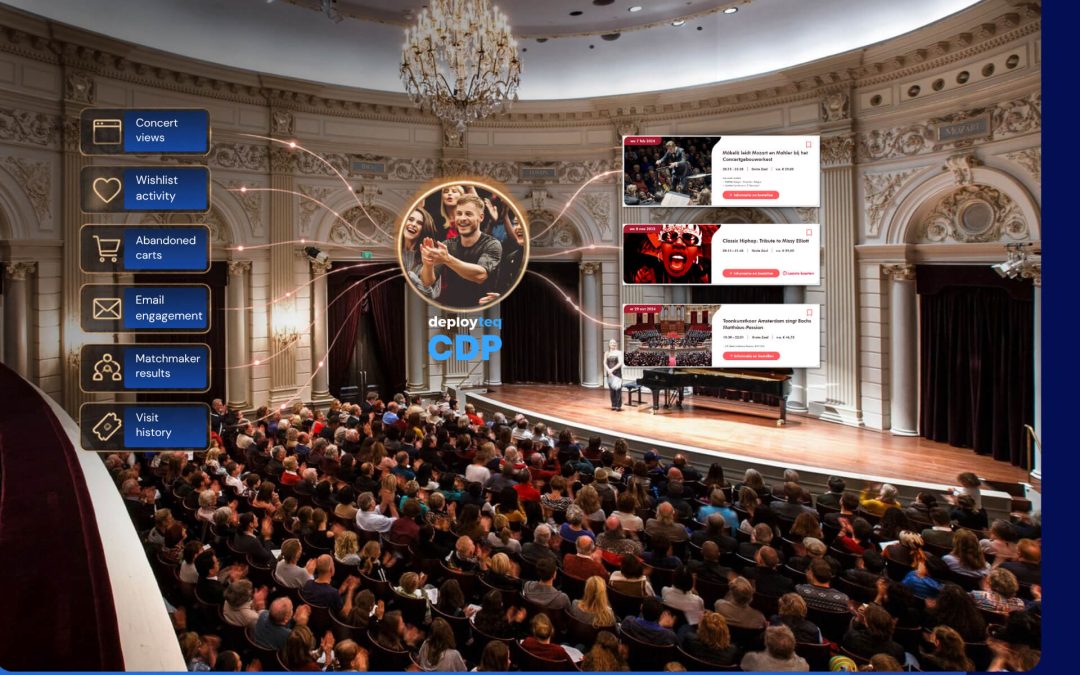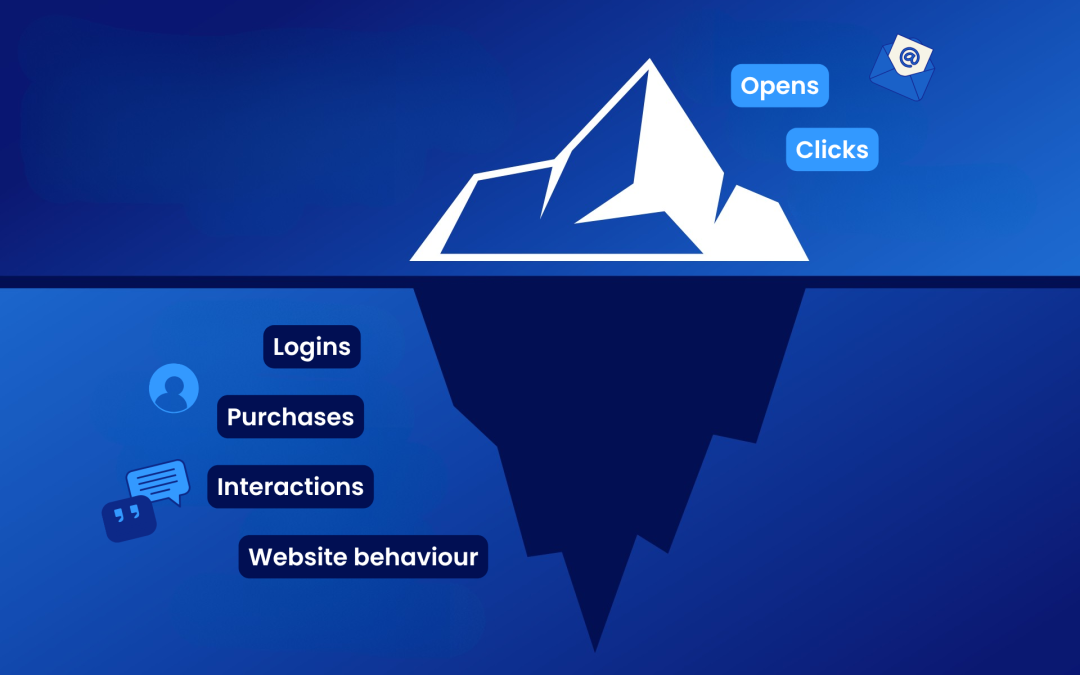
A customer data platform unifies customer data by ingesting information from every touchpoint — website visits, email clicks, purchase history, app behaviour, and more — and stitching it together into a single, persistent customer profile. Unlike tools that store data in silos, a CDP platform resolves identities across sources so you get one coherent view of each person. Below, we unpack exactly how that works and what it means for your marketing.
What types of customer data does a CDP bring together?
A CDP platform brings together four core categories of customer data: behavioural data (site visits, clicks, app usage), transactional data (purchases, returns, order history), demographic data (name, location, preferences), and contextual data (device type, channel, timing). The platform ingests these in real time from APIs, CRMs, web trackers, and offline sources.
Most marketing teams are sitting on rich data — they just cannot connect it. A CRM holds purchase history. An email platform holds engagement rates. A web analytics tool holds browsing behaviour. Each system tells part of the story, but none tells the whole story.
A customer data platform acts as the connective layer. It pulls structured data (like transaction records) and unstructured data (like support chat logs) into one place. It handles first-party data you collect directly, as well as second-party data shared by partners. The result is a data foundation broad enough to power genuinely personalised experiences rather than educated guesses.
How does a CDP create a unified customer profile?
A CDP creates a unified customer profile through a process called identity resolution. It matches data points across sources — email addresses, device IDs, loyalty numbers, cookie data — and links them to a single persistent profile. That profile updates in real time as new interactions occur, so your view of each customer is always current and complete.
Think of it as assembling a jigsaw puzzle automatically. A customer might browse your travel site on mobile, open a promotional email on desktop, and book a holiday via your app. Without identity resolution, those are three anonymous sessions. With a CDP, they are one customer with a clear intent signal.
The unified profile stores not just who the customer is, but how they behave, what they prefer, and where they are in their lifecycle. That depth is what separates a real-time customer data platform from a basic data warehouse. Profiles stay live, not static, which means your segmentation and triggers reflect reality rather than last week’s export.
What is the difference between a CDP, a CRM, and a DMP?
The key distinction is purpose and data type. A CRM manages known customer relationships, primarily for sales and service teams. A DMP (Data Management Platform) handles anonymous, third-party audience data for ad targeting. A CDP platform unifies first-party data from all sources into persistent, identity-resolved profiles built specifically for marketing activation.
CRM: relationship management for known contacts
A CRM is designed around contact records and pipeline management. It is excellent for tracking sales conversations and service history, but it was not built to ingest real-time behavioural signals at scale. It tells you who bought something; it does not tell you what they almost bought or when they are likely to churn.
DMP: anonymous audiences for paid media
A DMP aggregates third-party cookie data to build audience segments for programmatic advertising. It works with anonymous profiles and short data retention windows. With third-party cookies in decline, DMPs have lost much of their utility for precision targeting, which is one reason CDPs have grown in importance.
CDP: the persistent, first-party foundation
A CDP sits between these two worlds. It works with known and unknown profiles, resolves identity over time, and retains data long enough to build meaningful lifecycle models. Crucially, it is built for marketing activation — feeding segments directly into email, SMS, push, and web channels without manual data exports or IT tickets.
How does unified data improve marketing personalisation?
Unified data improves personalisation because it eliminates the blind spots that cause generic messaging. When your platform knows a customer’s full purchase history, browsing behaviour, channel preferences, and lifecycle stage simultaneously, you can trigger the right message at the right moment — not just a segment-level approximation.
Consider a retail scenario. A customer browses winter coats three times without purchasing. They have previously bought in-store and respond well to SMS. Without unified data, your email platform sends a generic newsletter. With a CDP, you trigger a personalised SMS featuring the exact product category they browsed, timed to their typical engagement window.
Unified profiles also enable predictive modelling. Frameworks like RFM (Recency, Frequency, Monetary value) and next-best-offer models become far more accurate when they draw on complete behavioural data rather than transactional data alone. That accuracy translates directly into higher conversion rates and stronger LTV across your customer base.
For sectors like finance or travel, where customer journeys are long and complex, this matters even more. A unified view lets you identify where customers drop off, what triggers re-engagement, and which segments are approaching a natural renewal or upgrade moment. That is the difference between marketing automation that reacts and automation that anticipates.
What should you look for in a CDP platform?
When evaluating a CDP platform, prioritise real-time data ingestion, identity resolution quality, native activation across channels, and ease of use for marketers (not just data engineers). A platform that requires constant IT support to build segments will slow you down. Look for one that puts the marketer in control.
Here are the key capabilities to assess:
- Real-time processing: Can the platform update profiles and trigger campaigns the moment a behaviour occurs, not hours later?
- Identity resolution: How does it handle duplicate records, anonymous-to-known transitions, and cross-device matching?
- Segmentation depth: Can you build dynamic segments based on behavioural, transactional, and predictive attributes without writing SQL?
- Native channel activation: Does the CDP connect directly to your email, SMS, push, and web channels, or does data have to leave the platform first?
- Intelligent modelling: Does it support lifecycle models like RFM, churn prediction, or next-best-offer out of the box?
- Data governance: How does it handle consent, suppression lists, and GDPR compliance?
The best CDPs are not just data stores — they are activation engines. If a platform holds your data beautifully but still requires a developer to push a segment into a campaign, you have not solved the speed problem that makes personalisation so difficult at scale.
How Deployteq helps you unify and activate customer data
We built our Customer Data Platform to solve exactly the challenges described above — not just unifying data, but making it immediately usable by marketers. Here is what that looks like in practice:
- 360-degree single customer view: All touchpoints, channels, and behaviours are resolved into one persistent profile that updates in real time.
- Intelligent modelling built in: RFM analysis, next-best-offer recommendations, and predictive lifecycle insights are available without third-party tools or data science resource.
- Native cross-channel activation: Segments activate directly into email, SMS, WhatsApp, push, and web campaigns — no data exports, no delays.
- Marketer-friendly interface: Build complex segments and trigger journeys without writing a line of code.
- Full lifecycle visibility: Understand where every customer sits in their journey and what the next best action is.
If you are ready to move from fragmented data to hyper-personalised campaigns, book a demo and see how Deployteq’s CDP works in your environment.