When your B2C business starts sending thousands of emails each day, you might notice Mailchimp struggling to keep up. What began as a simple, user-friendly platform can quickly become a bottleneck for growing companies that need advanced segmentation, real-time automation, and enterprise-grade deliverability.
High-volume B2C senders face unique challenges that basic email platforms simply weren’t designed to handle. From pricing that scales exponentially to limited automation capabilities, understanding these limitations helps you make informed decisions about when to upgrade your email marketing infrastructure.
What Are the Main Limitations of Mailchimp for High-Volume Senders?
Mailchimp’s primary limitations for high-volume senders include restricted automation capabilities, basic segmentation tools, limited API functionality, and deliverability challenges at scale. These constraints become particularly problematic when sending hundreds of thousands of emails each month to diverse customer segments.
Mailchimp’s automation builder offers only basic, trigger-based workflows and lacks the sophisticated branching logic that B2C companies need for complex customer journeys. You can’t create advanced behavioral triggers based on real-time website activity or implement dynamic content that adapts to customer lifecycle stages.
Segmentation represents another significant hurdle. While Mailchimp provides standard demographic and engagement filters, it struggles with real-time behavioral segmentation and lacks advanced modeling capabilities such as RFM analysis or predictive scoring. High-volume B2C brands require granular audience targeting that goes beyond basic purchase history or email engagement.
API limitations further compound these issues. Mailchimp’s rate limits and data-sync restrictions make it difficult to maintain real-time customer data updates, especially for businesses with rapidly changing inventory or time-sensitive promotional campaigns.
How Does Mailchimp’s Pricing Scale for B2C Businesses?
Mailchimp’s pricing increases dramatically for high-volume senders, with costs rising from $20 per month for 2,500 contacts to over $350 per month for 100,000 contacts on its Standard plan. Premium features require even higher-tier subscriptions, making it expensive compared to enterprise marketing automation platforms.
The pricing structure becomes particularly challenging for B2C businesses because costs scale directly with contact list size, regardless of engagement levels. You pay the same amount for highly engaged customers as you do for inactive subscribers, creating inefficiencies in your marketing budget allocation.
Beyond the base pricing, Mailchimp charges additional fees for premium features that high-volume senders typically need. Advanced reporting, multivariate testing, and phone support all require upgraded plans, pushing total costs significantly higher than the advertised rates.
For businesses sending to 250,000+ contacts, Mailchimp’s pricing often exceeds $600–$800 per month, not including additional feature costs. At this scale, enterprise platforms frequently offer better value, with more sophisticated capabilities included in their base pricing.
What’s the Difference Between Mailchimp and Enterprise Email Platforms?
Enterprise email platforms offer advanced automation workflows, real-time data integration, sophisticated segmentation capabilities, and dedicated deliverability support, while Mailchimp provides basic email marketing tools suitable for smaller businesses with simpler requirements.
Automation capabilities represent the most significant difference. Enterprise platforms enable complex, multichannel customer journeys with advanced branching logic, while Mailchimp limits you to simple, linear workflows. With enterprise solutions, you can create sophisticated behavioral triggers based on website activity, purchase patterns, and engagement history.
Data integration capabilities also differ substantially. Enterprise platforms typically offer robust APIs, real-time data syncing, and customer data platform integration, enabling seamless connections with your existing tech stack. Mailchimp’s integration options remain limited and often require manual data exports and imports.
Deliverability support varies dramatically between the two approaches. Enterprise platforms provide dedicated IP addresses, advanced reputation monitoring, and direct relationships with major ISPs. Mailchimp users share IP addresses with other senders, potentially affecting delivery rates based on others’ sending practices.
When Should B2C Companies Outgrow Mailchimp?
B2C companies should consider moving beyond Mailchimp when they exceed 50,000 active contacts, need real-time behavioral triggers, require advanced segmentation beyond basic demographics, or face deliverability challenges that affect revenue. These indicators suggest your business needs enterprise-grade email marketing capabilities.
Contact volume is the most obvious trigger point. Once you consistently send to more than 50,000 contacts each month, Mailchimp’s pricing becomes less competitive while its feature limitations become more restrictive. The platform simply wasn’t designed for the complexity that high-volume B2C marketing requires.
Revenue impact from email limitations provides another clear signal. If you can’t implement the personalization strategies your business needs, or if deliverability issues cause measurable revenue loss, the platform has become a growth constraint rather than an enabler.
Technical requirements also indicate readiness for platform migration. When your team requests features such as advanced API access, real-time data syncing, or sophisticated automation workflows that Mailchimp can’t provide, it’s time to evaluate enterprise email marketing solutions.
What Are the Best Mailchimp Alternatives for High-Volume B2C Marketing?
The best Mailchimp alternatives for high-volume B2C marketing include dedicated marketing automation platforms that offer advanced segmentation, real-time behavioral triggers, multichannel capabilities, and enterprise-grade deliverability. These solutions provide the scalability and sophistication that growing B2C businesses require.
When evaluating alternatives, prioritize platforms that offer unified customer data management, enabling you to create comprehensive customer profiles that inform your email marketing strategy. Look for solutions that integrate seamlessly with your existing e-commerce platform, CRM system, and analytics tools.
Advanced automation capabilities should rank highly in your evaluation criteria. The ideal platform enables complex customer journey mapping with behavioral triggers, dynamic content personalization, and cross-channel orchestration across email, SMS, and other marketing channels.
Deliverability infrastructure is another crucial consideration. Choose platforms that provide dedicated IP addresses, advanced reputation monitoring, and direct relationships with major email providers to ensure your messages consistently reach customer inboxes.
How Deployteq Helps with High-Volume B2C Email Marketing
We designed Deployteq specifically for high-volume B2C businesses that have outgrown basic email platforms like Mailchimp. Our platform combines enterprise-grade capabilities with a user-friendly design, enabling you to scale your email marketing without sacrificing ease of use or breaking your budget.
Here’s how we solve the limitations you face with Mailchimp:
- Advanced Automation: Create sophisticated, multichannel customer journeys with real-time behavioral triggers and dynamic content personalization
- Smart Segmentation: Leverage RFM modeling, predictive insights, and real-time behavioral data for hyper-targeted campaigns
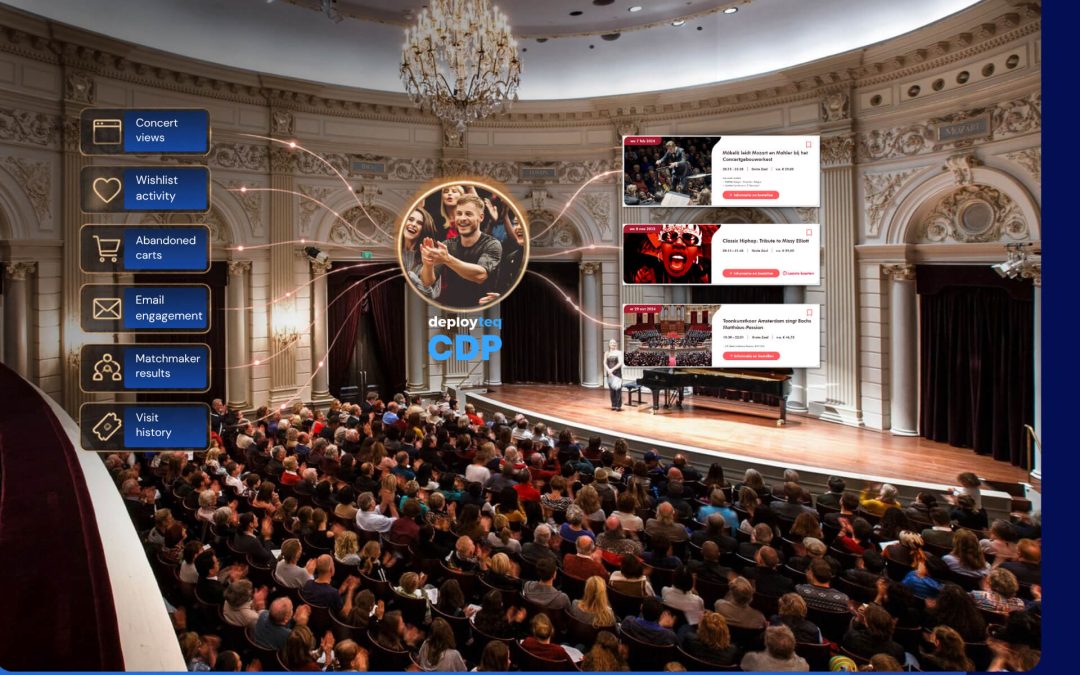
- Unified Data Platform: Consolidate customer data from all touchpoints for comprehensive profile building and seamless campaign activation
- Enterprise Deliverability: Benefit from dedicated infrastructure and expert deliverability support to maximize inbox placement
Ready to scale beyond Mailchimp’s limitations? Book a demo to see how Deployteq can transform your high-volume B2C email marketing strategy.