Scattered customer data is one of the most common — and most quietly damaging — problems in modern marketing. You have data everywhere: your ESP, your CRM, your analytics platform, your loyalty system. Each one holds a piece of the picture. But when those pieces never come together, your campaigns suffer, your team wastes hours, and your customers feel like strangers every time they hear from you.
If you are trying to figure out how to unify customer data but are not sure where the cracks are, start here. These eight signs point directly to a scattered customer data problem — and knowing them is the first step to fixing it.
When messy data quietly kills your marketing results
Fragmented data does not announce itself with a loud failure. It shows up in small, frustrating ways: a campaign that underperforms, a segment that does not make sense, a report that takes three hours to build. Over time, these small friction points compound into a serious drag on your team’s output and your customers’ experience.
The good news is that scattered customer data leaves clear traces. Here are the eight signs to watch for.
1: Your segments keep overlapping or contradicting each other
When customer data lives in multiple places, your segments become unreliable. A customer tagged as “lapsed” in your CRM might be actively purchasing through a different channel. A “high-value” segment built in your ESP might include customers your loyalty platform has already flagged as churned.
Overlapping or contradictory segments are a direct symptom of data that has never been unified into a single source of truth. Every time you build a campaign on these segments, you are making decisions based on incomplete or conflicting information. The result is wasted spend, irrelevant messaging, and missed opportunities with the customers who matter most.
2: Campaign personalisation relies on manual data prep
If your team spends hours before every campaign pulling CSVs, cleaning files, and manually stitching together customer attributes from different tools, your marketing automation is not actually automating much. Manual data prep is a bottleneck that limits how often you can personalise and how deep that personalisation can go.
Real personalisation at scale requires data that is always ready to act on. When that data is scattered, your team ends up doing the work that your platform should be doing. This is especially painful in fast-moving sectors like retail or travel, where timing and relevance are everything.
3: Each channel holds a different version of the customer
Your email platform knows about purchase history. Your SMS tool tracks opt-in preferences. Your web personalisation layer sees browsing behaviour. But none of them talk to each other. So each channel sends messages based on its own incomplete view of the customer.
This is one of the clearest signs of a data unification problem. When channels operate in silos, customers receive disconnected experiences. A traveller who just booked a holiday might still receive a generic acquisition offer via push notification. A retail customer who returned a product might get a follow-up upsell email the same day. Disconnected data leads to tone-deaf communication.
4: Reporting requires pulling data from multiple tools
If building a campaign performance report means logging into four different platforms and reconciling numbers that never quite match, your data is too scattered to act on efficiently. This is not just a time problem. It is also a decision-making problem.
When your reporting is fragmented, insights arrive too slowly to influence live campaigns. By the time you have stitched together a full picture of what worked, the campaign window has passed. A unified data environment should give you a single view of performance across all channels without the manual reconciliation.
5: Triggered journeys fire at the wrong time or not at all
Triggered automation depends entirely on data being accurate, current, and accessible in real time. If your triggers are misfiring — sending a welcome email to a customer who has been active for two years, or failing to send a cart abandonment message because the purchase event did not sync in time — your data pipeline is broken somewhere.
These errors are frustrating for customers and costly for your business. A well-timed trigger can recover a sale or deepen a relationship. A poorly timed one can damage trust. When your customer data is scattered across systems with inconsistent sync speeds, reliable triggering becomes almost impossible.
6: High-value customers get treated like new leads
Few things erode customer loyalty faster than being treated as if you do not exist in a brand’s memory. When a customer with three years of purchase history and a high LTV receives a “Welcome, here is 10% off your first order” email, it signals that your systems do not actually know who they are.
This happens when customer history is siloed in a legacy CRM that your email marketing platform cannot access in real time. Without a unified customer profile that surfaces the right context at the right moment, even your best customers end up in generic flows. That is a retention risk you can avoid.
7: Compliance and consent records live in separate systems
In 2026, managing consent across fragmented systems is not just an operational headache. It is a compliance risk. If your opt-in records sit in one tool, your suppression lists in another, and your preference centre data somewhere else entirely, you are one sync failure away from a serious problem.
A scattered data solution for consent management is not optional. Unified consent records ensure that every communication you send respects the customer’s current preferences, across every channel. When those records are fragmented, you risk sending to contacts who have opted out, or failing to reach those who have opted in.
8: Your team debates which data source is correct
If your marketing team and your data team regularly disagree about which numbers to trust, or which customer list is the most up-to-date, that is a cultural signal of a technical problem. Time spent debating data accuracy is time not spent acting on it.
This kind of internal friction is common in organisations that have grown quickly and layered on tools without a unified data strategy. The fix is not more spreadsheets or more meetings. It is a single, trusted source of customer data that every team works from. When everyone operates from the same foundation, decisions happen faster and with more confidence.
How Deployteq helps you unify customer data and act on it faster
If several of these signs feel familiar, the underlying issue is the same: your customer data needs to come together in one place before your marketing can reach its potential. That is exactly what we built our Customer Data Platform to solve.
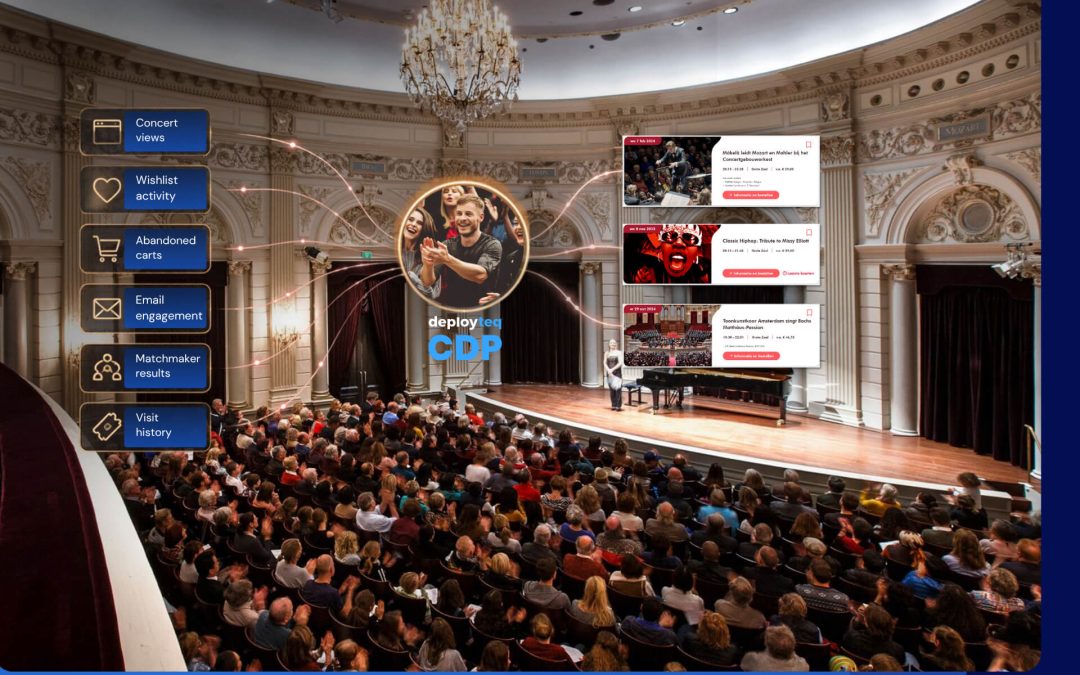
Our CDP creates a unified, intelligent customer profile that pulls together data from every source and makes it immediately actionable across all your channels. Here is what that looks like in practice:
- 360-degree single customer view: Every interaction, purchase, preference, and consent record consolidated into one profile, visible across your entire team.
- Intelligent modelling built in: RFM analysis, next-best-offer predictions, and full lifecycle insights run directly within your campaigns, without manual data prep.
- Real-time activation across every channel: Email, SMS, WhatsApp, push, and web all draw from the same unified data, so every trigger fires at the right moment.
- Hyper-personalised segmentation: Build segments that reflect who your customers actually are right now, not who they were when the data was last exported.
- Compliance-ready by design: Consent and preference data is centralised, so every communication you send is compliant and up to date.
Scattered customer data is a solvable problem. When your data is unified, your segments sharpen, your triggers become reliable, your high-value customers get the treatment they deserve, and your team stops debating which source to trust. Ready to see it in action? Book a demo and we will show you how it works for your specific use case.