Most marketing automation programmes deliver average results because the platform underneath them wasn’t built for complexity. Fragmented data, rigid journey builders, and one-size-fits-all messaging are the real culprits. The good news? A modern marketing automation platform solves all of this, and then some. Here are seven powerful ways customer engagement platforms transform what your automation actually delivers.
What separates great marketing automation from average
The gap between good and great marketing automation comes down to one thing: how well your platform turns data into timely, relevant action. Average platforms send messages. Great platforms trigger the right conversation, at the right moment, in the right channel, without your team manually orchestrating every step.
The seven capabilities below are what separate platforms that drive real revenue from those that just tick a compliance box. If your current setup is missing more than two of these, it’s worth asking whether you’re leaving serious LTV on the table.
1: Unify customer data across every touchpoint
Fragmented data is the single biggest blocker to effective marketing automation. When a customer’s web behaviour, purchase history, loyalty status, and support interactions all live in separate systems, your campaigns are working with an incomplete picture. Unification fixes that.
A strong customer engagement platform consolidates data from every source into a single customer view. That means CRM records, transactional data, browsing behaviour, and app activity all feed into one profile. From there, every campaign decision is grounded in the full customer story, not just a slice of it.
For retail and travel brands managing millions of customer records, this is foundational. Without it, personalisation is guesswork. With it, every downstream capability on this list becomes significantly more powerful.
2: Segment smarter with real-time behavioural signals
Static segments built on demographic data alone are no longer enough. Customers move through consideration, purchase, and loyalty cycles fast, and your segmentation needs to keep pace. Real-time behavioural signals are what make that possible.
The best platforms update segments dynamically based on live actions: a customer browsing a specific product category, abandoning a cart, opening three emails in a week, or lapsing after 60 days of inactivity. Each of these signals should trigger a different response, automatically.
For e-commerce and finance brands especially, this level of segmentation precision directly impacts conversion. A customer who viewed a savings account product yesterday is in a fundamentally different mindset from one who last engaged six months ago. Smart segmentation treats them accordingly.
3: Personalise content at scale across channels
Personalisation at scale is not about writing individual emails. It’s about building a system where dynamic content blocks, smart logic, and segment-specific rules do the heavy lifting for you. One campaign can deliver dozens of distinct experiences without duplicating your workload.
Advanced email marketing platforms use conditional content to show different product recommendations, offers, or messaging based on who is receiving the message. A loyalty member in the travel sector sees a destination upgrade offer. A lapsed customer in retail sees a re-engagement incentive. Same send, different experience.
The key is having templates and content architecture that support this flexibility from the start. When your platform is built for hyper-personalised output, scaling from 10,000 to 10 million contacts doesn’t mean sacrificing relevance.
4: Automate complex customer journeys with flexibility
A journey builder should give you freedom, not force you into rigid templates. Complex customer lifecycles, especially in entertainment, hospitality, and finance, require branching logic, multi-step waits, conditional splits, and the ability to re-enter customers at the right point based on new behaviour.
The best journey builders let you design flows that mirror how real customers actually move through a brand relationship. That means handling edge cases, looping back when a trigger is missed, and suppressing messages when a customer has already converted through another channel.
Flexibility here also means your team can build and iterate without needing developer support for every change. When marketers own the journey builder, campaigns move faster and optimisation happens in days, not sprint cycles.
5: Predict behaviour with intelligent data modelling
Reactive marketing responds to what customers have already done. Predictive marketing anticipates what they’re about to do, and reaches them before the moment passes. Intelligent data modelling is what makes the shift from reactive to predictive possible.
Models like RFM (Recency, Frequency, Monetary) help you identify your highest-value customers and those at risk of churning before the drop-off becomes permanent. Next-best-offer modelling surfaces the product or content most likely to resonate with each individual, based on their full behavioural history.
For brands with large customer bases and complex product catalogues, predictive insights reduce the manual effort of deciding what to send to whom. The model does the prioritisation. Your team focuses on the creative and strategy.
6: Activate campaigns across every marketing channel
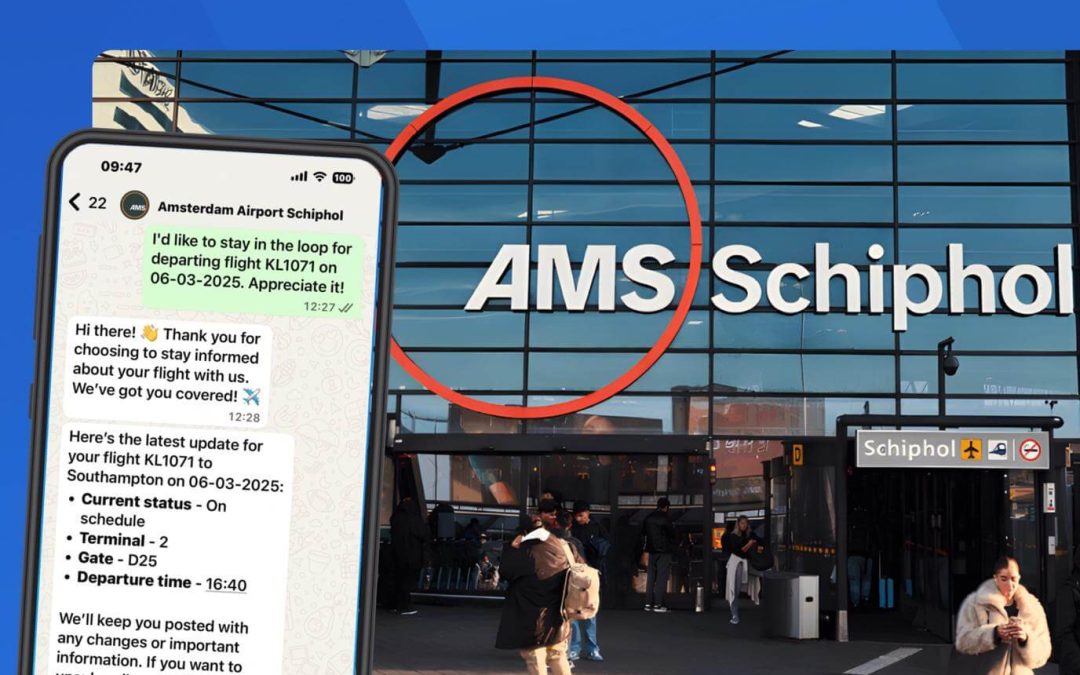
Email remains the highest-ROI channel in most marketing mixes, but customers don’t live in their inboxes alone. A strong customer engagement platform lets you activate campaigns across email, SMS, WhatsApp, push notifications, and web, from a single interface, with consistent data powering all of it.
Cross-channel activation means a customer who doesn’t open an email can receive a follow-up SMS. A loyalty member can get a WhatsApp message about a time-sensitive offer. A web visitor can be retargeted with a push notification after leaving without converting. Each touchpoint is coordinated, not siloed.
The real value is consistency. When the same customer data drives every channel, the experience feels joined-up rather than repetitive. That’s what builds trust, and trust is what drives long-term LTV.
7: Measure what actually drives revenue
Vanity metrics, open rates, send volumes, and impression counts tell you very little about whether your marketing automation is generating real business value. The platforms that make a genuine difference connect campaign activity directly to revenue outcomes.
That means attribution modelling that accounts for multi-touch journeys, not just last-click. It means dashboards that show you which segments, journeys, and content variants are driving conversion, not just engagement. And it means being able to act on that insight quickly, without waiting for a data team to run a report.
When measurement is built into the platform rather than bolted on, optimisation becomes a continuous habit rather than a quarterly exercise. That’s where compounding gains come from.
How Deployteq helps with marketing automation
All seven of these capabilities are built into Deployteq. We’ve designed our platform specifically for B2C brands managing complex data and high-volume customer bases, so you get the depth you need without the operational overhead.
- Unified customer data: Our Customer Data Platform consolidates data from every source into a single customer view, ready for activation across all channels.
- Smart segmentation: Build real-time, highly personalised segments based on live behavioural signals, without needing a data science team to run the queries.
- Hyper-personalised email at scale: Our advanced email marketing service uses dynamic content blocks and smart logic to deliver tailored messages to every segment from a single campaign.
- Flexible journey builder: Design complex, multi-step customer journeys with full branching logic and channel coordination, owned entirely by your marketing team.
- Predictive modelling: RFM analysis, next-best-offer, and predictive insights are built into the platform, so intelligent decisions happen automatically.
- Cross-channel activation: Email, SMS, WhatsApp, push, and web, all managed from one place, powered by the same customer data.
- Revenue-focused reporting: Connect campaign performance directly to business outcomes with attribution and analytics that go beyond surface-level metrics.
Trusted by brands like Wickes, Virgin Media, and Center Parcs, we help marketing teams automate faster, segment smarter, and deliver content that actually drives results. Ready to see what this looks like in practice? Book a personalised demo and we’ll show you exactly how it works for your sector.