Watching customers leave is painful, but what if those churned customers were actually your biggest opportunity for growth? The truth is, winning back a lost customer is often more cost-effective than acquiring a new one, and churned customers already know your brand, making them prime candidates for re-engagement.
The challenge lies in crafting the right approach. Generic “We miss you” emails rarely work. Instead, you need strategic, data-driven email marketing tactics that address why customers left and give them compelling reasons to return. Let’s explore seven proven methods for turning customer departure into comeback success.
Why churned customers are your biggest opportunity
Churned customers represent untapped revenue potential that many businesses overlook. These individuals have already demonstrated interest in your products or services, understand your value proposition, and have experience with your brand. This familiarity makes them significantly easier to convert than completely cold prospects.
The economics are compelling, too. Acquiring new customers typically costs five to seven times more than re-engaging existing ones. When you factor in the shortened sales cycle for churned customer recovery, the return on investment becomes even more attractive. A well-executed win-back campaign can recover 10–15% of churned customers, directly impacting your bottom line.
Successful re-engagement also provides valuable insights into customer behaviour and preferences. By understanding why customers left and what brings them back, you can improve your overall email marketing platform strategy and reduce future churn rates.
1: Analyse churn patterns to understand departure reasons
Before launching any re-engagement campaign, you need to understand why customers churned in the first place. Start by analysing customer behaviour data in the weeks leading up to their departure. Look for patterns such as declining engagement rates, reduced purchase frequency, or support ticket history.
Segment your churned customers based on their departure reasons and timing. Create categories such as price-sensitive customers, those who experienced service issues, customers who chose competitors, or those whose needs evolved beyond your offerings. This segmentation forms the foundation of your targeted approach.
Consider conducting exit surveys or reaching out to recently churned customers for feedback. While response rates may be low, the insights you gain can inform your entire customer re-engagement strategy and help prevent future churn.
2: Create personalised win-back email sequences
Generic win-back emails are easily ignored. Instead, develop targeted sequences that speak directly to each churn segment’s specific concerns and motivations. For price-sensitive customers, focus on value and cost savings. For those who experienced service issues, acknowledge the problems and highlight improvements.
Timing is crucial for email win-back campaigns. Start your sequence 2–4 weeks after churn, when the customer’s experience is still fresh but emotions have cooled. Space your emails strategically, typically 3–5 days apart for the initial sequence, then extend intervals for longer-term nurturing.
Personalisation goes beyond using the customer’s name. Reference their purchase history, preferred products, or previous interactions. This demonstrates that you valued their business and understand their specific needs, making your outreach feel genuine rather than automated.
3: Offer exclusive incentives and limited-time deals
Compelling offers can overcome the inertia that keeps churned customers away. Structure your incentives based on the customer’s previous value and churn reason. High-value customers might warrant significant discounts or exclusive access to new products, while others might respond better to free shipping or bonus services.
Create genuine urgency through limited-time offers, but ensure the deadlines are realistic and the deals are truly valuable. Avoid the temptation to use false scarcity, as this can damage trust with customers who are already sceptical about returning.
Consider progressive incentives that increase in value if the initial offer doesn’t work. This approach shows increasing commitment to winning the customer back while providing multiple opportunities for conversion. However, be careful not to train customers to wait for better offers.
4: What messaging resonates with different churn segments?
Different customer segments require different emotional triggers and messaging approaches. Price-sensitive customers respond well to value-focused messaging that emphasises savings and ROI. Use phrases like “exclusive discount” or “special pricing just for you” to make them feel valued.
For customers who left due to service issues, acknowledge their concerns directly and highlight specific improvements you’ve made. Transparency about changes and a genuine apology can rebuild trust. Consider offering a trial period or satisfaction guarantee to reduce their risk of disappointment.
Customers who simply drifted away often respond to nostalgia-based messaging that reminds them of positive experiences with your brand. Reference past purchases they enjoyed or highlight new features that align with their previous interests. The key is rekindling the emotional connection they once had with your business.
5: Implement progressive engagement campaigns
Rather than immediately pushing for a purchase, build trust through valuable content and gradual re-engagement. Start with helpful resources, industry insights, or educational content that provides value without asking for anything in return. This approach demonstrates your expertise and reminds customers why they initially chose your brand.
Gradually increase engagement through interactive content such as surveys, polls, or personalised recommendations. Monitor how customers interact with your emails and adjust your approach based on their engagement levels. Highly engaged customers can move faster through your sequence, while others need more nurturing.
Use marketing automation to create responsive sequences that adapt based on customer behaviour. If someone opens multiple emails but doesn’t click, they might need different messaging. If they visit your website after receiving an email, trigger a more direct offer sequence.
6: Use behavioural triggers for automated responses
Set up automated campaigns that respond to specific actions churned customers take. Website visits, email opens, or social media engagement can all trigger targeted follow-up sequences. These behavioural signals indicate renewed interest and present optimal moments for re-engagement.
Create responsive email flows for different scenarios. A churned customer who visits your pricing page might receive information about new plans or limited-time discounts. Someone who browses product pages could get personalised recommendations based on their viewing history and past purchases.
Leverage your email marketing platform to create sophisticated trigger campaigns that feel personal and timely. The key is responding quickly to behavioural signals while the customer’s interest is piqued, turning passive browsing into active re-engagement.
7: Test and optimise your re-engagement approach
Continuous testing is essential for improving your customer retention efforts. A/B test different subject lines, messaging approaches, incentive levels, and send times to identify what resonates best with each segment. Start with major elements like offers and messaging before optimising smaller details.
Measure success beyond simple open and click rates. Track metrics such as reactivation rates, lifetime value of recovered customers, and long-term retention rates. Some customers might re-engage but churn again quickly, while others become more loyal than before.
Document your learnings and apply them to future campaigns. Successful re-engagement tactics can often be adapted for other segments or used to prevent churn in the first place. Regular optimisation ensures your win-back campaigns become more effective over time.
How Deployteq helps with customer re-engagement
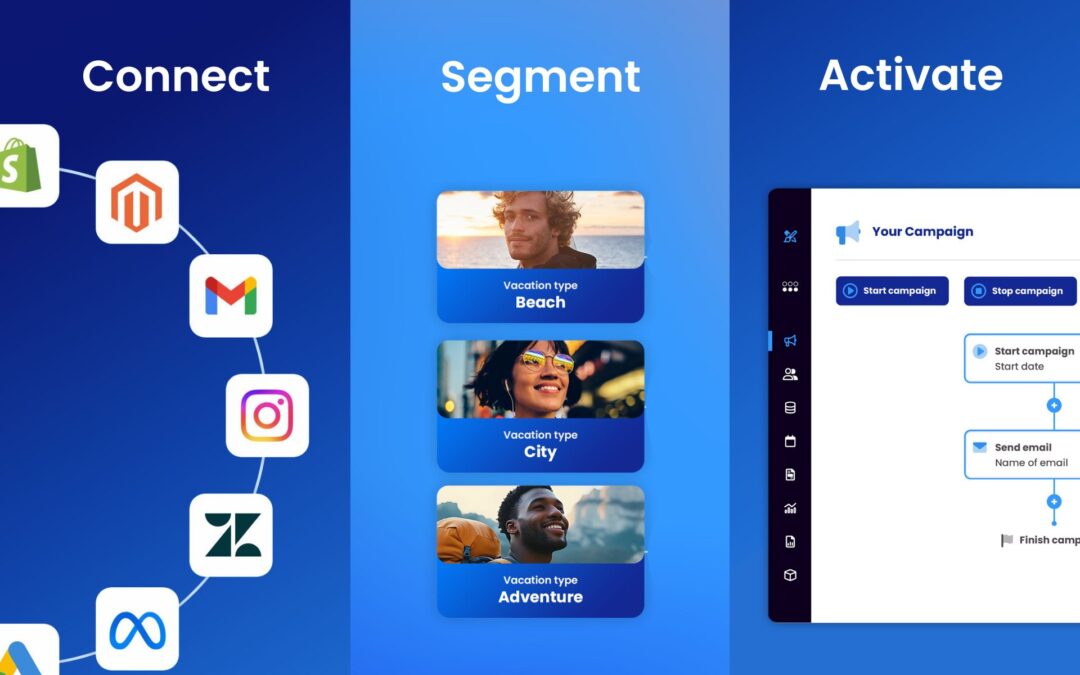
Deployteq provides the comprehensive solution for transforming churned customers into loyal advocates through intelligent automation and personalisation. Our platform enables you to implement all seven tactics outlined above with precision and scale:
- Advanced segmentation tools that analyse churn patterns and automatically categorise customers based on behaviour and departure reasons
- Personalised email sequences with dynamic content that adapts to each customer’s history and preferences
- Behavioural trigger automation that responds instantly to customer actions with targeted re-engagement campaigns
- Comprehensive A/B testing capabilities to optimise every element of your win-back strategy
- Real-time analytics and reporting that track reactivation rates, lifetime value, and long-term retention metrics
Transform your customer departure into your next growth opportunity with Deployteq’s powerful marketing automation platform. Book a demo today to discover how our advanced re-engagement tools can help you recover lost customers and build stronger, more profitable relationships.