A business needs a CDP when its customer data is fragmented across multiple platforms and that fragmentation is actively limiting personalisation, segmentation, or campaign performance. If your marketing team cannot build a single, accurate view of each customer in real time, a customer data platform is the tool designed to fix that. Below, we answer the most common questions marketers ask before making the decision.
What are the signs your business has outgrown its current data setup?
Your business has outgrown its current data setup when you can no longer act on customer behaviour quickly, accurately, or at scale. The clearest signals are fragmented customer profiles spread across disconnected tools, manual data exports to build segments, and campaigns that fire on stale or incomplete information. If your team spends more time wrangling data than using it, that is the sign.
More specifically, watch for these red flags:
- Duplicate or conflicting customer records across your CRM, email platform, and e-commerce system
- Segment-building that takes days rather than minutes, relying on manual exports or IT support
- Campaigns that ignore recent behaviour because data from your website or app has not synced in time
- No cross-channel view of what a customer has done, bought, or clicked across touchpoints
- Personalisation that is surface-level because you simply do not have the unified data to go deeper
For a retail brand running email, SMS, and a loyalty programme simultaneously, this fragmentation means a customer who just purchased in-store can still receive a discount push notification for the same product an hour later. That is not just inefficient; it actively damages trust.
What’s the difference between a CDP, a CRM, and a DMP?
The key distinction is purpose and data type. A CRM manages known customer relationships and sales interactions. A DMP (Data Management Platform) handles anonymous, third-party audience data primarily for paid media targeting. A CDP (Customer Data Platform) unifies first-party behavioural, transactional, and profile data from all sources into a persistent, individual customer profile that any marketing tool can activate.
Here is how they compare in practice:
- CRM: Stores contact records, deal history, and service interactions. Built for sales and support teams. Does not typically ingest real-time behavioural data at scale.
- DMP: Aggregates third-party cookie data for programmatic advertising. Profiles are anonymous and short-lived. Increasingly limited by cookie deprecation.
- CDP: Collects first-party data from every touchpoint, resolves identities across devices and sessions, and makes unified profiles available in real time for marketing activation across email, SMS, web, and beyond.
The practical implication: a CRM tells you who bought from you last year. A CDP tells you what that same person did on your website this morning, what they opened in your last email, and what they are most likely to buy next, so you can act on it immediately.
How does a CDP actually unify customer data?
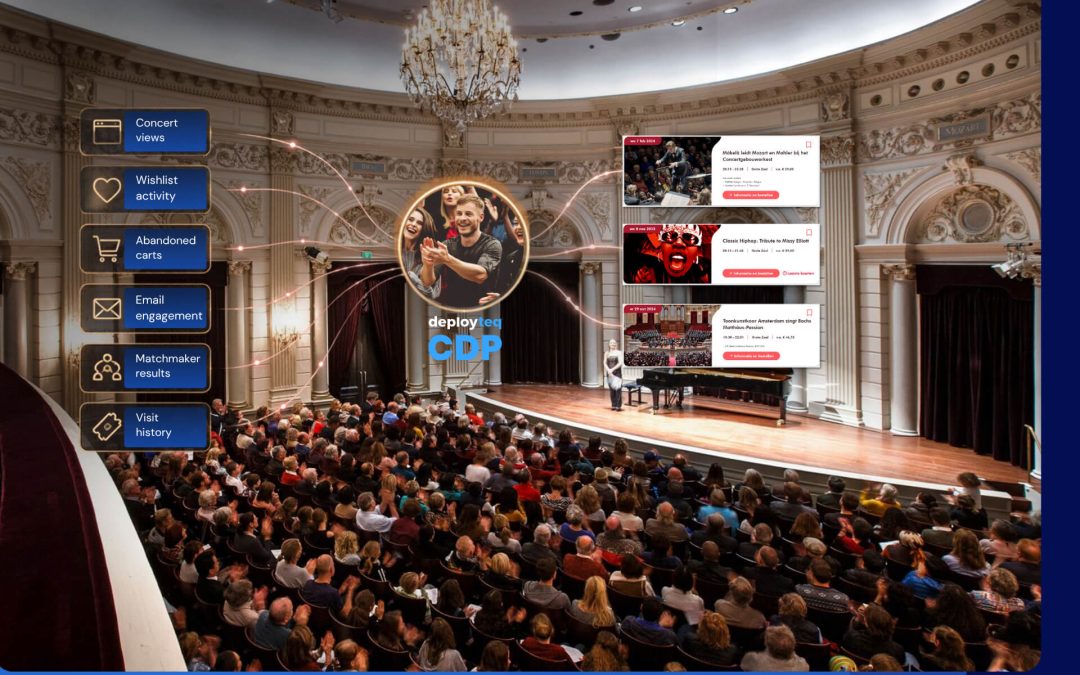
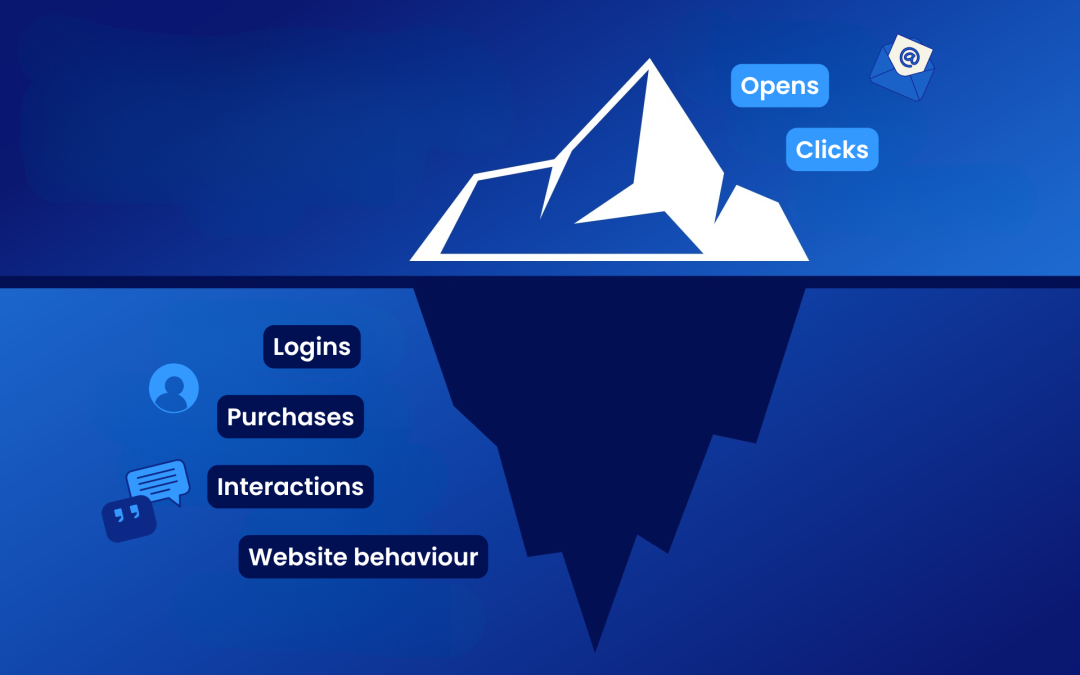
A CDP unifies customer data through a process called identity resolution. It ingests data from multiple sources, such as your website, app, email platform, POS system, and CRM, then matches records belonging to the same individual using identifiers like email address, device ID, loyalty number, or phone number. The result is a single, persistent customer profile that updates in real time.
The unification process typically works in three stages:
- Data ingestion: The CDP collects raw data via APIs, SDKs, and direct integrations from every source where customer interactions occur.
- Identity resolution: It stitches together anonymous and known interactions, linking a browsing session to an email open to an in-store purchase, all under one profile.
- Profile activation: The unified profile is made available to your marketing tools in real time, enabling triggered campaigns, dynamic segments, and personalised content based on the full customer picture.
For a travel brand, this means a customer who searched for flights, abandoned a booking, and then opened a loyalty email can receive a precisely timed follow-up offer, not because someone set it up manually, but because the CDP recognised the pattern and triggered the right message automatically. That is marketing automation working at its full potential.
What types of businesses benefit most from a CDP?
Businesses with high customer volumes, multiple touchpoints, and a genuine need for personalisation at scale benefit most from a CDP. This typically means B2C brands in retail, travel, entertainment, finance, and e-commerce, where the gap between generic and personalised communication directly affects revenue.
The strongest use cases include:
- Retail and e-commerce: Connecting in-store, online, and app behaviour to power cart recovery, loyalty triggers, and hyper-personalised product recommendations
- Travel and hospitality: Unifying booking data, browsing history, and loyalty status to automate timely, relevant offers across long booking windows
- Finance and insurance: Building compliant, first-party data profiles to trigger lifecycle communications based on account activity and product eligibility
- Entertainment and media: Driving high-frequency engagement with content-based triggers tied to viewing habits, subscription status, and real-time events
The common thread is complexity. If your customer journey spans more than two or three touchpoints, and your segments need to reflect real-time behaviour rather than historical snapshots, a CDP moves from a nice-to-have to a practical necessity.
When is it too early to invest in a CDP?
It is too early to invest in a CDP when your data volume is low, your customer touchpoints are few, or your marketing team does not yet have the processes to act on unified data. A CDP creates value only when there is enough data complexity to justify it. If you are sending one email newsletter to a single list, a CDP will not move the needle.
Consider waiting on a CDP implementation if:
- Your customer database has fewer than 50,000 active contacts and sits cleanly in one platform
- Your marketing activity is limited to one or two channels with no cross-channel personalisation requirement
- You do not yet have the internal resource to manage integrations, data governance, or profile activation
- Your segmentation needs are straightforward and your current email marketing platform handles them without friction
The honest answer is that a CDP amplifies what you already do well. If the foundations of your data strategy are not yet in place, invest in those first. A CDP built on poor data hygiene will simply unify your mess at greater speed.
How does a CDP improve marketing automation performance?
A CDP improves marketing automation performance by ensuring that every trigger, segment, and personalisation decision is based on a complete, current customer profile rather than siloed or delayed data. Automation that fires on unified, real-time data is faster, more accurate, and far more relevant than automation built on partial information.
The performance improvements show up in several ways:
- Smarter segmentation: Segments built on unified behaviour, LTV, purchase frequency, and channel preference produce higher engagement than those built on list membership alone
- Real-time triggers: Events like a price drop on a browsed product or a lapsed loyalty point balance can fire an automated message within minutes, not days
- Predictive models: With a full data picture, models like RFM analysis, next-best-offer, and churn prediction become genuinely actionable rather than theoretical
- Reduced suppression errors: A unified profile ensures a customer who converted via one channel is not retargeted via another, protecting both budget and brand experience
The result is automation that feels less like broadcasting and more like a conversation, one that responds to what a customer actually does, across every channel they use.
How Deployteq powers your CDP strategy
We built our Customer Data Platform to sit natively inside the Deployteq marketing automation platform, which means unified customer profiles activate directly into your campaigns without additional middleware or complex integrations. Here is what that looks like in practice:
- Unified first-party data collected across email, SMS, WhatsApp, push, and web, consolidated into persistent customer profiles
- Intelligent modelling including RFM analysis, next-best-offer, and predictive insights built into the platform, not bolted on
- Real-time segmentation that reflects what your customers are doing right now, not last week
- Cross-channel activation so a segment built in the CDP fires the right message on the right channel automatically
- No-code journey building so your marketing team can act on unified data without waiting for technical resources
If your data is fragmented and your campaigns are suffering for it, we can show you exactly what a unified setup looks like for your business. Book a personalised demo and see the CDP in action.