A Customer Data Platform (CDP) and a CRM are both customer data tools, but they serve very different purposes. A CRM manages relationships and interactions, typically used by sales and customer service teams. A CDP unifies behavioural, transactional, and demographic data from every touchpoint to build a complete, real-time customer profile that marketers can activate directly. The sections below unpack the key differences, who uses each, and when a CDP is the right choice for your business.
How does a CDP store and use customer data differently than a CRM?
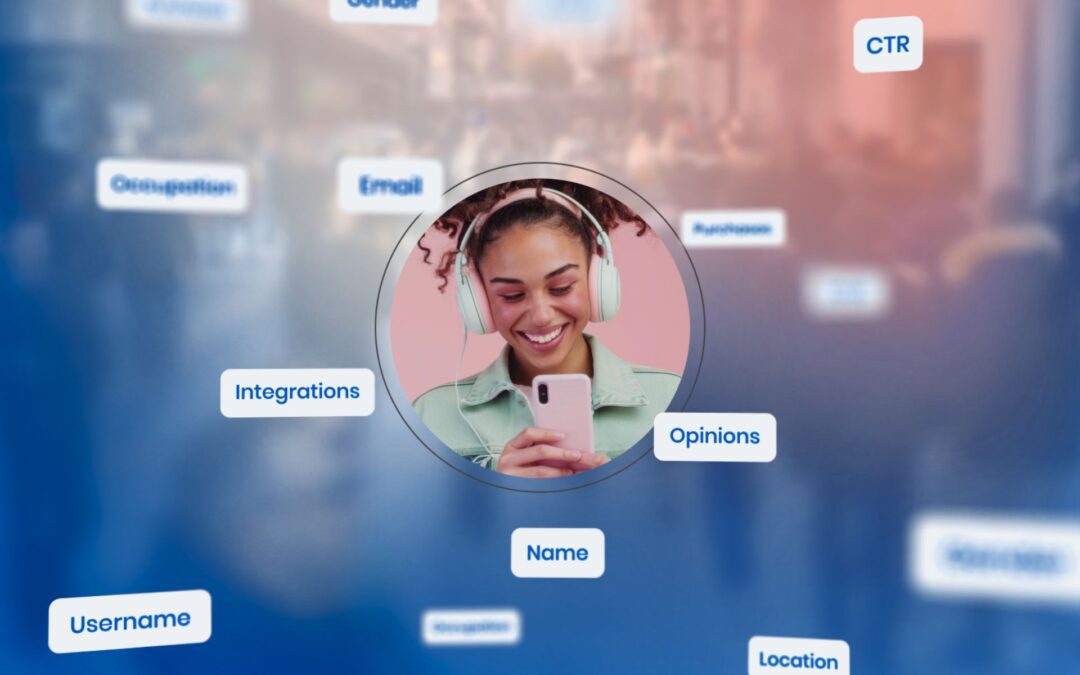
A CRM stores structured, interaction-based data: contact details, sales history, support tickets, and pipeline stages. A customer data platform goes further by ingesting data from every source, including website behaviour, app activity, email engagement, and purchase history, and stitching it into a unified, real-time customer profile that can trigger personalised marketing automatically.
The key distinction is who the data serves. CRM data is built to help sales and service teams manage conversations. CDP data is built to help marketers act. A Customer Data Platform resolves identity across channels, so if a customer browses on mobile, buys on desktop, and opens an email on a tablet, all of that activity is tied to a single profile.
CRMs are largely manual and relationship-driven. CDPs are designed for automated, high-volume activation. That means a CDP can power real-time triggers, predictive models, and hyper-personalised segments at a scale that a CRM simply was not built for.
Who uses a CRM and who uses a CDP?
CRMs are primarily used by sales teams, account managers, and customer service representatives who need a record of direct customer interactions. CDPs are built for marketing teams, including CMOs, CRM marketers, and campaign managers, who need to segment audiences, personalise content, and automate journeys across multiple channels.
In practice, the two tools often sit in different departments. Sales owns the CRM. Marketing owns the CDP. But the data they generate can, and should, inform each other.
For B2C brands operating at volume, such as a travel company managing millions of booking profiles or a retailer running seasonal campaigns, a CDP is the operational backbone of the marketing function. It handles the complexity of real-time segmentation and cross-channel activation that a CRM was never designed to manage.
Can a CDP and a CRM work together?
Yes, a CDP and a CRM work well together and are designed to complement each other rather than compete. The CRM holds relationship history and sales context. The CDP holds behavioural and engagement data. When integrated, marketers gain a fuller picture of each customer, and sales teams benefit from richer context before any conversation begins.
A practical example: a finance brand might use a CRM to track policy renewals and advisor notes, while the CDP captures browsing behaviour, email engagement, and product interest signals. The CDP can then surface a next-best-offer recommendation that the sales team delivers at exactly the right moment.
Most modern CDPs are built with open APIs to connect cleanly with CRM platforms, so integration is straightforward. The result is a marketing automation stack where data flows in both directions, enriching every customer interaction.
When should a business choose a CDP over a CRM?
A business should prioritise a CDP when its primary challenge is marketing personalisation, cross-channel activation, or fragmented customer data rather than sales pipeline management. If your team is struggling to build accurate segments, trigger timely campaigns, or understand how customers behave across touchpoints, a CDP solves those problems directly.
Specific signals that a CDP is the right investment:
- Customer data lives in multiple disconnected systems (email platform, e-commerce database, loyalty programme, app)
- Campaigns rely on static lists rather than real-time behavioural segments
- Personalisation is limited to first name fields rather than product-level recommendations
- Marketing and data teams spend significant time manually preparing audience exports
- The business wants to use predictive models such as RFM scoring or next-best-offer without building bespoke data science infrastructure
For businesses already running a CRM, adding a CDP does not replace it. It amplifies it. The CDP handles the marketing data complexity so the CRM can focus on what it does best.
What’s the difference between a CDP and a DMP?
A CDP and a Data Management Platform (DMP) are both audience tools, but they operate on fundamentally different data types and timescales. A DMP works primarily with anonymous, third-party cookie data to build broad audience segments for paid advertising. A CDP works with first-party, identified customer data to build persistent profiles used for personalised, owned-channel marketing.
The practical difference matters enormously in 2026. With third-party cookies largely phased out and data privacy regulations tightening across Europe and beyond, DMPs have lost much of their utility. CDPs, built on consented first-party data, are the more durable and compliant solution.
A DMP might tell you that a segment of users aged 25 to 34 responded to a display ad. A CDP tells you that a specific customer, Sarah, browsed three times in the last week, opened your last two emails, and has a high LTV score, so she should receive a personalised retention offer through WhatsApp today. That level of precision is what separates the two tools.
How Deployteq’s CDP powers smarter marketing
Understanding the difference between a CDP, CRM, and DMP is one thing. Having a platform that puts that knowledge into action is another. Our Customer Data Platform was built specifically for marketers who need to move from data chaos to data confidence, fast.
Here is what Deployteq’s CDP delivers:
- 360-degree single customer view: Unify all customer data into one intelligent profile, connecting behavioural, transactional, and demographic signals in real time
- Intelligent modelling built in: RFM scoring, next-best-offer recommendations, and full lifecycle insights are available directly within your campaigns, no data science team required
- Direct campaign activation: Activate audiences instantly across email, SMS, WhatsApp, push, and web without exporting lists or switching platforms
- Hyper-personalised segmentation: Build segments based on real behaviour, not just demographics, so every message lands at the right moment
- Privacy-first architecture: Built on consented first-party data, so you stay compliant while your competitors scramble to adapt
Whether you are in retail, travel, finance, or entertainment, our CDP gives your marketing team the data foundation to deliver experiences that genuinely delight customers at every stage of their lifecycle. Book a demo and see how it works in practice.
Related Articles
- 8 customer data mistakes that break your marketing campaigns
- 5 automation triggers every hospitality brand should implement
- What features should marketing automation software have?
- Why do streaming subscribers ignore renewal emails (and what to do about it)?
- How do you measure email marketing success?
This content was generated with the help of AI — it may contain mistakes