A customer data platform collects and stores a wide range of customer data, including behavioural, transactional, demographic, and engagement data, from every channel your brand uses. It then unifies that data into a single customer profile, giving you a complete, real-time view of each individual. Below, we unpack exactly what gets collected, how it is stored, and how marketers put it to work.
What types of data does a CDP collect?
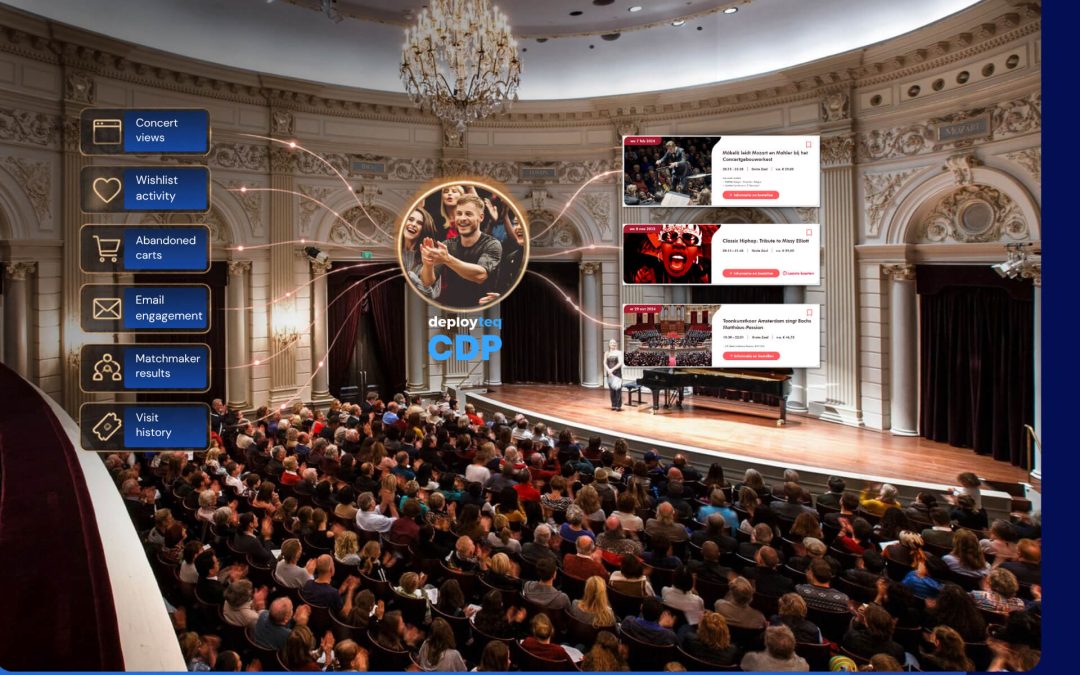
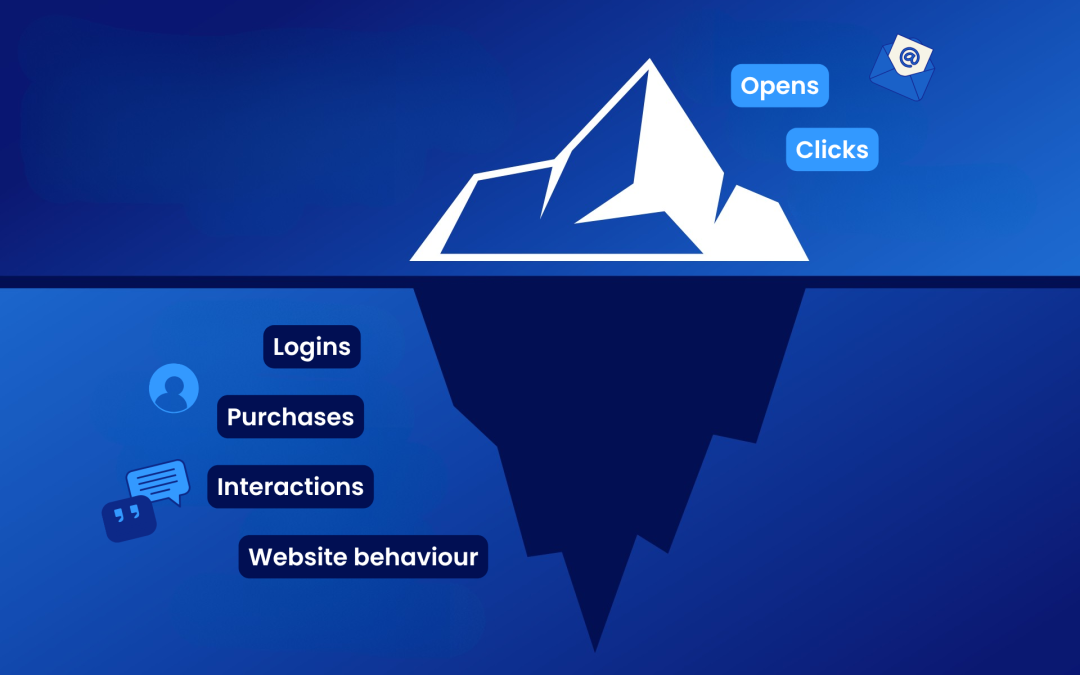
A CDP platform collects data across four core categories: behavioural data (what customers do), transactional data (what they buy), demographic data (who they are), and engagement data (how they interact with your brand). Together, these categories build a complete picture of every customer across every touchpoint.
Here is a breakdown of what typically falls into each category:
- Behavioural data: Website visits, pages viewed, product clicks, search queries, app usage, and browse abandonment
- Transactional data: Purchase history, order values, return behaviour, booking records, and payment methods
- Demographic data: Name, age, location, email address, phone number, and account preferences
- Engagement data: Email opens, clicks, SMS responses, push notification interactions, and social media activity
- Contextual data: Device type, session timing, referral source, and campaign attribution
For a retail brand, this means every cart abandonment, loyalty redemption, and product review feeds directly into the customer record. For a travel brand, it captures booking windows, destination preferences, and loyalty tier activity in one place. The more sources you connect, the sharper the profile becomes.
How does a CDP store and unify customer data?
A real-time customer data platform stores data in a centralised database and unifies it by matching records from different sources to a single customer identity. This process, called identity resolution, links data points such as email addresses, device IDs, and loyalty numbers to one persistent customer profile, eliminating duplicates and data silos.
The unification process typically works in three stages:
- Ingestion: Data flows in from connected sources via APIs, SDKs, CRM exports, and native integrations
- Resolution: The platform matches incoming records to existing profiles using deterministic or probabilistic matching
- Enrichment: Profiles are continuously updated as new interactions occur, keeping the data current and actionable
The result is a 360-degree single customer view that updates in real time. When a customer browses your site, opens an email, and then makes a purchase, all three events attach to the same profile within seconds. That is what separates a CDP from a traditional CRM or data warehouse, which often rely on batch updates and manual data merges.
What’s the difference between first-party, second-party, and third-party data in a CDP?
The key distinction lies in the source and the level of trust attached to each data type. First-party data is collected directly from your customers and is the most reliable. Second-party data is first-party data shared by a trusted partner. Third-party data is purchased from external providers and carries the least certainty about accuracy or consent.
First-party data
This is data your brand owns outright: website behaviour, purchase history, email engagement, app activity, and CRM records. It is collected with direct customer consent, which makes it the most compliant and the most accurate. A CDP is primarily built to activate first-party data at scale, and this is where its value is strongest.
Second-party data
Second-party data is essentially someone else’s first-party data, shared through a formal partnership. A hotel chain sharing booking intent data with an airline loyalty programme is a classic example. CDPs can ingest this data to enrich profiles, though governance agreements between partners are essential.
Third-party data
Third-party data comes from data brokers and aggregators. Its role in CDPs has diminished significantly as cookie deprecation and tightening privacy regulations have reduced both its availability and its reliability. Most modern CDP strategies focus on maximising first-party data rather than supplementing with third-party sources.
How long does a CDP store customer data?
A CDP stores customer data for as long as your data retention policy and applicable regulations permit. In practice, most platforms allow you to configure retention windows per data type, ranging from a few months for granular behavioural events to several years for transactional and identity data. There is no universal default; it depends on your legal obligations and business needs.
Key factors that determine your retention policy include:
- GDPR and local privacy law: Data must not be held longer than necessary for its stated purpose
- Consent records: If a customer withdraws consent, their data must be deleted or anonymised promptly
- Business use case: Predictive models like RFM (Recency, Frequency, Monetary) benefit from longer purchase histories, while session-level behavioural data loses relevance quickly
- Storage costs: High-volume event data accumulates fast; many brands archive or aggregate older records rather than storing raw events indefinitely
A practical approach is to define tiered retention: keep rich event-level data for 12 to 24 months, retain aggregated profile attributes longer, and set automated deletion rules for lapsed or unsubscribed customers in line with your privacy policy.
What data can a CDP not collect or store?
A CDP cannot collect data it has no lawful basis to process, data from sources it is not integrated with, or data that customers have explicitly opted out of sharing. Consent and connectivity are the two hard limits on what any CDP platform can hold.
Specific examples of data a CDP typically cannot or should not collect include:
- Third-party cookie data (increasingly unavailable as browsers phase out support)
- Data from channels with no integration (a point-of-sale system not connected to the CDP will not contribute data)
- Sensitive personal data without explicit consent, such as health information or financial details beyond what is necessary for a transaction
- Data from opted-out customers beyond the minimum required for suppression and compliance records
- Inferred data presented as fact, such as income estimates derived from postcode modelling, unless clearly flagged as a prediction
Understanding these limits is just as important as knowing what a CDP can collect. Building your data strategy around consented, first-party sources is not just a compliance requirement; it produces more accurate profiles and stronger customer trust.
How does a CDP use stored data for marketing activation?
A CDP uses stored data to power real-time segmentation, predictive modelling, and personalised campaign delivery across every channel. Rather than sitting in a database, the unified customer profile becomes the engine behind every email, SMS, push notification, and web experience your brand delivers.
Practical activation use cases include:
- Smart segmentation: Build dynamic audiences based on live behavioural signals, such as customers who browsed a product category in the last 48 hours but have not purchased
- RFM modelling: Score customers by Recency, Frequency, and Monetary value to prioritise high-LTV audiences and re-engage lapsing ones
- Next-best-offer predictions: Use purchase history and browse patterns to surface the most relevant product or content for each individual
- Lifecycle triggers: Automatically fire communications at key moments, such as post-purchase, pre-renewal, or after a period of inactivity
- Cross-channel consistency: Ensure a customer who receives an email offer sees the same message reinforced on your website and in a push notification
For a finance brand, this might mean triggering a timely renewal reminder to customers approaching the end of a policy cycle. For an entertainment platform, it could mean surfacing new content recommendations the moment a subscriber finishes a series. The stored data only creates value when it is connected directly to your activation channels without manual exports or delays.
You can explore how marketing automation connects with your CDP data to trigger these journeys at scale.
How Deployteq helps you activate your customer data
We built our Customer Data Platform to close the gap between data collection and real campaign activation. Everything described in this article, from identity resolution to predictive modelling, is available natively within Deployteq, so your team never has to wait for a data export or a developer to act on an insight.
Here is what you get with Deployteq’s CDP:
- 360-degree single customer view that unifies data from every channel into one intelligent profile
- RFM, next-best-offer, and predictive models built directly into the platform, with no data science team required
- Real-time segmentation that updates as customers interact, so your audiences are always accurate
- Native activation across email, SMS, WhatsApp, push, and web from a single platform
- Hyper-personalised campaigns that respond to where each customer is in their lifecycle right now
If you are ready to turn your customer data into campaigns that actually convert, book a personalised demo and see how it works for your brand.