Growing a retail email list requires strategic approaches that convert browsers into subscribers and customers into advocates. The most effective methods combine compelling lead magnets, optimized website forms, social media integration, in-store experiences, and customer retention tactics. Each strategy works together to create multiple touchpoints where potential customers willingly share their email addresses in exchange for value.
What are the most effective lead magnets for retail businesses?
The most effective retail lead magnets offer immediate value that directly relates to purchasing decisions. Discount codes consistently perform best, typically generating 15–25% conversion rates on opt-in forms. Exclusive product previews, style guides, and seasonal lookbooks also drive strong sign-up rates because they provide insider access that customers value.
Discount-based lead magnets work because they remove purchase barriers while capturing email addresses. Offer meaningful savings (10–20% minimum) rather than token amounts that won’t motivate action. Time-limited offers create urgency that encourages immediate sign-ups.
Educational content performs exceptionally well for retail brands. Style guides, size charts, care instructions, and how-to content establish your brand as helpful beyond just selling products. These lead magnets attract subscribers who engage more deeply with your brand long term.
Product-focused lead magnets like early access to sales, new-arrival notifications, or exclusive collections appeal to your most engaged customers. These offers work particularly well for fashion, beauty, and lifestyle brands where customers want to stay current with trends.
How do you optimize website opt-in forms to capture more email subscribers?
Optimized opt-in forms balance visibility with user experience through strategic placement, timing, and compelling copy. Exit-intent popups and scroll-triggered forms typically achieve 2–5% conversion rates without disrupting the shopping experience. The key is showing forms when visitors demonstrate engagement rather than immediately upon arrival.
Form placement significantly impacts conversion rates. Header bars work well for ongoing promotions, while sidebar forms capture attention without interrupting browsing. Footer forms catch visitors who have consumed your content and are ready to engage further.
Copy optimization focuses on clear value propositions rather than generic “subscribe” language. Specify what subscribers receive: “Get weekly style tips and exclusive offers” performs better than “Join our newsletter.” Keep form fields minimal—email address only for maximum conversions.
Design elements that improve conversions include contrasting colors that stand out from your site design, mobile-optimized layouts that work on all devices, and social proof elements like subscriber counts or customer testimonials. Test different combinations to find what resonates with your specific audience.
Timing matters enormously. Immediate popups often irritate visitors, while exit-intent or time-delayed forms (30–60 seconds) allow people to explore your site first. Consider implementing different triggers for different pages based on user behavior patterns.
What social media strategies work best for growing retail email lists?
Social media email acquisition works best through exclusive content offers, contests, and strategic cross-platform promotion. Instagram and Facebook contests that require email sign-up for entry typically generate hundreds of new subscribers per campaign. The key is offering prizes that attract your ideal customers rather than prize hunters.
Exclusive social media offers encourage followers to join your email list for deeper access. Promote email-only discounts, early sale access, or special content that is not available on social platforms. This creates a natural progression from social follower to email subscriber.
Stories and posts that tease email content work effectively for list growth. Share snippets of style guides, behind-the-scenes content, or exclusive tips, then direct followers to sign up for the complete version. This approach provides value while demonstrating what email subscribers receive.
Influencer partnerships can accelerate email list growth when structured properly. Collaborate with influencers whose audiences align with your target customers. Provide them with exclusive discount codes or content to share, requiring email sign-up for access.
User-generated content campaigns that require email participation build both social engagement and email lists. Encourage customers to share photos wearing your products, then ask them to submit entries via email for features or prizes.
How can in-store experiences drive online email sign-ups?
In-store email capture connects physical retail experiences with digital marketing through point-of-sale integration, QR codes, and trained staff interactions. QR codes on receipts and displays provide easy sign-up methods that customers can complete immediately or later. Staff training ensures consistent, natural email capture that enhances rather than disrupts the shopping experience.
Point-of-sale systems should integrate email capture into the checkout process. Train staff to mention email benefits naturally: “Would you like exclusive offers and early sale access sent to your email?” This approach feels helpful rather than pushy when positioned correctly.
QR code placement throughout your store creates multiple sign-up opportunities. Place codes on product displays, fitting room mirrors, checkout areas, and receipts. Link codes to mobile-optimized sign-up forms that load quickly and capture emails efficiently.
In-store exclusive offers encourage email sign-ups by providing immediate value. Offer additional discounts, extended return periods, or exclusive access to in-store events for email subscribers. These perks create tangible reasons to share contact information.
Staff training ensures consistent email capture without creating negative experiences. Teach team members to identify natural conversation opportunities, explain email benefits clearly, and respect customers who decline. Well-trained staff can significantly increase sign-up rates through genuine, helpful interactions.
What customer retention tactics help grow email lists organically?
Customer retention tactics that grow email lists organically transform satisfied customers into brand advocates who naturally refer others. Referral programs and loyalty initiatives encourage existing customers to share your brand with friends while expanding your email database. These strategies work because recommendations from trusted sources carry more weight than traditional advertising.
Referral programs should offer mutual benefits—rewards for both the referrer and the new customer. Structure programs so existing customers can easily share discount codes or exclusive offers with friends via email. Track referrals through unique codes or links to measure program effectiveness.
Loyalty programs naturally encourage email sign-ups by requiring registration for points tracking and reward notifications. Design programs that provide ongoing value through points accumulation, tier benefits, and exclusive member experiences that justify email communication.
User-generated content campaigns create organic sharing opportunities that drive new email sign-ups. Encourage customers to share photos, reviews, or experiences with branded hashtags, then feature the best content in email campaigns. This recognition encourages both participation and email subscription to see featured content.
Exceptional customer experiences naturally lead to word-of-mouth recommendations. Focus on exceeding expectations through personalized service, thoughtful follow-up, and genuine problem resolution. Satisfied customers become organic brand ambassadors who recommend your email list to others.
How Deployteq accelerates retail email list growth
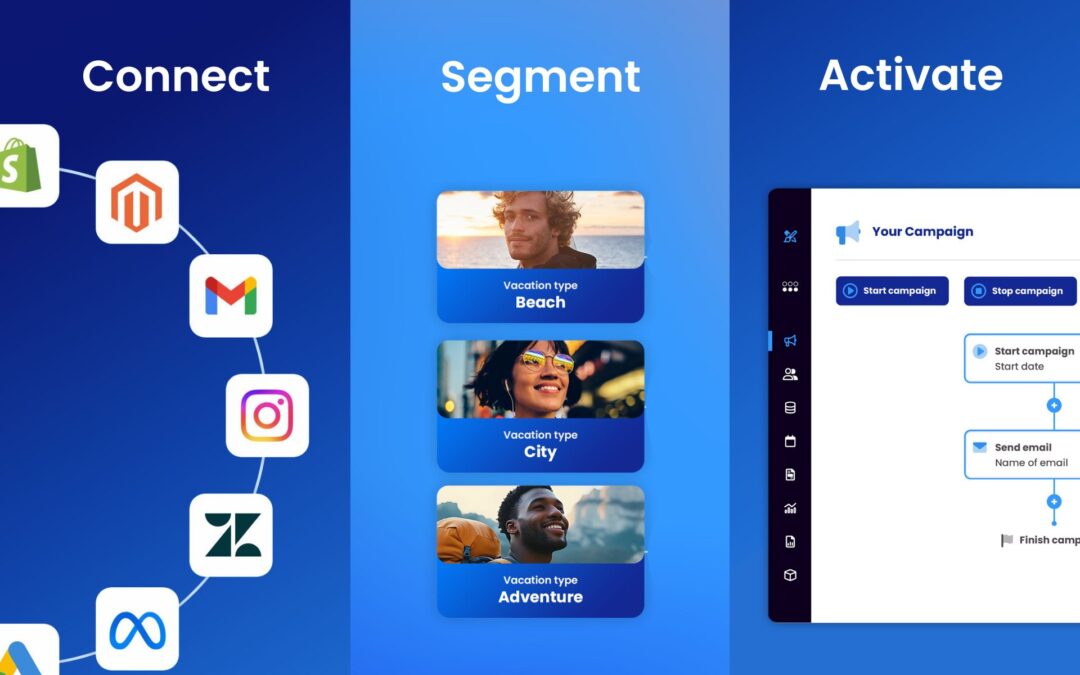
Deployteq’s marketing automation platform addresses retail email list-building challenges through intelligent segmentation, omnichannel integration, and automated nurture sequences. Advanced customer data consolidation enables precise targeting that improves sign-up conversion rates, while automated workflows nurture new subscribers effectively from their first interaction.
Our platform accelerates retail email list growth through:
- Smart segmentation capabilities that identify high-value prospects and personalize sign-up experiences based on browsing behavior, purchase history, and engagement patterns
- Omnichannel integration connecting email, SMS, WhatsApp, and push notifications for consistent messaging across all customer touchpoints
- Automated welcome sequences that immediately engage new subscribers with personalized content, product recommendations, and exclusive offers tailored to their interests
- Real-time trigger capabilities that capture sign-up opportunities through behavioral triggers like cart abandonment, browse patterns, and engagement levels
- Unified customer data management that consolidates online and offline interactions for complete customer profiles that improve targeting accuracy
The platform’s intelligent modeling includes RFM analysis, next-best-offer predictions, and predictive insights that help retail brands identify the most effective lead magnets and sign-up strategies for different customer segments. This data-driven approach consistently improves email acquisition rates while building higher-quality subscriber lists.
Ready to accelerate your retail email list growth with advanced automation? Book a demo to see how our platform transforms email acquisition strategies, or explore our comprehensive email marketing platform designed specifically for retail success. Contact us to discuss your specific email list-building challenges and discover how intelligent automation can drive sustainable subscriber growth.