A CDP (Customer Data Platform) and a CRM (Customer Relationship Management system) are fundamentally different tools built for different jobs. A CRM manages relationships and interactions with known contacts, primarily for sales and service teams. A CDP collects, unifies, and activates behavioural and transactional data from every touchpoint to power real-time, personalised marketing at scale.
The core distinction comes down to scope and purpose. CRMs are contact-centric and manually updated. CDPs are data-centric and continuously enriched by automated feeds from your website, apps, campaigns, and more. The questions below unpack every meaningful difference between the two.
What does a CDP do that a CRM cannot?
A CDP ingests real-time behavioural data from anonymous and known users, builds unified customer profiles automatically, and activates those profiles across marketing channels without manual input. A CRM cannot do this because it is designed to store structured contact records and log deliberate interactions, not to process streaming event data or trigger automated cross-channel campaigns.
The practical gap shows up fast in marketing execution. A CRM tells you that a customer exists and what they bought last quarter. A CDP tells you that the same customer browsed three product pages this morning, abandoned a basket twenty minutes ago, and has a predicted LTV that puts them in your top 20% segment. That difference drives entirely different campaign decisions.
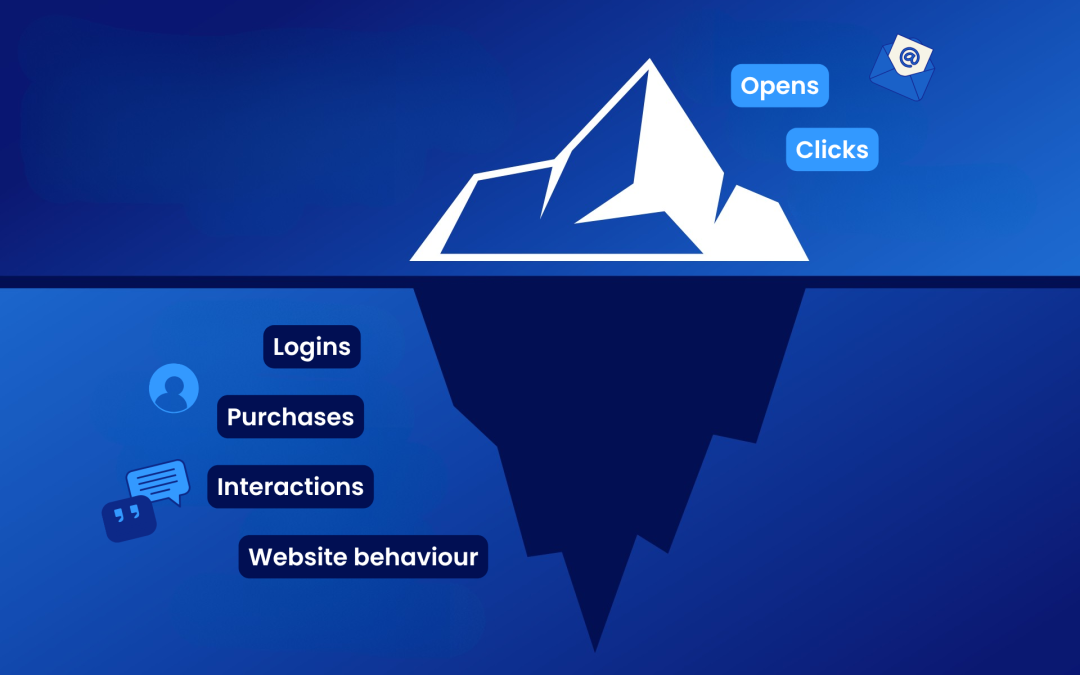
CDPs also handle anonymous visitor data before a user identifies themselves. This is territory a CRM simply does not cover. By the time a contact lands in your CRM, the CDP has already been building a behavioural profile for days or weeks.
How does a CDP collect and unify customer data?
A CDP collects data through direct integrations, APIs, and tracking scripts that pull in events and attributes from every source your customers touch. It then resolves those data points into a single, persistent customer profile using identity resolution logic. The result is one unified view of each customer, regardless of which channel or device they used.
The sources feeding a CDP typically include:
- Website and app behavioural events (page views, clicks, searches, basket activity)
- Email and SMS engagement data (opens, clicks, conversions)
- Transactional data from ecommerce platforms or POS systems
- Loyalty programme data
- CRM exports and offline data uploads
- Paid media and social interaction data
Once unified, the CDP continuously updates profiles as new data arrives. This is what enables real-time segmentation and next-best-action triggers. The profile is not a static snapshot; it is a living record that reflects your customer’s current behaviour and predicted intent.
Which teams use a CRM versus a CDP?
CRMs are primarily used by sales, customer service, and account management teams. They are built around managing pipelines, logging calls and meetings, tracking deals, and resolving support tickets. A CDP, by contrast, is owned and operated by marketing teams, specifically CRM marketers, data analysts, and campaign managers who need to segment audiences and activate them across channels.
This distinction matters when scoping a technology investment. If your sales team needs a tool to manage the full customer relationship lifecycle, a CRM is non-negotiable. If your marketing team needs to activate behavioural data for email personalisation, triggered journeys, and predictive segmentation, a CDP is the right fit.
In larger organisations, both tools coexist and share data. The CRM feeds customer status and purchase history into the CDP. The CDP feeds enriched segments and engagement signals back into the CRM. Neither replaces the other; they serve different functions for different teams.
Can a CDP replace a CRM, or do you need both?
A CDP cannot replace a CRM, and a CRM cannot replace a CDP. They solve different problems for different teams. Most marketing-mature organisations run both in parallel, with the CDP handling behavioural data unification and campaign activation, while the CRM manages structured contact records, sales pipelines, and service interactions.
That said, for B2C marketing teams focused on high-volume, automated customer engagement, the CDP often delivers more day-to-day value than the CRM. If your primary goal is to trigger personalised campaigns based on real-time behaviour, the CDP is where the action happens.
The practical approach is to treat them as complementary layers. Your CRM holds the relationship record. Your CDP holds the behavioural intelligence. Together, they give you a complete picture. Trying to force one tool to do both jobs well almost always creates data gaps and operational friction.
What types of data live in a CDP but not a CRM?
CDPs store event-level behavioural data, anonymous visitor profiles, real-time session data, predictive scores, and cross-channel engagement signals. None of this typically lives in a CRM, which is structured around contact records, deal stages, and logged interactions that require a human to initiate or record them.
Specifically, data that belongs in a CDP but not a CRM includes:
- Anonymous browsing behaviour before a user identifies themselves
- Real-time event streams such as product views, scroll depth, and search queries
- Predictive attributes like churn probability, next-best-offer scores, and RFM classifications
- Cross-device identity graphs linking multiple devices to a single customer
- Audience segments built from dynamic, rule-based or ML-driven logic
- Campaign engagement history across email, SMS, push, and web in a unified profile
This data is what powers hyper-personalised marketing automation at scale. It is not the kind of data a sales rep enters into a contact record; it is machine-generated intelligence built from millions of micro-interactions.
When should a marketing team invest in a CDP?
A marketing team should invest in a CDP when fragmented data is limiting personalisation, when campaign triggers rely on manual audience builds, or when customer journeys span multiple channels but the data does not connect across them. If your team is spending more time preparing data than using it, a CDP is the right next investment.
Specific signals that indicate CDP readiness include:
- Your email segments are static lists rather than dynamic, behaviour-driven audiences
- You cannot trigger campaigns based on real-time website or app activity
- Customer data lives in three or more disconnected systems with no single customer view
- You are losing revenue to cart abandonment or lapsed customers because you cannot identify them fast enough
- You want to move from batch-and-blast sending to lifecycle-driven, predictive marketing
For teams in retail, travel, or entertainment managing large, transactional customer bases, the case for a CDP is particularly strong. The volume and velocity of behavioural data in those sectors make manual data management unscalable, and the revenue impact of real-time personalisation is measurable and significant.
How Deployteq’s CDP closes the gap between data and action
Most CDP conversations stall at the data layer. The real question is not just “can we unify our data?” but “can we activate it immediately, in the channels that drive revenue?” That is exactly where we built our Customer Data Platform to perform.
Our CDP unifies all customer data into intelligent profiles and activates them directly within your campaigns, with no exports, no middleware, and no waiting. Here is what that looks like in practice:
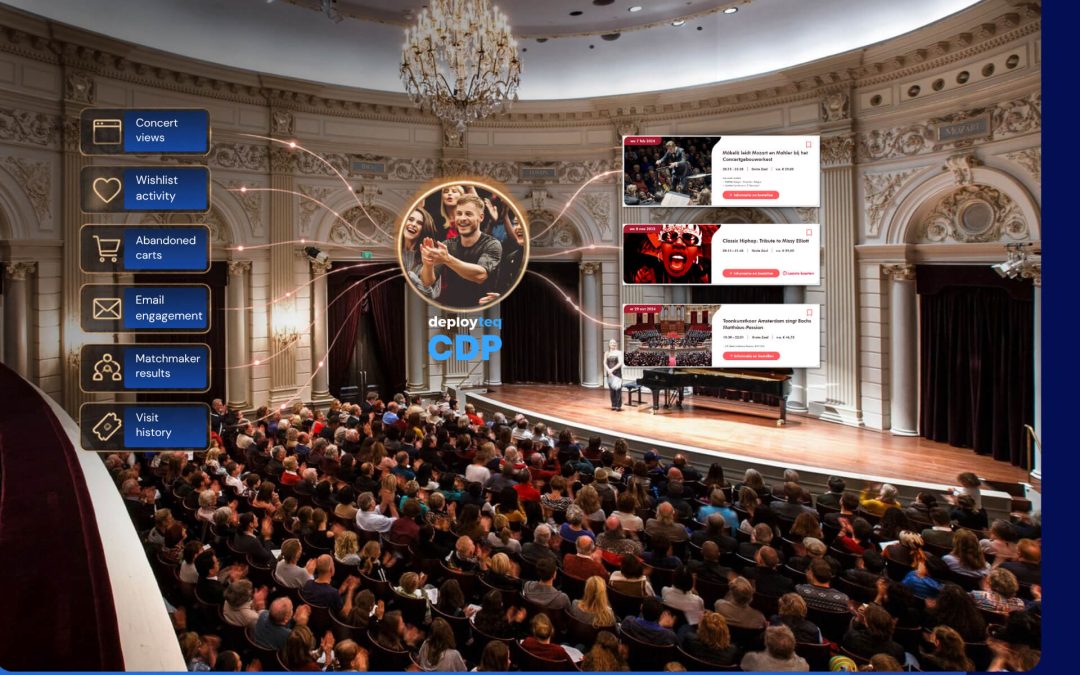
- 360-degree single customer view that visually connects every touchpoint across email, SMS, WhatsApp, push, and web
- Intelligent modelling including RFM scoring, next-best-offer predictions, and full lifecycle insights built into the platform
- Real-time segmentation that updates dynamically as customer behaviour changes, so your campaigns always reflect current intent
- Direct campaign activation across every channel without leaving the platform
- Predictive insights that surface which customers are most likely to convert, churn, or respond to a specific offer
If you are ready to move from fragmented data to campaigns that actually respond to your customers in real time, book a demo and we will show you exactly how it works for your sector.