Your customers don’t live in a single channel. They browse your website, open your emails, tap through push notifications, and respond to SMS offers, sometimes all in the same afternoon. If your marketing automation treats each of those touchpoints as a separate conversation, you’re leaving serious revenue on the table. Omnichannel marketing automation fixes that by connecting every channel into one coherent, intelligent experience.
This article builds your understanding from the ground up. We’ll cover what omnichannel marketing automation actually means, how it differs from what most teams are already doing, and how to put it into practice without common pitfalls slowing you down.
What is omnichannel marketing automation?
Omnichannel marketing automation is the practice of using a single, unified system to deliver personalised, coordinated messages across every customer touchpoint, triggered by real-time data and customer behaviour. The key word here is unified. It’s not just about being present on multiple channels; it’s about those channels sharing data, learning from each other, and responding as one.
Think of it like a well-briefed customer service team. Every agent knows your history, your preferences, and your last interaction, so you never have to repeat yourself. Omnichannel automation applies that same principle at scale, using data to ensure your email, SMS, push, WhatsApp, and web channels all tell the same story at the right moment.
The result is customer experience automation that feels genuinely personal, not just personalised in name. A travel customer who abandons a booking on your website doesn’t receive a generic email blast the next morning. They receive a tailored reminder on the channel they’re most likely to engage with, at the time they’re most likely to act.
How omnichannel automation differs from multichannel marketing
Multichannel marketing means being active on multiple channels. Omnichannel marketing means those channels work together. It sounds like a subtle distinction, but in practice, the difference is enormous.
With multichannel automation, each channel typically operates in its own silo. Your email team runs campaigns independently of your SMS team. Your push notifications aren’t aware of what your email has already said. Customers experience this as inconsistency, repeated messages, or worse, contradictory offers.
Omnichannel automation, by contrast, treats every channel as part of a single journey. Here’s how the two approaches compare:
- Data: Multichannel stores data per channel. Omnichannel consolidates it into one unified customer profile.
- Triggers: Multichannel campaigns often run on schedules. Omnichannel triggers are driven by real-time behaviour across any channel.
- Messaging: Multichannel messages can contradict each other. Omnichannel messages build on each other logically.
- Channel selection: Multichannel sends to a channel by default. Omnichannel selects the right channel based on where the customer is most likely to engage.
For a retail brand, this means a customer who clicks a stock alert email and then visits the product page on mobile doesn’t receive that same stock alert again via SMS. The system knows they’ve already engaged and adapts accordingly.
The core components that make it work
Effective omnichannel marketing automation depends on a few interconnected components. Remove any one of them, and the experience starts to break down.
Unified customer data
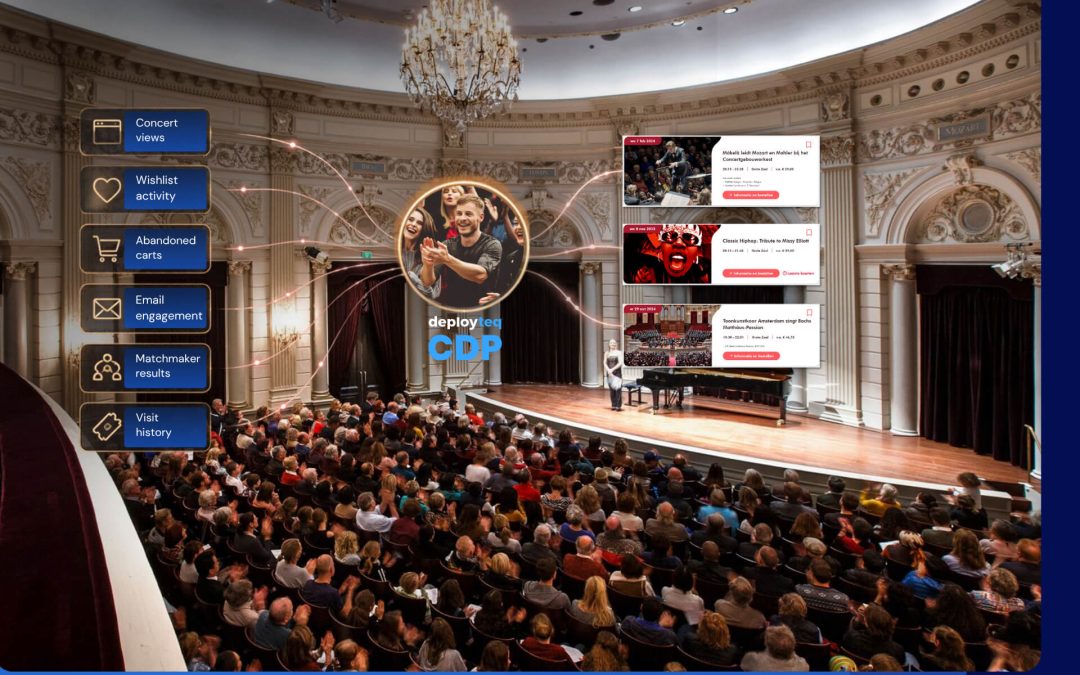
Everything starts with a single customer profile that aggregates data from every touchpoint: browsing behaviour, purchase history, email engagement, app activity, and more. Without this, channels can’t communicate intelligently with each other. A customer data platform is typically what powers this layer, collecting and structuring data so it’s available for real-time activation.
Smart segmentation
Unified data only becomes useful when you can slice it into meaningful segments. Advanced segmentation allows you to group customers by behaviour, LTV, lifecycle stage, or predictive signals, so your automation triggers the right message for the right person, not just the right audience.
A flexible journey builder
The journey builder is where your logic lives. It maps out the conditions, delays, channel selections, and branching paths that determine what happens next for each customer. The more flexible the builder, the more precisely you can reflect real customer behaviour rather than forcing customers into rigid, pre-set flows.
Cross-channel activation
Your platform needs to be able to send across email, SMS, push, WhatsApp, and web from a single workflow. If you’re stitching together separate tools per channel, you’re rebuilding the silos that omnichannel is designed to eliminate. Explore how marketing automation brings these channels together in one place.
How omnichannel automation works in practice
Building on the components above, here’s how a real omnichannel journey plays out. Take a loyalty programme in the entertainment sector. A customer purchases event tickets online. That action updates their unified profile and triggers a welcome sequence, starting with a confirmation email, followed by a push notification with venue information, and a personalised SMS closer to the event date.
If the customer opens the email but doesn’t click through to download the app, the journey branches. Instead of sending another email, the system serves a targeted web banner on their next site visit, prompting the app download. Every step is informed by what happened in the previous one.
This is cross-channel marketing in action: not just sending on multiple channels, but letting customer behaviour on one channel shape what happens on the next. The experience feels intuitive because it mirrors how a real relationship works.
Common omnichannel automation mistakes to avoid
Even with the right technology in place, there are patterns that consistently undermine omnichannel programmes. Knowing them in advance saves a significant amount of rework.
- Treating channel preference as permanent: A customer who prefers email today might shift to SMS next month. Build in preference checks rather than locking customers into a single channel path.
- Ignoring suppression logic: If a customer converts, stop the journey. Sending a cart recovery email after a purchase is one of the fastest ways to erode trust.
- Launching without clean data: Omnichannel automation amplifies whatever data you feed it. Fragmented or outdated customer profiles produce fragmented, irrelevant experiences.
- Over-automating too quickly: Start with two or three high-impact journeys, measure them thoroughly, and expand. Trying to automate every touchpoint at once leads to complexity that’s difficult to manage and harder to optimise.
- Skipping channel-specific optimisation: A message that works in an email won’t necessarily work as an SMS. Each channel has its own conventions, character limits, and engagement patterns. Adapt your content accordingly.
Building your omnichannel automation strategy
A strong omnichannel strategy doesn’t start with technology. It starts with understanding your customer journeys and identifying where disconnected experiences are costing you engagement or revenue.
Here’s a practical framework to get started:
- Map your current customer journeys. Identify every touchpoint a customer has with your brand, from acquisition through retention. Note where channels overlap, where data gets lost, and where the experience becomes inconsistent.
- Consolidate your data. Before you can automate intelligently, you need a single source of truth for customer data. Audit your current data sources and identify what needs to be connected.
- Prioritise your highest-value journeys. Choose two or three journeys with the clearest impact, such as cart abandonment, post-purchase onboarding, or loyalty re-engagement, and build those first.
- Define your channel logic. For each journey, decide which channel leads, which channels support, and what triggers a channel switch. Base this on actual engagement data, not assumptions.
- Measure, learn, and expand. Set clear KPIs for each journey, review performance regularly, and use those insights to refine and scale your programme.
The goal isn’t perfection on day one. It’s building a foundation that gets smarter with every customer interaction. Check out our email marketing platform as a strong starting point for any omnichannel strategy, since email remains the highest-performing channel for most B2C brands.
How Deployteq powers your omnichannel automation
We built Deployteq to make omnichannel marketing automation genuinely accessible for marketing teams managing complex, high-volume customer bases. Here’s what that looks like in practice:
- Unified customer profiles: Our CDP consolidates data from every channel into a single, actionable view, so your journeys are always working from accurate, real-time information.
- Cross-channel campaign activation: Build and deploy journeys across email, SMS, WhatsApp, push, and web from one platform, with no need to stitch together separate tools.
- Intelligent segmentation: Use RFM modelling, next-best-offer logic, and predictive insights to build segments that actually reflect where your customers are in their journey.
- A flexible journey builder: Design customer journeys with the freedom to branch, suppress, delay, and adapt based on real behaviour, not rigid templates.
- Sector-specific expertise: We work with brands across travel, retail, finance, and entertainment, so our platform is built around the journeys and data challenges that matter most to you.
If you’re ready to move beyond siloed channels and start delivering experiences that actually connect, do a self-guided demo and see how Deployteq brings it all together.