Static segmentation rules were built for a simpler time. You define a group once, set some conditions, and send the same message to everyone who fits the box. It works until your customers start behaving in ways your rules never anticipated. In 2026, the gap between what static segments assume and what customers actually do is costing brands real revenue.
This guide walks you through shifting to dynamic behavioral segmentation in a way that is practical and low-risk. You will move from rigid, rule-based lists to living segments that respond to real customer actions, without ripping out everything you have already built.
Audit Your Existing Static Segmentation Rules
Before you build anything new, map what you already have. Pull every active segment from your platform and document the logic behind each one. You are looking for segments that rely purely on fixed attributes such as age, location, or signup date, with no behavioral input whatsoever.
- Export a list of all active segments and their defining criteria.
- Flag any segment that has not been updated in the last six months.
- Identify which segments are driving the highest and lowest engagement rates.
- Note where segments overlap or contradict each other.
What you should see after this step is a clear picture of where your customer segmentation is working and where it is producing noise. Low-engagement segments built on static rules are your starting point for replacement. High-performing ones may only need a behavioral layer added on top.
Map Behavioral Signals to Meaningful Segment Criteria
Not every behavioral signal is worth tracking. Focus on the actions that directly indicate intent or lifecycle stage. For a retail brand, that might be browse depth, cart additions, and purchase frequency. For a travel brand, it could be destination searches, booking windows, and loyalty activity.
- List the five to ten customer actions most predictive of conversion or churn in your sector.
- Assign each signal a weight or priority based on its commercial impact.
- Define what a change in behavior actually means, for example, a customer who browsed three times without purchasing in seven days is showing high intent but low confidence.
- Map each signal to a segment trigger: entry, exit, or escalation.
After this step, you will have a behavioral signal map. This is the logic engine behind your dynamic segments. Verify it by sense-checking each trigger against a real customer scenario before you connect any data sources.
Connect Your Data Sources for Real-Time Behavioral Input
Dynamic customer segmentation only works when your platform receives behavioral data in real time. Static segments pull from a snapshot. Dynamic segments need a live feed. This step is where most teams hit friction, usually because data sits in disconnected systems.
- Identify every source of behavioral data: your website, app, email platform, CRM, POS, and any third-party tools.
- Audit which of these sources have API access or webhook capability.
- Prioritise connecting your highest-signal sources first, typically your website and email engagement data.
- Set up event tracking for the specific behavioral signals you mapped in the previous step.
- Confirm that data is flowing correctly by testing a known user action and checking whether it registers in your platform.
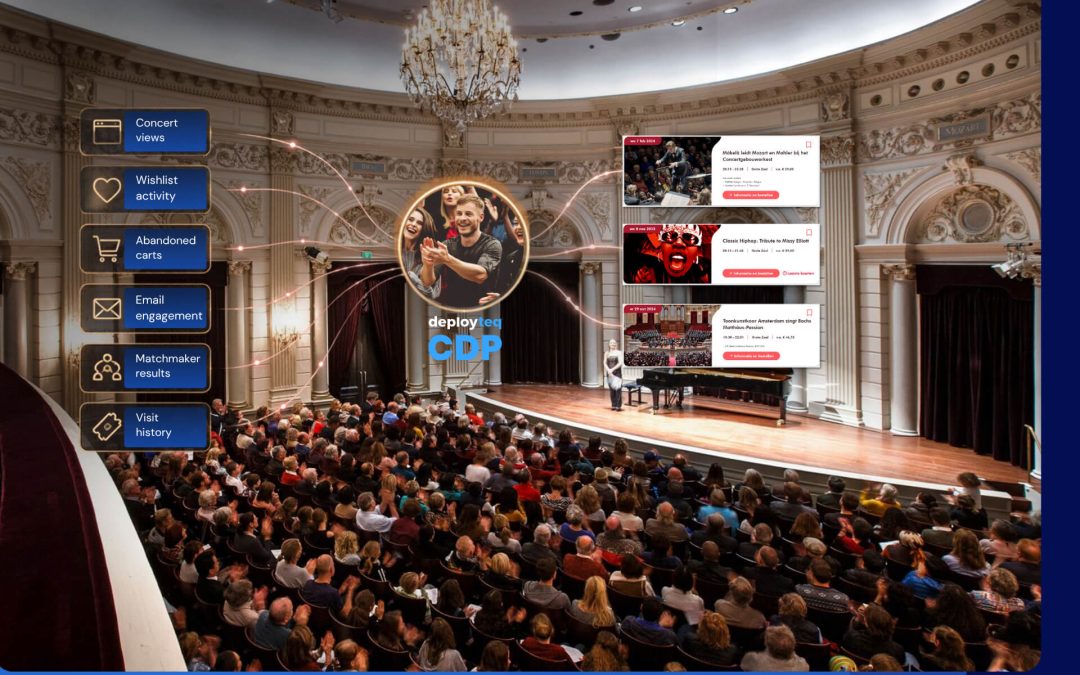
A unified customer data platform makes this significantly faster by consolidating these sources into a single profile. Without one, you may need to manage multiple integrations manually. Either way, do not move to the next step until you can confirm live behavioral data is reaching your segmentation layer.
Build and Activate Your First Dynamic Behavioral Segments
Start small. Pick one high-value use case from your audit, such as high-intent browsers who have not purchased in seven days, and build that segment first. Trying to migrate all your static segments at once is the fastest way to introduce errors.
- Define the entry criteria using behavioral signals: for example, three or more product page views in the last seven days with no purchase event.
- Set an exit condition so customers leave the segment when they convert or when the behavior stops.
- Assign a marketing automation journey to the segment, starting with a single triggered communication.
- Set refresh frequency, ideally real-time or at minimum daily, so the segment stays current.
- Activate the segment in a controlled environment before pushing it live to your full audience.
Once the segment is live, confirm that customers are entering and exiting as expected. Check the segment size against your expectations. If it is dramatically larger or smaller than anticipated, revisit your entry criteria before scaling.
Validate Segment Accuracy Before Full Rollout
Validation is not optional. A dynamic segment that pulls the wrong customers into the wrong journey does more damage than a static segment that simply underperforms. Build in a quality check before any segment goes to full scale.
- Pull a sample of twenty to fifty customer profiles currently sitting in the new segment.
- Check each profile manually against the entry criteria to confirm they genuinely match the behavioral pattern.
- Compare open rates, click rates, and conversion rates from the dynamic segment against the static equivalent over a two-week period.
- Look for unexpected exits: customers leaving the segment before completing the journey.
If your sample check reveals mismatches, go back to your signal mapping and tighten the criteria. Common issues include overly broad time windows, missing exclusion rules, or behavioral signals that fire on irrelevant actions. Fix these before expanding to additional segments.
Iterate and Expand Behavioral Segmentation Over Time
Dynamic segmentation is not a one-time build. The real value compounds as you add more signals, refine your criteria, and introduce more sophisticated logic such as RFM scoring, predictive next-best-offer models, or lifecycle stage transitions.
- Review segment performance monthly and retire any that are no longer driving engagement.
- Add new behavioral signals as your data sources mature and new customer actions become trackable.
- Introduce suppression logic to prevent over-messaging customers who appear in multiple active segments.
- Test more advanced segmentation models, such as predictive churn or high-LTV identification, once your foundational segments are stable.
Set a quarterly review cadence to assess which segments are contributing to revenue and which need rethinking. The goal is a personalised email and cross-channel strategy that evolves with your customers rather than one that freezes them in place.
How Deployteq Helps with Behavioral Segmentation
We built Deployteq specifically for marketers who need to move fast without sacrificing precision. Shifting from static rules to dynamic behavioral segmentation is exactly the kind of challenge our platform is designed to solve.
- Real-time data consolidation: Our Customer Data Platform unifies behavioral signals from every source into a single customer profile, updated in real time.
- Advanced segmentation tools: Build dynamic segments using behavioral triggers, RFM models, and predictive insights without needing a data science team.
- Cross-channel activation: Push segments directly into email, SMS, WhatsApp, push, and web campaigns from one place.
- Journey builder flexibility: Design automated journeys that respond to segment entry and exit events, so the right message reaches the right customer at the right moment.
- Intelligent modelling: Use next-best-offer and predictive insights to go beyond behavioral triggers and anticipate what each customer needs next.
If you are ready to move beyond static lists and start building segments that actually reflect how your customers behave, do a self-guided demo and see how Deployteq makes it straightforward.