Omnichannel marketing has always promised a seamless customer experience. But for most teams, the reality has been a collection of automated flows firing in sequence, each channel operating on its own logic, with little awareness of what the others are doing. That gap between promise and practice is closing fast.
In 2026, the shift from pre-built automation to real-time engagement orchestration is reshaping how B2C marketing teams operate. This article walks you through that shift, from the foundational concepts to the practical steps you can take to build a more responsive, connected marketing operation.
What is real-time engagement orchestration in omnichannel marketing?
Real-time engagement orchestration is the practice of coordinating customer communications across every channel, dynamically and in the moment, based on live behavioral signals rather than pre-scheduled sequences.
Traditional automation asks: what should we send next? Orchestration asks: what does this customer need right now, and which channel is best placed to deliver it? That distinction matters enormously when you are managing high-volume, multi-channel customer bases.
For example, a travel brand running a pre-built flow might send a promotional email three days after a customer browses a holiday package. An orchestrated approach would detect that the same customer just returned to the site, checked availability, and abandoned the booking page, then trigger an SMS within minutes, not days.
How omnichannel flows evolved into dynamic orchestration
Early omnichannel marketing automation was built around journeys with fixed entry points, fixed timing, and fixed channel logic. A customer enters a flow, moves through it step by step, and exits at the end. This model works well for predictable lifecycle moments like onboarding or post-purchase follow-up.
The problem is that customer behavior is not predictable. People browse out of sequence, respond at unexpected times, and switch between channels mid-decision. Fixed flows cannot adapt to that reality without constant manual intervention.
Dynamic orchestration emerged as teams started connecting richer behavioral data to their automation logic. Instead of a customer moving through a journey you designed in advance, the journey assembles itself around the customer’s actual actions, drawing on real-time data to determine the next-best touchpoint.
Core principles that power real-time orchestration
Understanding how orchestration works means understanding the three principles it depends on. These are not features of a platform, they are strategic commitments that shape how you build and manage your marketing operation.
Unified data in motion
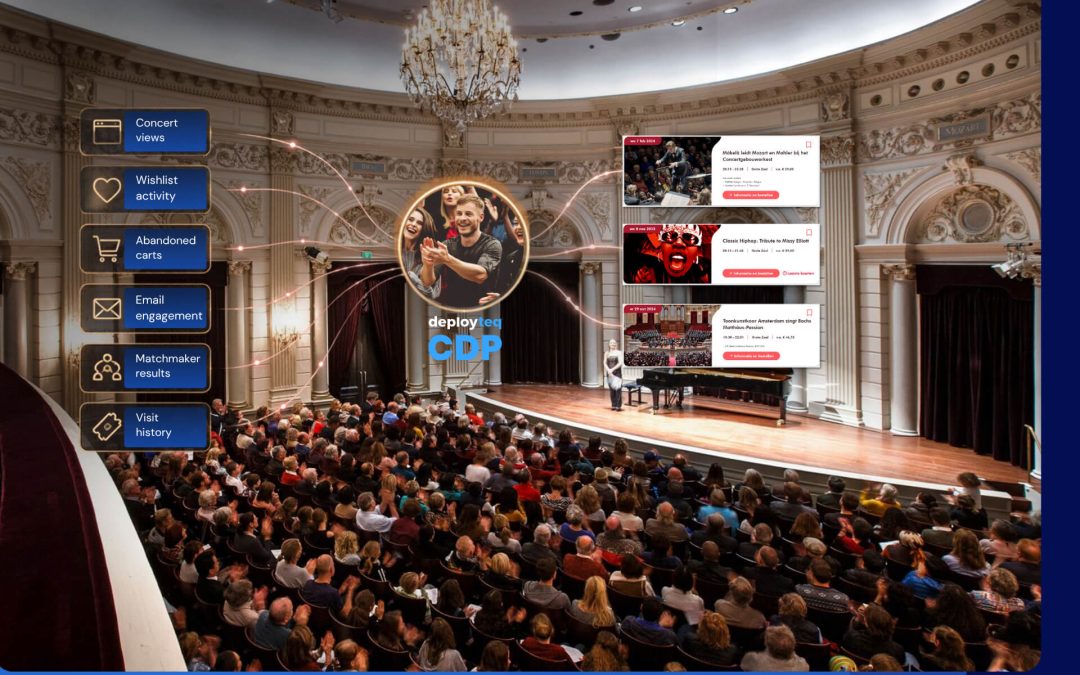
Orchestration only works when customer data flows freely between your channels and your decision logic. That means breaking down the silos between your CRM, your web analytics, your email platform, and your transactional data. A customer data platform is often the infrastructure layer that makes this possible, consolidating behavioral, transactional, and demographic signals into a single, actionable profile.
Decisioning at the moment of interaction
Rather than scheduling communications in advance, orchestration systems evaluate customer context at the moment a trigger fires. This is where logic like next-best-offer modeling or RFM scoring becomes operationally useful, not just analytically interesting. The system decides, in real time, what to send, through which channel, and with what content.
Channel agnosticism
No single channel owns the customer relationship. Email, SMS, push notifications, WhatsApp, and web personalization each have different strengths depending on the moment and the customer’s preferences. Orchestration treats channels as delivery mechanisms, not destinations. The message determines the channel, not the other way around.
Apply orchestration thinking to your existing channel mix
Building on the principles above, the practical starting point is not rebuilding your entire marketing stack. It is applying orchestration logic to the channels you already use.
Start by auditing your current flows for moments where channel switching would improve the experience. For example:
- A cart abandonment email that goes unread after four hours could trigger an SMS follow-up automatically
- A loyalty program email could be suppressed for customers who already redeemed their points via the app that morning
- A post-purchase flow could branch into different content tracks based on whether the customer has opened previous emails or ignored them
These are not complex infrastructure projects. They are decision points you can introduce into existing journeys once your data connections are in place. The goal is to make your flows context-aware, so they respond to what the customer is actually doing rather than what you assumed they would do when you built the flow.
Common mistakes that stall omnichannel orchestration
Most orchestration projects slow down or stall for the same reasons. Recognizing these early saves a significant amount of time and budget.
- Treating orchestration as a platform problem: The technology matters, but orchestration fails when teams have not agreed on the data model, the channel ownership rules, or the decisioning logic. Platform capability without strategic alignment produces expensive automation that still fires out of context.
- Over-engineering the first iteration: Teams often try to build the perfect orchestration system before running anything. Start with one high-value customer moment, prove the model, then scale. A well-executed cart recovery orchestration is worth more than a theoretically perfect omnichannel architecture that never launches.
- Ignoring suppression logic: Real-time orchestration can easily tip into over-communication if suppression rules are not built in from the start. Customers who have already converted, already engaged, or have recently received multiple messages need to be excluded from triggers automatically, not manually.
- Underestimating data latency: Orchestration depends on real-time data. If your customer profiles update in batch cycles overnight, your “real-time” triggers are working on stale information. Closing that latency gap is often the most impactful technical investment a team can make.
Build an orchestration-ready marketing operation
Getting your team and infrastructure ready for orchestration is a staged process. You do not need to solve everything at once, but you do need a clear sequence.
- Consolidate your customer data: Identify where your key behavioral and transactional signals live and map the connections between them. Unified profiles are the foundation everything else depends on.
- Define your trigger library: List the customer actions and inactions that should prompt a response. Browsing without purchasing, opening without clicking, lapsing after a high-engagement period: these are your orchestration entry points.
- Assign channel logic to each trigger: For every trigger, decide which channel responds first, under what conditions a second channel activates, and what suppression rules apply. Document this before you build it.
- Build, test, and measure one journey at a time: Prioritize the highest-value customer moment in your current mix, build the orchestrated version, and measure the outcome against your existing flow. Use those results to make the case for the next iteration.
- Review your tech stack for real-time capability: Assess whether your current platform can support real-time triggers, cross-channel suppression, and live personalization. If it cannot, that is a constraint worth addressing early.
How Deployteq powers real-time omnichannel orchestration
We built Deployteq to give marketing teams the infrastructure they need to move from static flows to genuinely responsive orchestration. Our platform connects every major channel in a single environment, so your decisioning logic, your data, and your delivery all work from the same source of truth.
- Unified customer profiles: Our CDP consolidates behavioral, transactional, and demographic data in real time, giving every trigger the full customer context it needs to make smart decisions.
- Cross-channel journey builder: Design and deploy orchestrated journeys across email, SMS, WhatsApp, push, and web, with real-time triggers, smart branching logic, and built-in suppression rules.
- Intelligent modeling: RFM scoring, next-best-offer logic, and predictive insights are built directly into campaign activation, so your orchestration decisions are backed by data you can actually use.
- Scalable for high-volume B2C teams: Whether you are in retail, travel, finance, or entertainment, our platform is built to handle the complexity and volume that omnichannel customer experience strategy demands.
If you are ready to move beyond pre-built flows and build an orchestration-ready marketing operation, explore Deployteq and see how it works in practice.