Marketing automation improves email segmentation and targeting by replacing manual, static list management with dynamic, data-driven audience building. Instead of grouping contacts by basic criteria like sign-up date or location, automation continuously updates segments based on real-time behaviour, purchase history, lifecycle stage, and predictive signals. The result is sharper targeting, higher relevance, and measurably better campaign performance. Below, we break down exactly how this works across the most common questions marketers ask.
What types of segmentation does marketing automation enable?
Marketing automation enables behavioural, demographic, transactional, predictive, and lifecycle-based segmentation. Unlike basic list splits, automated segmentation layers multiple data points simultaneously, so a single contact can qualify for highly specific audiences based on what they have done, what they are likely to do next, and where they sit in the customer journey.
Here is a practical breakdown of the main segmentation types automation unlocks:
- Behavioural segmentation: Based on email opens, clicks, website visits, and content interactions
- Transactional segmentation: Built from purchase frequency, average order value, and recency (RFM modelling)
- Lifecycle segmentation: Separates new subscribers, active buyers, at-risk customers, and lapsed contacts
- Predictive segmentation: Uses historical patterns to identify next-best-offer candidates or churn risks
- Preference-based segmentation: Driven by declared interests, category affinity, or channel preference
For a retail or travel brand managing tens of thousands of contacts, this level of granularity transforms a single campaign into dozens of precisely targeted conversations, each relevant to a specific audience slice.
How does automation use customer data to improve targeting accuracy?
Automation improves targeting accuracy by consolidating customer data from multiple sources into a unified profile, then using that profile to trigger sends, update segments, and personalise content in real time. Rather than relying on a snapshot of who a customer was when they signed up, automation reflects who they are right now.
The mechanism works in three stages. First, data from email interactions, website behaviour, CRM records, and purchase systems is pulled into a central platform. Second, rules, scoring models, or predictive algorithms evaluate that data continuously. Third, contacts are moved between segments automatically as their behaviour changes, without any manual intervention.
This is particularly powerful for advanced email marketing, where the difference between a relevant message and an ignored one often comes down to timing and context. A customer who browsed holiday packages yesterday and opened a promotional email this morning is a fundamentally different targeting opportunity from one who has not engaged in three months. Automation recognises that distinction instantly.
What’s the difference between static and dynamic email segments?
Static segments are fixed lists that do not change unless a marketer manually updates them. Dynamic segments are rule-based audiences that update automatically as contacts meet or stop meeting defined criteria. For high-volume email programmes, dynamic segments are significantly more accurate and far less resource-intensive to maintain.
Static segments: when they work
Static segments are useful for one-time sends to a defined group, such as attendees of a specific event or customers who made a purchase in a fixed date range. They give you precise control over a frozen audience, which is appropriate when the list itself is the point.
Dynamic segments: the automation advantage
Dynamic segments continuously re-evaluate your contact database. A segment defined as “customers who purchased in the last 30 days and have not opened an email this week” will always contain the right people, regardless of when you send. This removes the risk of messaging lapsed customers with active buyer content, or missing newly qualified contacts because the list was built last month.
For CRM and email teams managing complex lifecycle programmes, dynamic segments connected to a unified customer data platform are the foundation of scalable, accurate targeting.
How does personalisation connect to automated segmentation?
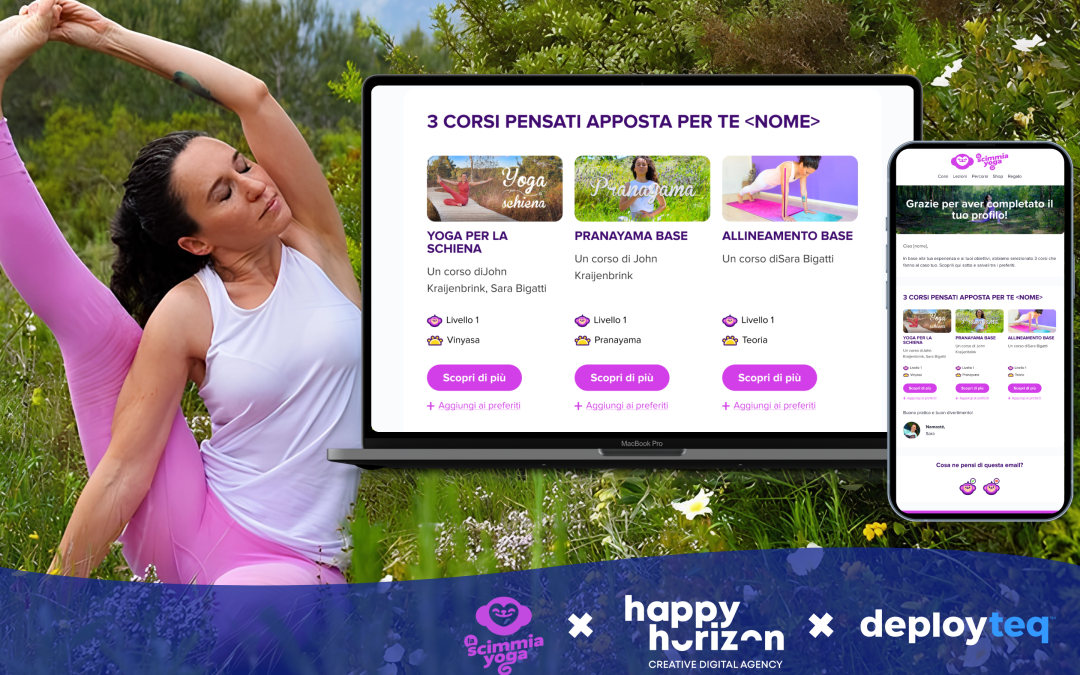
Automated segmentation is the engine that makes personalisation possible at scale. Segmentation defines who receives a message; personalisation defines what that message contains. When automation handles both, every contact receives content that reflects their specific behaviour, preferences, and stage in the customer journey, without the production overhead of building individual campaigns.
In practice, this works through dynamic content blocks within a single email template. A travel brand, for example, sends one campaign but the destination imagery, offer, and call to action adapt based on each recipient’s browsing history and loyalty tier. A finance brand sends a single lifecycle email where the product recommendation changes based on the contact’s account type and recent activity.
The connection between segmentation and personalisation becomes tighter as data quality improves. The more accurately a platform can classify a contact, the more precisely it can serve relevant content. This is why investing in smart segmentation logic pays dividends across every personalisation tactic downstream.
Which email metrics improve when automation handles segmentation?
When automation handles segmentation, the metrics that improve most consistently are open rate, click-through rate, conversion rate, and unsubscribe rate. These gains occur because automated segments ensure the right message reaches the right person at the right moment, reducing irrelevance and increasing resonance across the board.
- Open rate: Improves when subject lines and send timing are matched to segment behaviour rather than applied uniformly
- Click-through rate: Rises when content and offers are relevant to the recipient’s demonstrated interests
- Conversion rate: Increases when automation targets contacts at peak intent moments, such as post-browse or cart abandonment windows
- Unsubscribe rate: Drops when contacts receive fewer irrelevant messages, reducing fatigue and list churn
- Revenue per email: Grows as hyper-targeted campaigns outperform broad sends on a per-contact basis
For e-commerce and retail teams, the conversion rate and revenue per email metrics are often the most compelling. Sending a cart recovery email to a precisely defined segment of high-intent, recent browsers consistently outperforms sending the same email to your entire list.
What features should a marketing automation platform have for segmentation?
A marketing automation platform built for serious segmentation needs real-time data ingestion, flexible rule-based segment builders, dynamic content support, predictive modelling, and cross-channel activation. Without these capabilities, segmentation stays surface-level and requires constant manual upkeep.
The core features to look for include:
- Unified data consolidation: The platform must pull data from email, CRM, web, and transactional sources into a single customer profile
- Dynamic segment rules: Segments should update automatically based on behaviour, not require manual refreshes
- Predictive models: RFM scoring, next-best-offer logic, and churn prediction add intelligence beyond rule-based filters
- Dynamic content blocks: Personalisation must be deliverable from a single template, not dozens of separate builds
- Cross-channel activation: Segments should trigger actions across email, SMS, push, and web, not just one channel
- Journey builder integration: Segmentation logic should feed directly into automated journeys without manual handoffs
Platforms that offer these capabilities as an integrated stack, rather than bolted-on add-ons, give marketing teams the speed and flexibility to act on data without waiting for technical support.
How Deployteq helps with email segmentation and targeting
We built Deployteq specifically for marketing teams who need to move fast without sacrificing precision. Our marketing automation platform brings together everything covered in this article into one connected stack:
- Advanced segmentation engine: Build real-time, dynamic segments using behavioural, transactional, and predictive data, all from a single interface
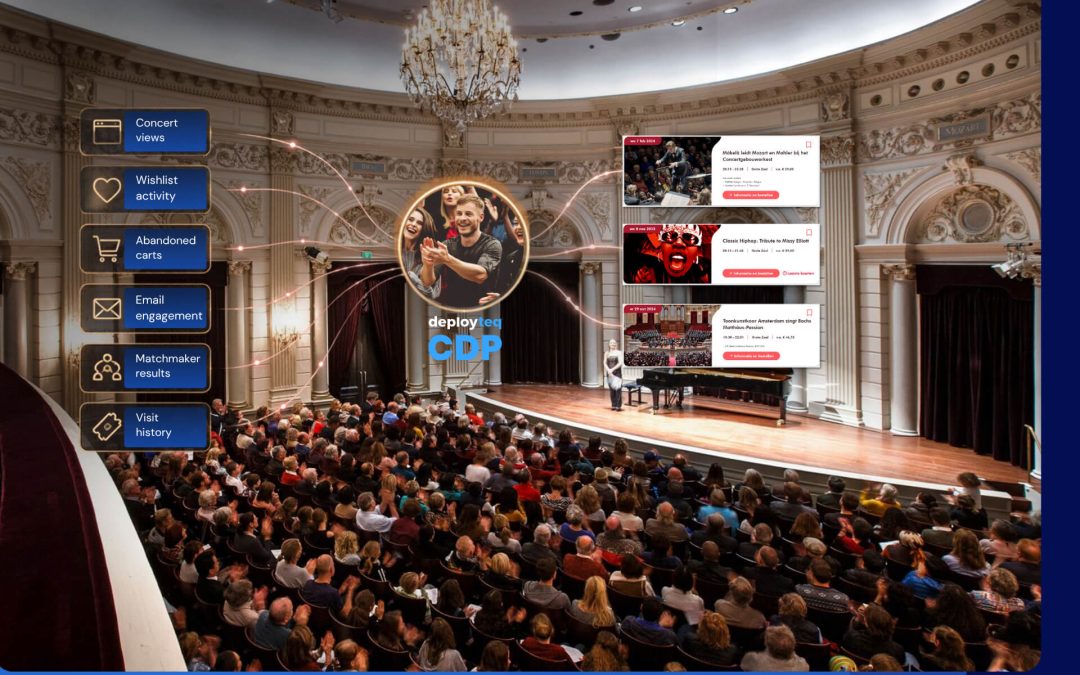
- Integrated CDP: Our Customer Data Platform unifies data across every touchpoint so your segments always reflect the current state of each contact
- Predictive intelligence: RFM modelling, next-best-offer logic, and churn prediction are built in, not bolted on
- Dynamic content at scale: Deliver hyper-personalised emails from a single campaign using smart logic and dynamic content blocks, with no duplication required
- Cross-channel activation: Segments trigger actions across email, SMS, WhatsApp, push, and web from one journey builder
Brands like Wickes, Virgin Media, and Center Parcs use Deployteq to run complex, high-volume email programmes with the kind of targeting accuracy that generic platforms cannot match. If you want to see how it works in practice, book a self-guided demo and explore the platform at your own pace.