Scattered customer data is one of the most common blockers for email marketers who want to personalise at scale. When purchase history lives in your ecommerce platform, engagement data sits in your ESP, and loyalty points are locked in a separate CRM, you end up sending campaigns based on an incomplete picture. The result? Generic messaging, missed triggers, and revenue left on the table. Data unification changes that. Here are eight practical strategies to bring your customer data together and put it to work.
Why fragmented data is holding email campaigns back
Most email marketers are not short on data. They are short on connected data. When your sources do not talk to each other, segmentation becomes guesswork. A customer who browsed holidays three times this week looks identical to a cold subscriber if your ESP cannot see their web behaviour. That gap kills relevance.
Fragmented data also creates operational drag. Your team spends hours reconciling exports, building workarounds, and second-guessing whether a segment is accurate. Knowing how to unify customer data is not just a technical upgrade. It is a direct path to faster campaigns, sharper targeting, and better results.
1: Audit all your data sources first
Before you can fix scattered customer data, you need to map exactly where it lives. Start by listing every system that holds customer information: your ESP, CRM, ecommerce platform, loyalty programme, web analytics tool, and any third-party integrations.
For each source, document what data it holds, how often it updates, and whether it uses a consistent customer identifier. This audit surfaces the gaps and duplications that are quietly undermining your segmentation. It also gives you a clear starting point for prioritising which integrations to tackle first.
Many teams discover during this step that they are collecting far more useful data than they realised. The problem was never volume. It was visibility.
2: Build a single customer profile
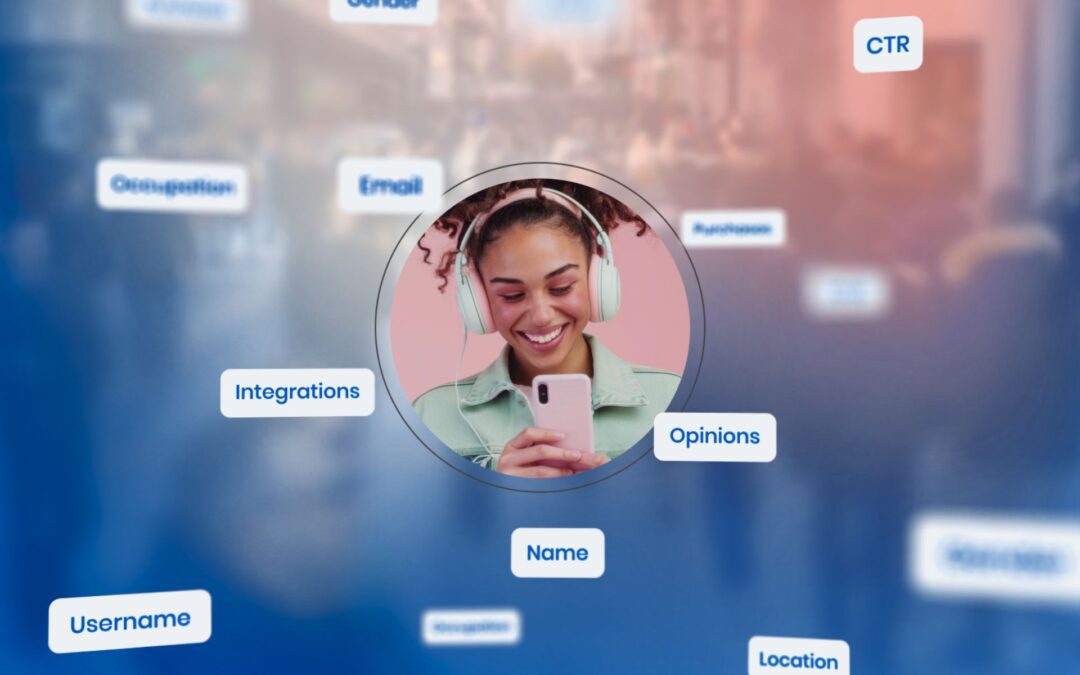
A single customer profile stitches together every interaction a person has had with your brand into one unified record. That means their purchase history, email engagement, web behaviour, support tickets, and loyalty status all live in one place, linked by a common identifier such as an email address or customer ID.
This unified view is the foundation of any serious email personalisation strategy. When you know that a customer last purchased two weeks ago, opened your last three campaigns, and has browsed a specific product category four times, you can trigger the right message at the right moment.
Start by resolving identity across sources. Decide on your master identifier and build your data model around it. Every system should feed into this central profile rather than operating as a standalone silo.
3: Standardise data formats across platforms
Even when data is technically connected, inconsistent formatting creates problems. One system stores dates as DD/MM/YYYY, another uses timestamps. Gender fields use different values. Product categories have different naming conventions. These mismatches break automation rules and corrupt segments.
Standardisation means agreeing on a shared schema before data enters your unified environment. Define your field names, accepted values, and formatting rules, then apply transformation logic at the point of ingestion. This is unglamorous work, but it pays off every time you build a segment or trigger a journey.
Build a data dictionary that your marketing, data, and tech teams all reference. It keeps everyone aligned and makes onboarding new data sources significantly faster.
4: Use a CDP to activate unified data
A Customer Data Platform is purpose-built to solve the scattered customer data problem at scale. Unlike a CRM or a data warehouse, a CDP is designed for marketers. It ingests data from multiple sources, resolves identities, and makes unified profiles immediately available for campaign activation.
The key word is activation. A CDP is not just a storage layer. It connects directly to your campaign channels so that when a profile updates, your automation can respond in real time. That means a travel brand can trigger a destination email the moment a customer browses a specific route, without waiting for a nightly data sync.
When evaluating CDPs, prioritise native integration with your existing channels and the ability to build segments without relying on your data team for every query.
5: Apply RFM modelling to unified segments
RFM (Recency, Frequency, Monetary) modelling is one of the most practical ways to turn unified data into actionable segments. It scores customers based on how recently they purchased, how often they buy, and how much they spend. The result is a clear picture of who your best customers are and who is at risk of churning.
With fragmented data, RFM is nearly impossible to run accurately. You need purchase history, engagement signals, and revenue data in one place. Once your data is unified, RFM becomes a fast, reliable way to prioritise your email strategy. High-value, high-frequency customers get loyalty rewards. Recent one-time buyers get onboarding sequences. Lapsed high-spenders get win-back campaigns.
The power of RFM is in its simplicity. It does not require a data science team. It requires clean, unified data and a clear plan for each segment.
6: Leverage real-time behavioural data
Batch data processing is no longer enough for marketers who want to compete on relevance. Real-time behavioural data, such as page views, product interactions, cart additions, and search queries, lets you trigger emails at the exact moment intent is highest.
Connecting your web analytics or app data to your email platform is a meaningful step toward data unification. When a retail customer views a product three times in 48 hours but does not purchase, a real-time trigger can send a targeted email while their interest is still active. That window closes quickly if your data is delayed by hours or days.
Focus on the behavioural signals that most strongly predict conversion in your sector. For travel, that might be repeated destination searches. For finance, it could be time spent on a product comparison page. Build your real-time triggers around those high-intent moments.
7: Enrich first-party data with predictive insights
First-party data tells you what a customer has done. Predictive insights tell you what they are likely to do next. Enriching your unified profiles with predictive scores, such as churn probability, next best offer, or LTV forecast, gives your segmentation a forward-looking dimension that reactive data alone cannot provide.
These models work best when they are built on clean, unified data. The more complete your customer profiles, the more accurate the predictions. A retail brand with full purchase history, engagement data, and browsing behaviour will generate far more reliable next-best-offer scores than one working from email opens alone.
Predictive enrichment does not require a dedicated data science team if your platform supports intelligent modelling natively. The goal is to surface these scores directly within your segmentation and journey builder so marketers can act on them without technical support.
8: Govern your data for long-term accuracy
Data unification is not a one-time project. Without governance, unified data degrades quickly. Customers change email addresses, preferences shift, and new data sources get added without following the agreed schema. Governance is what keeps your single customer view accurate over time.
Build governance into your process from the start. Define who owns each data source, establish rules for how conflicts are resolved when two systems disagree on a field value, and schedule regular audits to catch drift. Set up suppression logic to handle unsubscribes and inactive contacts consistently across all channels.
Good data governance also supports compliance. With privacy regulations continuing to evolve in 2026, having clear documentation of where your data comes from and how it is used protects your brand as well as your customers.
How Deployteq helps with data unification
We built our Customer Data Platform specifically to give marketers a practical, actionable solution to the data unification challenge. Rather than adding complexity, it simplifies the path from raw data to personalised campaigns.
- 360-degree single customer view: We unify all your customer data into intelligent profiles, connecting behavioural, transactional, and engagement data into one clear picture.
- Intelligent modelling built in: RFM scoring, next-best-offer recommendations, and predictive lifecycle insights are available natively, without needing a data science team.
- Direct campaign activation: Unified profiles activate straight into email, SMS, WhatsApp, push, and web campaigns, so there is no gap between insight and execution.
- Hyper-personalised segmentation: Build real-time, highly granular segments based on unified data and deploy them across every channel your customers use.
- No-code accessibility: Our platform is designed for marketers, not just data teams. You can build, activate, and iterate without relying on developer support.
If your current setup is making data unification harder than it needs to be, we would love to show you what is possible. Book a personalised demo and see how Deployteq turns unified data into smarter email results.
Turn unified data into smarter email results
The eight strategies above are most powerful when they work together. Auditing your sources and standardising formats lays the groundwork. Building single customer profiles and activating them through a CDP turns that groundwork into campaign-ready intelligence. RFM modelling, real-time triggers, and predictive enrichment sharpen your targeting. And governance keeps the whole system accurate as your data grows.
The marketers who win on relevance in 2026 are not necessarily the ones with the most data. They are the ones who have connected it, cleaned it, and built automated journeys that respond to it intelligently. Start with the audit, commit to the single profile, and build from there.
Related Articles
- How does a CDP improve marketing campaign performance?
- What does a 360-degree customer view actually mean?
- How Do You Recover Lost Sales With Cart Abandonment Email Campaigns?
- What is the difference between rule-based and AI-driven automation?
- How do I make marketing emails accessible for screen readers?
This content was generated with the help of AI — it may contain mistakes