Manual marketing processes are quietly eating into your team’s capacity. The repetitive tasks, the copy-paste workflows, the spreadsheets that need updating before you can even think about sending a campaign. In 2026, these habits are not just inefficient, they are holding your results back. Marketing automation exists precisely to free your team from the grind so you can focus on strategy, creativity, and growth. Here are seven processes you should stop doing manually right now.
1: Email campaign scheduling and sending
Manually scheduling email sends is one of the most time-consuming and error-prone tasks in any marketing team’s week. Pulling lists, checking suppressions, setting send times, and triple-checking everything before you hit go. It adds up fast.
Email marketing automation removes this friction entirely. You build the logic once: triggers, timing, audience conditions, and the platform handles execution. Whether it is a welcome email firing the moment someone signs up or a promotional send timed to a customer’s local time zone, automation ensures precision at scale.
For retail and e-commerce teams running multiple campaigns a week, this shift alone can reclaim significant hours. The added benefit is consistency. Automated sends do not miss a beat because someone forgot to click a button.
2: Lead segmentation and list management
Static lists are a liability. If your segmentation relies on someone manually tagging contacts, importing CSVs, or updating fields in a CRM, your data is already out of date by the time you use it.
Smart segmentation works in real time. It reads behavioural signals, purchase history, engagement data, and lifecycle stage, then places contacts into the right segments automatically. This means your messaging is always relevant, not based on who someone was three months ago.
Advanced CRM automation takes this further by syncing data across systems so your segments reflect a single, accurate view of each customer. For travel brands managing loyalty tiers or finance marketers working with complex lifecycle stages, this level of precision is not optional. It is essential.
3: Follow-up and drip campaign sequences
If your follow-up strategy depends on someone remembering to send the next email, you are losing conversions every single day. Drip sequences built on manual triggers are inconsistent, and inconsistency kills momentum in the customer journey.
Automated drip campaigns respond to behaviour. A customer downloads a guide, they enter a nurture sequence. A lead goes quiet after a demo request, a follow-up fires automatically at the right interval. The logic is set once, and it runs without intervention.
For entertainment and media brands with high-frequency engagement cycles, this is particularly powerful. You can build sequences that adapt based on what content a user has consumed, keeping them moving toward conversion without manual oversight.
4: Customer journey tracking across channels
Tracking a customer’s journey manually across email, SMS, web, and social is not just difficult. It is practically impossible to do accurately at scale. When data lives in separate tools with no unified view, your team is making decisions based on incomplete pictures.
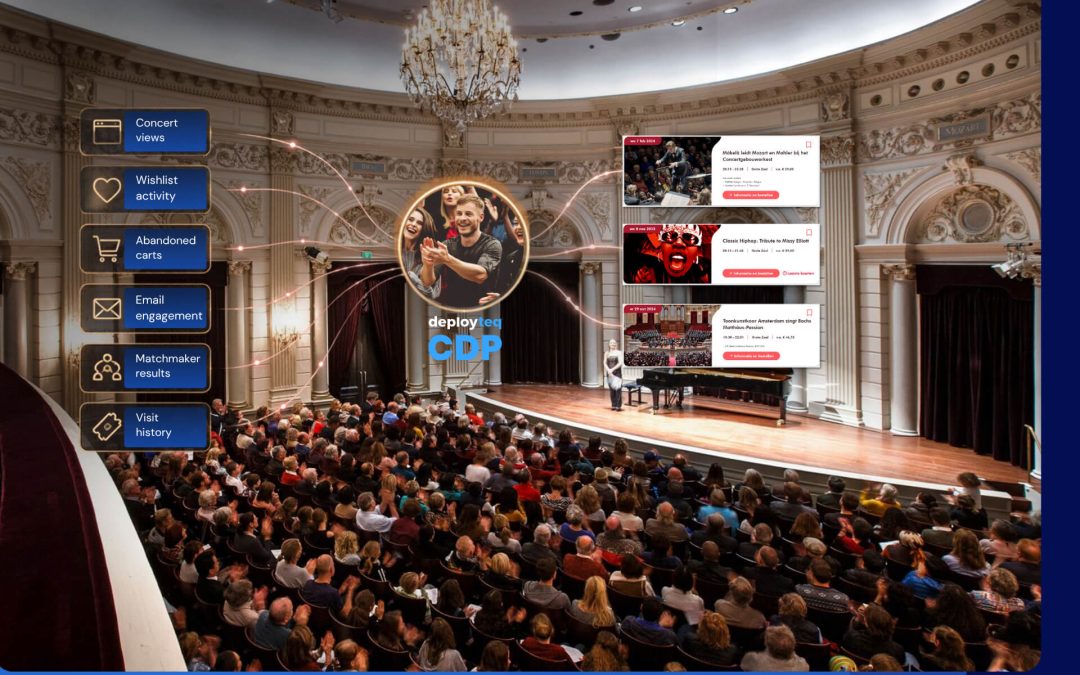
Automated customer data platforms consolidate this activity into a single timeline. Every touchpoint, every channel interaction, every conversion event is captured and connected to the individual. This gives you the context to trigger the right message at exactly the right moment.
Cross-channel visibility also means you stop bombarding customers on one channel while ignoring them on another. The journey becomes coherent, and that coherence drives better results across the board.
5: Personalisation at scale
Personalisation that relies on manually swapping out first names and subject lines is not really personalisation. It is a gesture. True personalisation means serving the right content, offer, or recommendation based on what each individual has done, bought, and responded to.
Doing this manually for thousands or hundreds of thousands of contacts is not feasible. Automated personalisation uses dynamic content blocks, behavioural triggers, and predictive logic to tailor each message without any manual input per contact.
Hyper-personalised campaigns consistently outperform generic sends on open rates, click-through, and conversion. For retail brands, this might look like product recommendations based on browsing history. For hospitality teams, it could be destination content triggered by a previous booking. The logic scales. The manual effort does not.
6: A/B testing and performance reporting
Running A/B tests manually, waiting for results, pulling data from multiple sources, and compiling reports in a spreadsheet is a slow process that delays learning. By the time you have insights, the campaign has already finished.
Automated testing and reporting changes this. Tests run simultaneously, results are captured in real time, and winning variants can be deployed automatically based on predefined thresholds. Your team gets faster insights and acts on them without the reporting lag.
Performance dashboards that update automatically also give leadership a live view of what is working. This removes the weekly scramble to pull numbers and lets your team spend time acting on data rather than collecting it. Smarter email marketing decisions start with faster, cleaner reporting.
7: Re-engagement and win-back campaigns
Lapsed customers represent real revenue potential. But manually identifying who has gone quiet, building a list, crafting a win-back sequence, and sending it at the right time is a process most teams deprioritise simply because it requires too much effort.
Automated win-back campaigns solve this. You define the inactivity threshold, set the trigger, build the sequence, and the platform identifies and contacts lapsed customers automatically. The message can adapt based on what they last engaged with, making it feel relevant rather than generic.
For subscription businesses, loyalty programmes, and e-commerce brands, re-engagement automation directly protects LTV. A well-timed win-back email sent automatically will always outperform one that never gets sent because the team was too busy.
How Deployteq helps you automate what matters
We built Deployteq to solve exactly these problems. Our platform gives marketing teams the tools to replace manual, error-prone processes with intelligent automation that runs reliably across every channel.
- Real-time segmentation: Build dynamic segments that update automatically based on behaviour, purchase data, and lifecycle stage.
- Journey builder: Design and automate cross-channel customer journeys with full flexibility, from welcome sequences to complex win-back flows.
- Email marketing automation: Schedule, trigger, and personalise campaigns at scale without manual intervention for each send.
- Unified customer data: Our CDP consolidates data from every touchpoint so your automation always works from a single, accurate customer view.
- Predictive intelligence: Use RFM modelling, next-best-offer logic, and predictive insights to drive smarter decisions automatically.
- Reporting dashboards: Track performance across campaigns and channels in real time, without building reports manually.
If your team is still managing any of these seven processes by hand, the fix is straightforward. Book a demo and see how Deployteq can help you automate faster, segment smarter, and get results without the manual grind.