A customer data platform promises unified profiles, smarter segmentation, and campaigns that actually land. But between the promise and the results sits a gap most teams only discover after they’ve already gone live. CDP implementation mistakes are rarely dramatic. They’re quiet. A missed data audit here, an ignored identity resolution step there, and suddenly your activation rates are underwhelming and your segments feel stale.
This guide walks through the seven most common mistakes marketers make when rolling out a CDP, and how to avoid each one before it costs you results.
How CDP mistakes quietly drain marketing performance
Most CDP projects don’t fail at the technology level. They fail at the planning and process level. Teams rush to connect sources, build segments, and launch campaigns before the foundations are solid. The result is a platform full of data that can’t be trusted, segments that don’t reflect real customer behaviour, and activation that falls flat.
The good news is that every mistake on this list is preventable. Knowing where teams typically stumble is half the battle in any CDP implementation guide.
1: Skipping a data audit before CDP onboarding
Walking into a CDP implementation without a data audit is like renovating a house without checking the foundations. You might love the new fixtures, but the structure underneath will cause problems fast.
Before you connect a single source, map out what data you actually have, where it lives, how it’s structured, and how clean it is. Duplicate records, inconsistent field naming, and missing consent flags are common culprits that corrupt your unified profiles from day one.
A pre-onboarding audit should cover data completeness, field standardisation, consent status, and source reliability. Teams that skip this step spend weeks firefighting data quality issues post-launch instead of building campaigns.
2: Connecting too many data sources at once
More data sounds better. In practice, connecting every source simultaneously during implementation creates noise, slows ingestion, and makes it nearly impossible to validate what’s working.
Start with your highest-value sources: your transactional data, your email engagement history, and your website behavioural data. Get those ingesting cleanly and producing reliable profiles before you layer in CRM data, loyalty platforms, or third-party enrichment.
A phased source connection approach gives your team time to validate data quality at each stage. It also makes troubleshooting far simpler when something looks off in your segments.
3: Ignoring identity resolution from the start
Identity resolution is the process of stitching together multiple identifiers (email, device ID, loyalty number, cookie) into a single, accurate customer profile. It sounds technical, but getting it wrong has very practical consequences: duplicate profiles, conflicting behavioural signals, and personalisation that misfires.
Teams often treat identity resolution as something to configure later, once the “main” setup is done. This is a costly mistake. Every profile created before your resolution rules are in place risks being built on fragmented or duplicated data.
Define your identity graph logic before you go live. Decide which identifiers take precedence, how you handle anonymous-to-known transitions, and what your merge and split rules look like. This is foundational work that pays dividends across every segment and campaign you run.
4: Building segments without activation goals
Segmentation without a clear activation goal is just data organisation. Impressive in a presentation, but not driving results in your campaigns.
Every segment you build should have a corresponding activation plan. Who receives what message, through which channel, triggered by what behaviour? A high-value lapsed segment means nothing until you’ve mapped it to a re-engagement journey with clear success metrics.
Work backwards from your campaign goals. Define the outcome first (recover lapsed buyers, upsell to high-LTV customers, reduce churn in a subscription cohort), then build the segment that serves that goal. This keeps your marketing automation tightly aligned to business outcomes rather than data exploration for its own sake.
5: Overlooking predictive models until too late
Predictive modelling (RFM scoring, next-best-offer, churn probability) is often treated as an advanced feature to explore once the basics are running. In reality, delaying these models means missing the moments when they matter most.
RFM in particular works best when it’s embedded into your segmentation logic early in the implementation. If you wait until your data is “perfect,” you’ll wait forever. Start with a working model, validate it against your actual customer behaviour, and refine from there.
Predictive insights also inform your segment architecture. Knowing which customers are likely to churn changes how you prioritise re-engagement. Knowing next-best-offer shifts how you structure product recommendation journeys. These aren’t add-ons; they’re central to what makes a customer data platform genuinely powerful.
6: Treating CDP as a one-team tool
When CDP implementation is owned entirely by the marketing team, the platform often ends up solving only marketing problems. Data teams aren’t aligned on ingestion standards. CRM teams aren’t feeding in the right signals. Customer service data never makes it in at all.
A CDP is most valuable when it reflects the full customer picture, not just the marketing slice of it. That requires cross-functional buy-in from the start: data engineering for source connections, CRM for lifecycle data, product teams for behavioural signals, and leadership for governance decisions.
Build a shared ownership model early. Define who owns data quality for each source, who governs consent and compliance, and who has authority to create or archive segments. This structure prevents the platform from becoming a siloed tool that duplicates problems rather than solving them.
7: What does success look like post-implementation?
Success after CDP implementation isn’t just a working platform. It’s measurable improvement in the outcomes that matter: higher personalisation relevance, faster campaign deployment, stronger conversion rates across key lifecycle stages.
Set clear benchmarks before you go live. What does a healthy unified profile look like in terms of completeness? What’s your baseline open rate for re-engagement campaigns, and what improvement do you expect once segmentation improves? These benchmarks give you something concrete to measure against in the weeks after launch.
Review your segment performance regularly, not just at launch. Customer behaviour shifts, data sources evolve, and your models need recalibration. Build a quarterly CDP health review into your team’s workflow to catch drift before it quietly erodes your results.
How Deployteq helps with CDP implementation
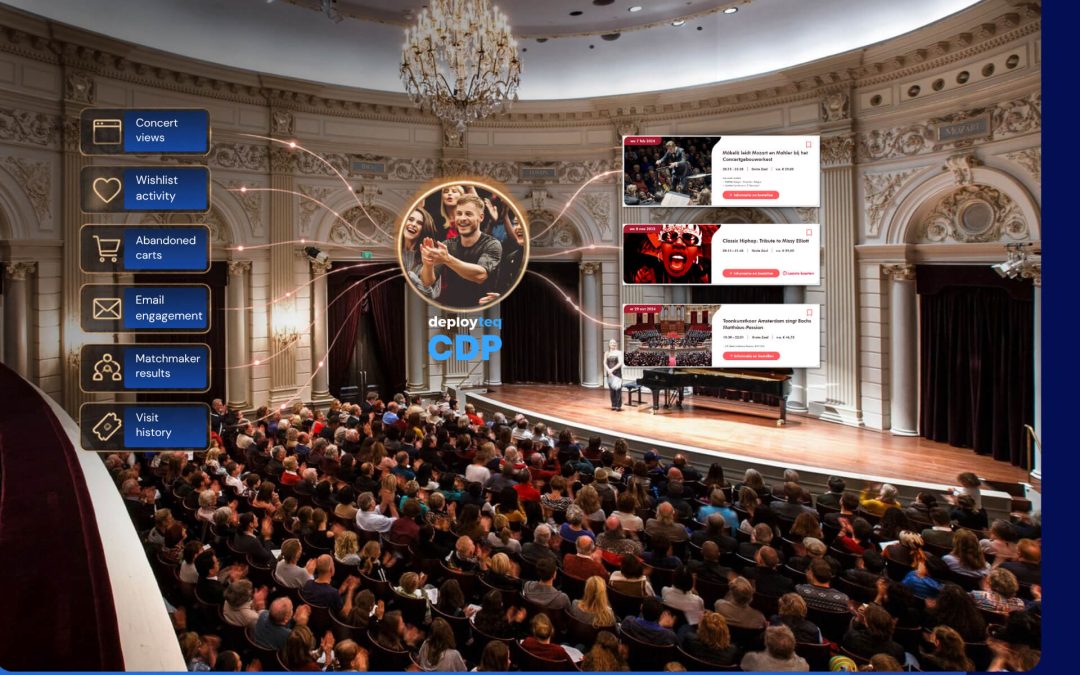
Getting your customer data platform right from the start is exactly what we built our CDP to support. Deployteq’s CDP unifies all customer data into intelligent profiles, giving your team a genuine 360-degree single customer view without the complexity that slows most implementations down.
Here is what makes our approach different:
- Unified customer profiles that pull together every touchpoint into a single, actionable view, reducing the identity resolution headaches that trip up most teams
- Built-in predictive models including RFM scoring, next-best-offer, and full lifecycle insights, available from day one rather than bolted on later
- Direct activation across channels including email, SMS, WhatsApp, push, and web, so your segments move straight into campaigns without extra integration steps
- Smart segmentation tools designed for real-time, hyper-personalised audiences that align to your activation goals, not just your data structure
- Cross-functional accessibility that makes the platform usable for marketing, CRM, and data teams without requiring deep technical expertise
If you’re planning a CDP rollout or looking to get more from a platform that’s already live, we’d love to show you how it works in practice. Book a demo and see how Deployteq’s CDP can turn your customer data into campaigns that consistently deliver results.