Most marketing teams don’t outgrow their tools overnight. It happens gradually: your sends increase, your segments multiply, and suddenly your platform is holding you back rather than pushing you forward. If you’re finding that marketing automation alone no longer delivers the results your campaigns deserve, you’re not alone. The shift from basic automation to a true customer engagement platform is one of the most impactful moves a modern marketing team can make.
Here are five essential shifts to make that transition count.
When marketing automation isn’t enough anymore
There’s a clear tipping point. You’ve built your flows, set up your welcome series, and scheduled your campaigns. But open rates are plateauing, unsubscribes are creeping up, and your reporting tells you what happened without telling you why. That’s the moment automation alone stops being enough.
The gap between marketing automation and a customer engagement platform isn’t just about features. It’s about intent. Automation handles the mechanics of sending. Engagement platforms are built around understanding and responding to real customer behaviour, at scale, across every channel. The five shifts below map out exactly what that upgrade looks like in practice.
1: From batch sending to behaviour-triggered journeys
Batch sending gets the message out. Behaviour-triggered journeys get the right message out at precisely the right moment. That distinction is everything when you’re competing for attention in a crowded inbox.
Instead of scheduling campaigns around your content calendar, behaviour-triggered journeys respond to what a customer actually does: browsing a product page, abandoning a booking, lapsing after a purchase, or hitting a loyalty milestone. Each action becomes a signal that fires a relevant, timely communication automatically.
For a retail brand, this might mean a cart recovery email triggered 30 minutes after abandonment, followed by an SMS nudge 24 hours later if there’s no conversion. For a travel operator, it could be a destination-specific email sent the moment a user views a holiday package three times in a week. The result is communication that feels personal because it is personal, driven by real behaviour rather than a broadcast schedule.
2: From siloed channels to unified cross-channel campaigns
Running email, SMS, push, and social as separate programmes creates fragmented customer experiences. A customer shouldn’t receive an email about a promotion they already redeemed via push notification. Siloed channels make that kind of disconnect almost inevitable.
Unified cross-channel campaigns treat every touchpoint as part of a single conversation. The customer’s journey continues seamlessly regardless of which channel they engage with. If they open your email but don’t click, your next touchpoint adapts. If they convert via WhatsApp, your email programme reflects that immediately.
This kind of coordination requires more than just access to multiple channels. It requires shared data, real-time triggers, and a journey builder that can orchestrate across all of them from one place. When those components work together, you stop running parallel campaigns and start delivering a genuinely connected customer experience.
3: From basic lists to intelligent audience segmentation
Static lists defined by demographics or purchase history are a starting point, not a strategy. Intelligent segmentation goes further, using behavioural signals, predictive scoring, and real-time data to build audiences that reflect where a customer is right now, not where they were six months ago.
Advanced segmentation lets you move beyond broad cohorts and into hyper-personalised micro-segments. Think: customers who bought in the last 30 days, browsed a specific category twice this week, and have a high predicted LTV. That’s a very different audience from “recent buyers”, and it deserves a very different message.
Models like RFM (Recency, Frequency, Monetary) give you a structured framework for identifying your most valuable customers, your at-risk churners, and your re-engagement opportunities. Layering predictive insights on top of that means your segments stay dynamic and actionable, not frozen in time. For finance and insurance marketers managing complex customer lifecycles, this kind of segmentation precision is what separates a relevant communication from a compliance risk.
4: From campaign data to a unified customer profile
Campaign-level data tells you how a send performed. A unified customer profile tells you who your customer actually is. Those are fundamentally different things, and only one of them helps you make better decisions at scale.
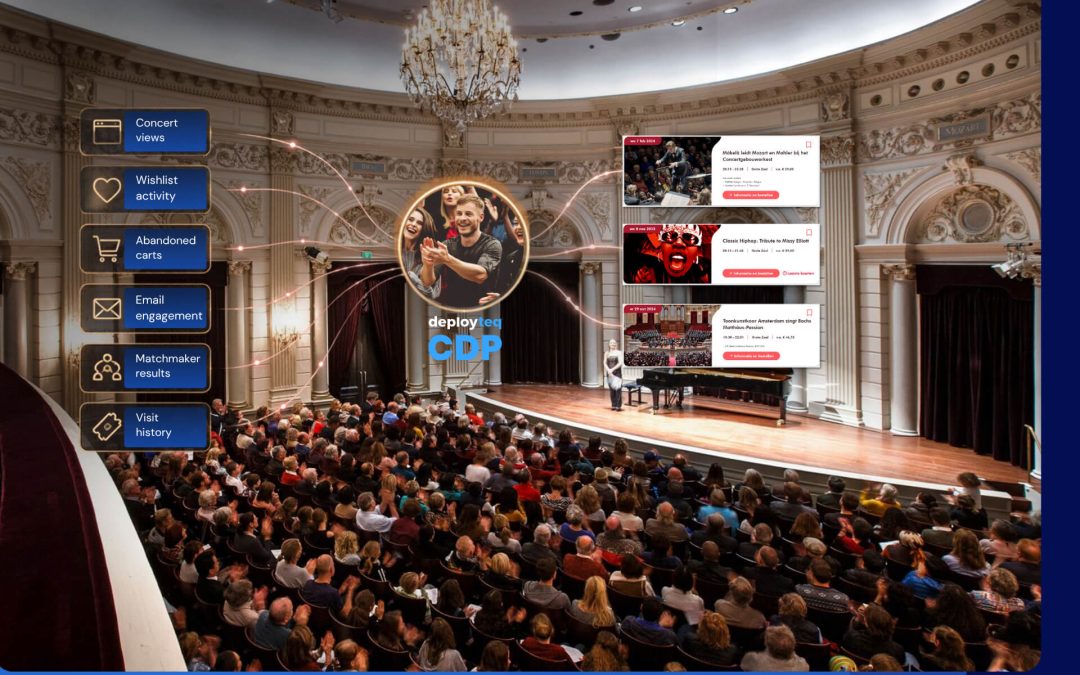
A unified profile consolidates data from every source: CRM records, transactional history, web behaviour, app activity, and campaign interactions. It creates a single, continuously updated view of each customer that any channel or campaign can draw from in real time. No more data silos. No more sending a win-back campaign to someone who purchased yesterday through a different channel.
This is where a Customer Data Platform becomes essential. A CDP doesn’t just store data; it activates it. It powers smarter segmentation, more accurate triggers, and personalisation that reflects the full picture of a customer’s relationship with your brand. For entertainment and hospitality brands managing high-frequency engagement, that unified view is the difference between feeling relevant and feeling intrusive.
5: From reporting on sends to measuring engagement outcomes
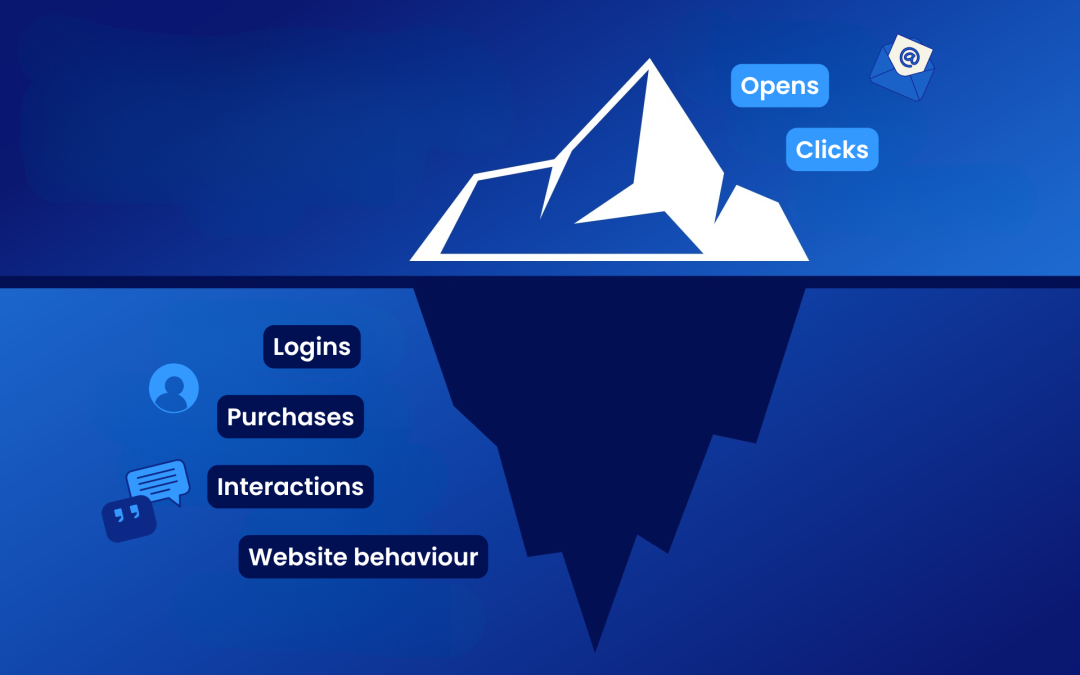
Opens and click-through rates are useful signals, but they’re not business outcomes. If your reporting stops at campaign metrics, you’re missing the bigger picture: whether your marketing is actually driving revenue, retention, and lifetime value.
Measuring engagement outcomes means connecting campaign activity to downstream results. Which journey drove the highest conversion rate? Which segment has the strongest LTV after a specific onboarding sequence? Which re-engagement flow recovered the most at-risk customers? These are the questions that justify marketing investment and shape future strategy.
Shifting to outcome-based reporting requires connecting your marketing platform to your broader data infrastructure. It means tracking behaviour beyond the email, attributing revenue to specific journeys, and surfacing insights that actually inform decisions. When your reporting tells you why something worked, not just that it worked, your next campaign starts from a much stronger position.
Making the shift without starting from scratch
The good news is that moving to a customer engagement platform doesn’t mean ripping out everything you’ve built. Most teams can migrate their existing journeys, segments, and templates and start layering in more sophisticated capabilities progressively.
The practical approach is to start with the shift that will have the biggest immediate impact for your team. If your data is fragmented, unifying your customer profiles is the foundation everything else depends on. If your campaigns are performing well but your segmentation is blunt, that’s where intelligent audience modelling will move the needle fastest.
What matters most is choosing a platform that can grow with you, one that handles the complexity of cross-channel orchestration without requiring a team of developers to manage it.
How Deployteq helps you make the shift
We built Deployteq specifically for marketing teams ready to move beyond basic automation. Our platform brings together everything you need to execute all five of these shifts in one place, without the technical overhead.
- Behaviour-triggered journeys: Our versatile journey builder lets you design and deploy real-time, event-driven flows across email, SMS, WhatsApp, push, and web, with full flexibility and no coding required.
- Unified cross-channel campaigns: Orchestrate every touchpoint from a single platform, with shared data ensuring every channel reflects the same customer truth.
- Intelligent segmentation: Use advanced segmentation tools, RFM modelling, and predictive insights to build hyper-personalised audiences that update in real time.
- Customer Data Platform: Our CDP consolidates all your customer data into a single, actionable profile, enabling smarter activation across every campaign.
- Outcome-based reporting: Go beyond open rates and connect campaign performance to the metrics that actually matter to your business.
Trusted by brands like Wickes, Virgin Media, and Center Parcs, we help marketing teams in retail, travel, finance, and entertainment scale personalisation without scaling complexity. If you’re ready to see what this looks like for your team, book a guided demo and we’ll walk you through it.