Most marketing teams know they should segment their audiences. Fewer know how to make it work at scale, across channels, and in a way that actually moves revenue. The gap is rarely strategy. It is usually execution. These ten customer segmentation examples show what smart segmentation looks like in practice, from the foundational to the genuinely sophisticated, so you can identify where your own approach has room to grow.
What makes customer segmentation work in practice
Segmentation only delivers results when it connects to action. A segment that sits in a spreadsheet changes nothing. What separates effective segmentation from theoretical segmentation is how quickly and accurately it flows into personalized communications, triggered journeys, and relevant offers.
The best segmentation strategies share three qualities: they are based on data you can actually use, they update dynamically as customer behavior changes, and they map directly to a specific campaign or message. Keep those principles in mind as you work through the examples below.
1: Demographic segmentation by age and life stage
Demographic segmentation is the starting point for most brands, and when done with precision it remains one of the most reliable customer segmentation types available. Age, household composition, income band, and life stage each signal different needs, priorities, and purchase triggers.
A travel brand, for example, can target retirees with long-haul, off-peak itineraries while promoting family-friendly short breaks to parents of school-age children. The message, the timing, and the offer differ completely, even though the destination might be identical.
Demographic data is widely available and easy to collect at acquisition. The real value comes when you layer it with behavioral signals to move beyond broad generalizations into genuinely relevant communications.
2: Geographic segmentation for local relevance
Geographic segmentation goes well beyond country-level targeting. City, postcode, climate zone, and proximity to a physical location all create opportunities for hyper-relevant messaging that generic campaigns simply cannot match.
A retailer with regional stores can promote click-and-collect to customers within a short radius, while serving online-only offers to those farther away. An entertainment brand can push event tickets to customers within a catchment area in the days before a show, rather than broadcasting to an entire national list.
This approach reduces irrelevance, which in turn protects deliverability and engagement rates. Customers who consistently receive locally relevant content are far more likely to open and act.
3: Behavioural segmentation based on purchase history
Purchase history is one of the richest segmentation signals available. What a customer has bought, how often, in what category, and at what price point tells you a great deal about what they are likely to want next.
Behavioral segmentation based on purchase data enables cross-sell and upsell campaigns that feel genuinely useful rather than opportunistic. A customer who has bought running shoes twice in twelve months is a strong candidate for performance apparel. A customer who has only ever bought in the sale is a different prospect entirely.
This is one of the most actionable customer data use cases for e-commerce and retail brands. The data is already there. The challenge is activating it consistently and at speed.
4: Psychographic segmentation by values and lifestyle
Psychographic segmentation moves beyond what customers do and into why they do it. Values, attitudes, interests, and lifestyle choices shape purchasing decisions in ways that demographics alone cannot explain.
A financial services brand might identify a segment of customers who prioritize ethical investment and communicate specifically to those values. A fashion retailer might distinguish between customers driven by status and those motivated by sustainability, then craft entirely different brand narratives for each group.
Psychographic data is harder to collect than transactional data, but preference centers, survey responses, and content engagement patterns all provide useful signals. Even small amounts of psychographic context can significantly sharpen your messaging.
5: Engagement-based segmentation for email campaigns
Engagement-based segmentation is essential for any brand running email at scale. Grouping subscribers by open rate, click frequency, and recency of last interaction allows you to tailor send frequency, content depth, and re-engagement tactics to where each contact actually sits in their relationship with your brand.
Highly engaged subscribers can receive more frequent sends with richer content. Lapsed contacts need a different approach entirely, typically a short, direct re-engagement sequence before a suppression decision is made. Treating both groups identically damages deliverability and wastes budget.
This is a core application of advanced email segmentation, and one of the fastest ways to improve open rates and reduce unsubscribes without changing a single word of your copy.
6: Customer lifecycle stage segmentation
Where a customer sits in their lifecycle with your brand determines what they need to hear from you. A first-time buyer needs onboarding and reassurance. A loyal, repeat customer needs recognition and early access. A customer who has not purchased in six months needs a reason to return.
Lifecycle segmentation ensures your communications match the relationship stage rather than defaulting to a one-size-fits-all promotional calendar. It is one of the most impactful segmentation strategies for reducing churn and increasing LTV, particularly in subscription-based and high-frequency retail models.
Mapping your customer journey stages clearly is the prerequisite. Once those stages are defined, automation does the heavy lifting.
7: Transactional segmentation by spend and order value
Average order value and total spend are powerful indicators of customer potential. Transactional segmentation lets you identify your highest-value customers and treat them accordingly, with priority access, dedicated support, or exclusive offers that reflect the relationship they have built with your brand.
At the other end of the spectrum, customers with low spend but high purchase frequency may respond well to basket-building incentives. Those with high spend but long gaps between purchases are candidates for loyalty programs designed to shorten the repurchase cycle.
RFM modeling, which combines recency, frequency, and monetary value, is a structured way to apply transactional segmentation at scale. It produces clear, actionable tiers without requiring complex data science.
8: Channel preference segmentation
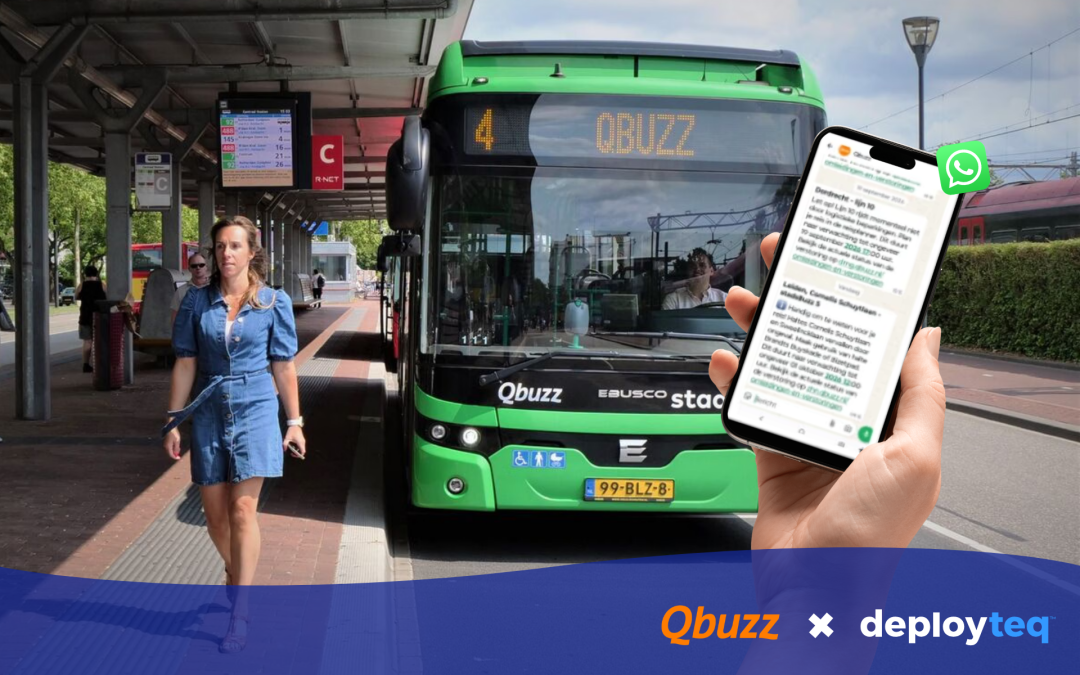
Not every customer wants to hear from you in the same place. Some engage primarily through email. Others respond to SMS, push notifications, or WhatsApp. Sending every message through every channel creates noise. Sending through the preferred channel creates results.
Channel preference segmentation is built from engagement data: which channel each customer opens, clicks, and converts from. Over time, those patterns become reliable enough to automate channel selection as part of your journey logic.
For brands running cross-channel campaigns, this is one of the most practical audience segmentation improvements available. It reduces opt-outs, improves conversion rates, and makes your overall channel mix more efficient.
9: Predictive segmentation using AI and modeling
Predictive segmentation uses historical data and machine learning to identify which customers are most likely to take a specific action, whether that is making a purchase, churning, upgrading, or responding to a particular offer. Rather than reacting to what customers have done, you act on what they are likely to do next.
Next-best-offer modeling, churn propensity scoring, and lifetime value prediction all fall into this category. These models surface segments that would be invisible to manual analysis, allowing you to intervene at exactly the right moment with exactly the right message.
Predictive segmentation is increasingly accessible to mid-market brands, not just enterprise teams with dedicated data science resources. Modern marketing automation platforms are building these models directly into the campaign workflow.
10: Real-time segmentation triggered by live behavior
Real-time segmentation responds to what a customer is doing right now, not what they did last month. A visitor who browses a product page three times without purchasing moves into a different segment the moment that third visit occurs. A loyalty member who hits a points threshold triggers a different journey the second that threshold is crossed.
This is where segmentation marketing becomes genuinely dynamic. Static lists become living audiences that update as behavior changes, ensuring every communication is anchored to current intent rather than historical data that may no longer be relevant.
Real-time segmentation requires clean, connected data and a platform capable of acting on signals instantly. When those conditions are in place, it consistently outperforms batch-and-blast approaches on every engagement metric.
Choosing the right segmentation approach for your brand
There is no single correct answer here. The right segmentation strategy depends on the quality and completeness of your data, the channels you operate across, and the complexity of your customer lifecycle. Most mature brands use several of these approaches simultaneously, layering them to create increasingly precise audience definitions.
A practical starting point: identify the one segmentation type that your current setup does not support but that would have the clearest commercial impact. Build that capability first, prove the value, then expand. Trying to implement all ten at once rarely works. Prioritizing ruthlessly usually does.
How Deployteq helps with customer segmentation
We built Deployteq to make every one of these segmentation types genuinely executable, not just theoretically possible. Here is what that looks like in practice:
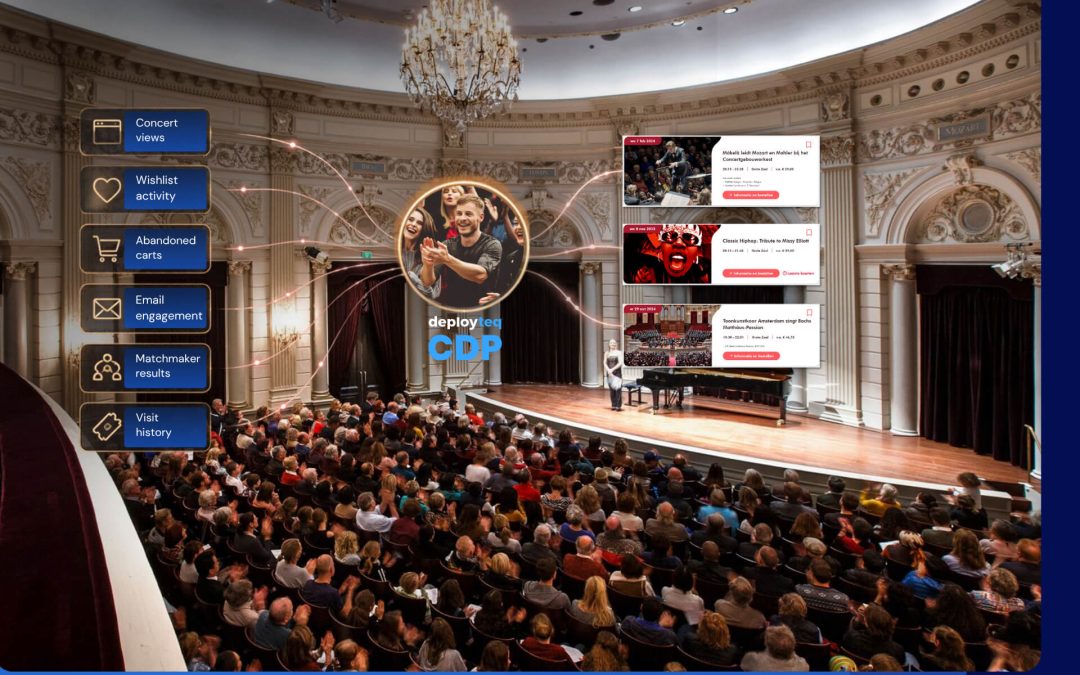
- Unified customer data: Our CDP consolidates data from every source into a single customer profile, giving you the clean, connected data that real-time and predictive segmentation demand.
- Advanced segmentation engine: Build dynamic segments based on demographics, behavior, lifecycle stage, spend, channel preference, and live triggers, all within the same platform.
- Predictive modeling built in: RFM scoring, next-best-offer, and churn propensity models are available directly inside your campaign workflow. No separate data science team required.
- Cross-channel activation: Segments activate instantly across email, SMS, WhatsApp, push, and web. One audience definition, every channel, fully coordinated.
- Journey builder with full flexibility: Design journeys that respond to real-time behavior, lifecycle stage, and predictive scores without writing a single line of code.
If your current platform is making segmentation harder than it needs to be, it is worth seeing what a purpose-built solution looks like. Book a self-guided demo and explore what smarter segmentation can do for your campaigns.