Marketing data becomes actionable when it is unified, clean, and directly connected to the tools your team uses to send campaigns and trigger journeys. Most marketing data is not actionable because it lives in disconnected systems, arrives incomplete, or lacks the structure needed to power real-time decisions. The sections below unpack each root cause and give you a clear path to fixing it.
What does it mean for marketing data to be actionable?
Actionable marketing data is data that your team can use immediately to make a decision, trigger a message, or personalise an experience without manual preparation. It is unified, accurate, and accessible within the platforms where your campaigns actually run. If your data requires a data analyst to extract and clean it before a marketer can use it, it is not yet actionable.
The practical test is simple: can a marketer on your team use that data to build a segment, fire a trigger, or personalise content right now? If the answer requires a spreadsheet export, a ticket to IT, or a three-day data pull, the data is theoretically valuable but operationally useless.
Truly actionable data has three qualities:
- Unified: All customer touchpoints feed into a single profile, from purchase history to browse behaviour to email engagement.
- Real-time or near real-time: The data reflects what a customer did recently, not what they did last quarter.
- Activation-ready: It connects directly to your campaign tools so segments and triggers can be built without technical intervention.
Why is marketing data often stuck in silos?
Marketing data ends up in silos because different teams adopt different tools over time, and those tools rarely talk to each other by default. Your e-commerce platform, CRM, email platform, loyalty system, and web analytics tool each hold a fragment of the customer picture, but none of them holds the whole story. This is the core problem behind disconnected marketing data.
The silo problem compounds quickly. A retail brand might have purchase data in one system, browse behaviour in another, and email engagement in a third. Without a deliberate integration strategy, these fragments never combine into a usable customer profile. Marketers end up working from partial information, which leads to irrelevant messaging, missed triggers, and wasted budget.
Organisational structure makes this worse. When CRM, digital, and loyalty teams operate independently, each team optimises its own data without considering how it connects to the others. The result is a customer who receives three disconnected messages on the same day from the same brand, each based on a different slice of their behaviour.
What causes poor data quality in marketing systems?
Poor data quality in marketing systems is caused by inconsistent data entry, duplicate records, outdated contact information, and a lack of governance over how data is collected and maintained. Each of these issues degrades your ability to segment accurately, personalise effectively, and measure campaign performance with confidence.
The most common culprits are:
- Duplicate profiles: A customer who has interacted across multiple channels often exists as several separate records, making their true LTV and engagement history impossible to read accurately.
- Stale data: Email addresses, preferences, and behavioural signals decay quickly. A segment built on six-month-old data may no longer reflect how those customers actually behave today.
- Inconsistent identifiers: When your CRM uses a customer ID that does not match the identifier in your e-commerce platform, joining those datasets becomes an engineering project rather than a marketing task.
- Missing consent records: Gaps in consent and preference data create compliance risk and force you to suppress contacts you would otherwise be able to reach.
Data quality is not a one-time fix. It requires ongoing processes: deduplication rules, validation at the point of capture, and regular audits to flag records that have gone cold or become unreliable.
How does a Customer Data Platform fix marketing data problems?
A Customer Data Platform fixes marketing data problems by ingesting data from all your sources, resolving identities across touchpoints, and creating a unified customer profile that is directly accessible to your marketing tools. Unlike a CRM or a data warehouse, a CDP is built for marketers, not just data teams, which means activation happens inside your campaigns rather than after a lengthy export process.
The key distinction between a CDP vs marketing automation platform is that a CDP handles the data layer while marketing automation handles the execution layer. When the two are connected, or better still, built to work together, your segments become smarter and your triggers become faster. Marketers can build audiences based on real behaviour, not just static lists, and those audiences update automatically as customer behaviour changes.
Practically, a marketing CDP enables capabilities that disconnected systems cannot:
- A single customer view that merges online and offline behaviour into one profile
- Predictive modelling such as RFM scoring, next-best-offer recommendations, and churn propensity
- Real-time segment updates that trigger campaigns based on what a customer just did
- Cross-channel activation across email, SMS, push, and web from a single data source
For a travel brand, this means knowing that a customer who browsed a destination three times this week, but has not booked, is the right candidate for a targeted offer today, not next month after a manual data pull.
What steps can marketers take to make their data actionable today?
To make your marketing data actionable, start by auditing where your data currently lives, identify the gaps between those systems, and prioritise connecting the sources that hold the most commercially important signals. You do not need to solve every integration at once. Start with the data that drives your highest-value campaigns.
A practical sequence to follow:
- Map your data sources: List every system that holds customer data and identify which fields each one captures. This gives you a clear view of what you have versus what you need.
- Resolve identities: Establish a common identifier, such as an email address or customer ID, that lets you join records across platforms.
- Prioritise high-value signals: Focus first on the behavioural data that directly predicts purchase intent: browse history, cart abandonment, recency of last purchase, and engagement frequency.
- Connect data to your marketing automation platform: Ensure the data flows into the tool your team uses to build campaigns, so activation does not require a separate step.
- Set up governance: Define who owns data quality, how duplicates are handled, and how often records are reviewed.
The goal is not perfect data before you start. It is good-enough data that your team can act on now, with a process in place to improve it continuously.
How do you know when your marketing data is finally working?
Your marketing data is working when your team can build a relevant segment, launch a triggered campaign, and measure its impact without relying on a data analyst or a manual export. The clearest signal is operational: marketers move faster, campaigns are more specific, and personalisation happens at scale rather than as a one-off effort.
Beyond the operational signals, look for these commercial indicators:
- Higher engagement rates: When your segments are built on real behaviour rather than broad demographics, open rates, click-through rates, and conversion rates improve because the right message reaches the right person at the right time.
- Fewer suppressed contacts: Clean, well-governed data means fewer bounces, fewer unsubscribes, and a healthier deliverable audience.
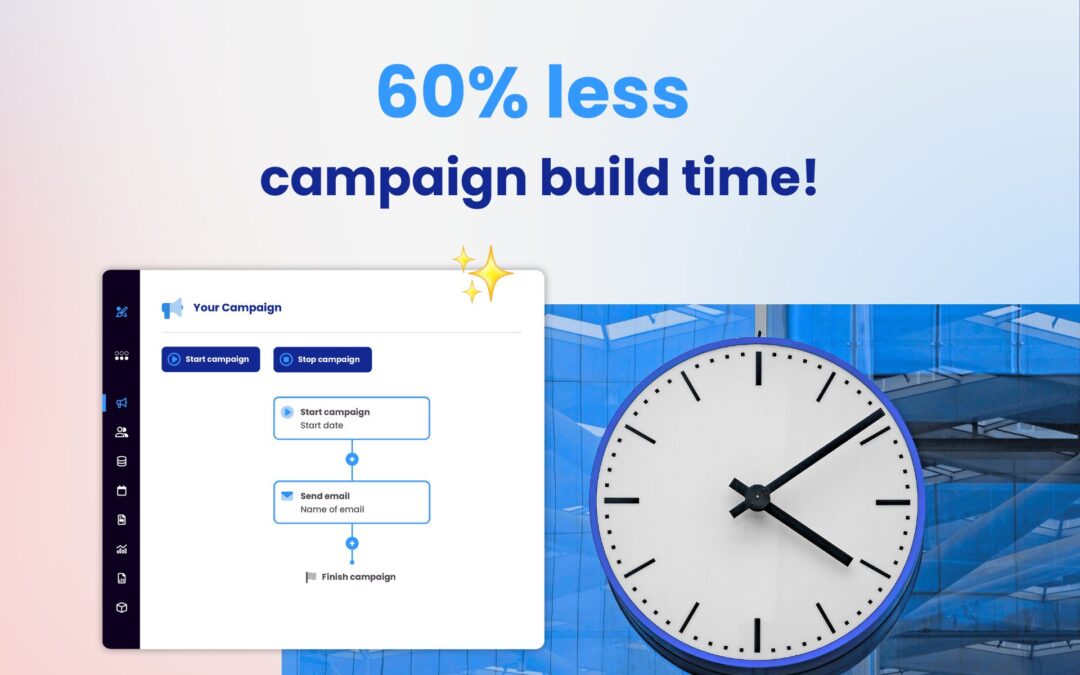
- Shorter campaign build times: When data is activation-ready, your team spends less time preparing and more time testing and optimising.
- Consistent cross-channel view: Your email platform, SMS tool, and web personalisation engine all reflect the same customer state, so you are never sending conflicting messages based on outdated information.
The shift from disconnected marketing data to data you can actually use is not just a technical improvement. It changes how your entire team operates, from the briefs they write to the results they report.
How Deployteq helps you turn marketing data into action
We built our platform specifically to close the gap between data and activation. Our newly launched Customer Data Platform unifies all your customer data into intelligent profiles and connects it directly to your campaigns across email, SMS, WhatsApp, push, and web. No exports, no waiting for a data team, no manual preparation.
Here is what that looks like in practice:
- 360-degree single customer view: Every touchpoint, from purchase history to browse behaviour to channel engagement, feeds into one unified profile that updates in real time.
- Intelligent modelling built in: RFM scoring, next-best-offer recommendations, and predictive lifecycle insights are available directly within your campaign builder.
- Hyper-personalised campaigns at scale: Build segments based on real behaviour and trigger the right message at exactly the right moment in the customer lifecycle.
- Cross-channel activation from one platform: No need to sync between separate tools. Your data and your campaigns live in the same place.
If your data is sitting in silos and your team is spending more time preparing than activating, we can show you a better way. Book a self-guided demo and see how unified data changes what your marketing team can actually do.