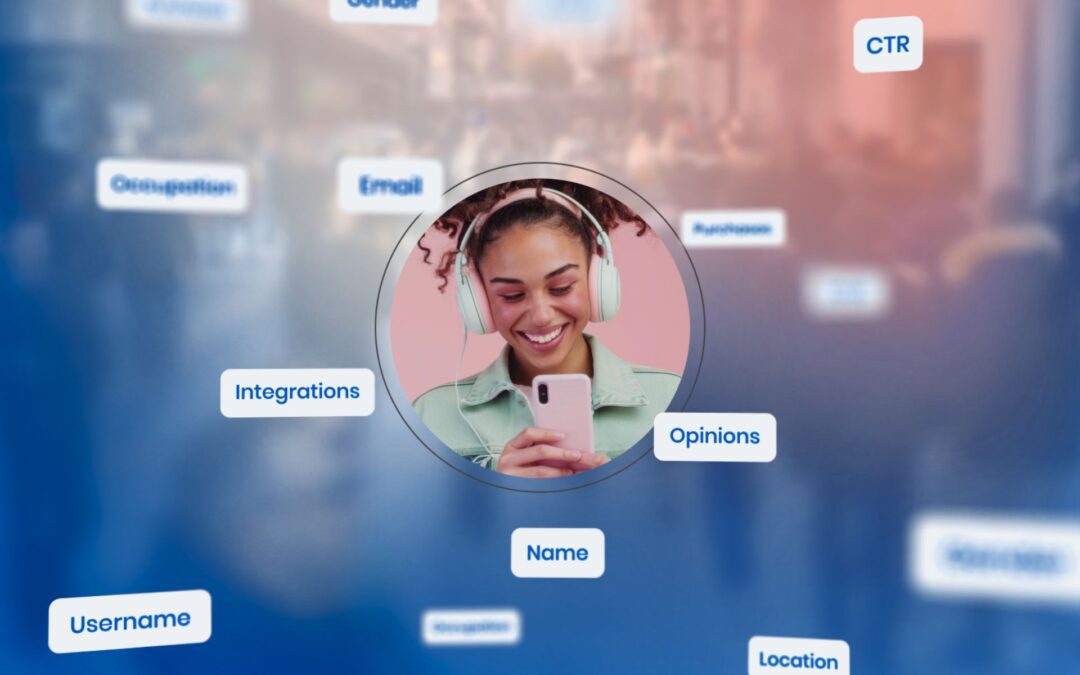
Customer data unification is critical for email marketing because it gives you a complete, accurate picture of each subscriber — their behaviour, preferences, purchase history, and lifecycle stage — all in one place. Without it, your campaigns are built on incomplete data, leading to generic messaging, poor timing, and missed revenue opportunities. The sections below break down exactly why unified data matters and how to put it to work.
What happens to email campaigns without unified customer data?
Without unified customer data, email campaigns default to guesswork. Marketers end up sending the same message to broadly defined groups, ignoring real behavioural signals that are trapped in disconnected systems. The result is lower open rates, weaker click-through, and subscribers who disengage because the content simply does not feel relevant to them.
The practical consequences go deeper than metrics. When your CRM, ecommerce platform, loyalty programme, and web analytics all hold separate slices of the customer picture, your segmentation logic is always working with stale or partial information. A travel brand might send a holiday promotion to a customer who booked that same destination yesterday. A retailer might trigger a win-back campaign to someone who purchased in-store three days ago. These are not edge cases — they are everyday friction points caused by data fragmentation.
Fragmented data also breaks automation. Lifecycle triggers depend on knowing where a customer actually is in their journey. If that context is missing or contradicted across systems, your marketing automation fires at the wrong moment, or not at all.
How does customer data unification actually work?
Customer data unification works by ingesting data from every source a customer touches — your website, app, email platform, CRM, POS system, loyalty programme — and resolving it into a single, persistent customer profile. Identity resolution matches records across systems using identifiers like an email address, customer ID, or device fingerprint, so one person’s activity is always attributed to one profile.
Once profiles are built, the unified layer keeps them live. Every new interaction — a page visit, a purchase, an email open — updates the profile in real time. This means your segmentation and triggers are always working from current data, not a snapshot from last week’s export.
The technology that powers this process is typically a Customer Data Platform. A CDP sits between your data sources and your activation channels, handling ingestion, resolution, enrichment, and audience building in one environment. Marketers gain access to a single customer view without needing to rely on engineering teams to stitch exports together manually.
What types of customer data matter most for email personalisation?
The data types that drive the strongest email personalisation are behavioural, transactional, and contextual. Behavioural data — pages visited, products browsed, emails clicked — tells you what a customer is interested in right now. Transactional data — purchase history, order value, frequency — tells you what they have already committed to. Contextual data — location, device, time of engagement — tells you how and when to reach them.
Demographic and preference data still has a role, but it is the least predictive on its own. Knowing a subscriber’s age bracket does not tell you they are actively researching a new product. Knowing they browsed that product page four times this week does.
For high-performing email personalisation, the most valuable combinations are:
- RFM signals (Recency, Frequency, Monetary value) to identify your most engaged and highest-value segments
- Browse and abandon behaviour to trigger timely, relevant follow-up
- Lifecycle stage to match message tone and offer to where someone actually is — new subscriber, active buyer, or lapsing customer
- Category affinity to surface the right products, destinations, or content rather than defaulting to bestsellers
- Cross-channel engagement history to understand whether email, SMS, or push is the right channel for each individual
How does unified data improve email segmentation?
Unified data improves email segmentation by replacing static, list-based groups with dynamic, behaviour-driven audiences that update in real time. Instead of segmenting by “customers who bought in the last 90 days,” you can segment by a combination of purchase recency, category preference, email engagement level, and predicted next action — all simultaneously.
This shift from broad cohorts to precise micro-segments has a direct impact on campaign performance. Subscribers receive content that reflects their actual relationship with your brand, not a generalised version of it. An entertainment brand can distinguish between a subscriber who attends live events regularly and one who only streams content, and serve each a completely different message within the same campaign send.
Unified data also enables predictive segmentation. By modelling patterns across your full customer base, you can identify who is likely to churn before they disengage, who is ready for an upsell, and who responds best to urgency-based offers versus value-led messaging. These are segments built on insight, not assumptions.
What’s the difference between a CDP and a CRM for email marketing?
The core distinction in the customer data platform vs CRM debate is scope and purpose. A CRM manages known customer relationships — contacts, deals, support history, and sales interactions. A CDP unifies all customer data, including anonymous behavioural data from users who have not yet identified themselves, and makes it available for real-time activation across marketing channels.
For email marketing specifically, a CRM gives you a contact database. A CDP gives you a single customer view — a live, enriched profile that combines CRM data with web behaviour, purchase events, app activity, and engagement signals. That distinction matters enormously when you are trying to personalise at scale.
A CRM is built around managing relationships over time. A CDP is built around activating data in the moment. The two are complementary rather than competing — many mature marketing stacks use both, with the CDP feeding enriched audience data into the CRM and the email platform simultaneously.
If your email programme relies on manual exports from your CRM to build segments, a CDP is the infrastructure that removes that bottleneck and gives your campaigns a genuine 360 customer view to work from.
When should a brand invest in customer data unification?
A brand should invest in customer data unification when fragmented data is visibly limiting campaign performance — when personalisation is shallow, segmentation is manual, or automation is misfiring because it cannot see the full customer picture. These are operational signals that the data infrastructure has become the ceiling on what marketing can achieve.
Specific triggers that indicate readiness include:
- Your team spends significant time manually merging data exports before each campaign build
- You cannot reliably suppress recent purchasers from acquisition campaigns
- Lifecycle automation is based on time delays rather than actual customer behaviour
- Personalisation is limited to first name and last product purchased
- You are running the same campaign to your entire database because building smaller segments is too time-consuming
- You have customer data in three or more separate platforms with no single source of truth
Brands scaling beyond a few hundred thousand contacts — particularly in retail, travel, and finance — typically reach this inflection point when their existing platform can no longer handle the complexity of their data or the volume of their audience. At that stage, investing in a unified data layer is not a nice-to-have; it is what keeps the email programme competitive.
How Deployteq powers customer data unification for email marketers
We built our Customer Data Platform to solve exactly the challenges outlined above. Rather than forcing your team to stitch data together manually before every send, our CDP unifies all customer data into intelligent profiles that activate directly inside your campaigns — across email, SMS, WhatsApp, push, and web.
Here is what that means in practice:
- 360 single customer view: Every profile consolidates behavioural, transactional, and contextual data into one live record — no more partial pictures
- Intelligent modelling built in: RFM scoring, next-best-offer predictions, and full lifecycle insights are available directly within your segmentation and journey builder
- Real-time segment updates: Audiences refresh automatically as customer behaviour changes, so your triggers fire at the right moment
- Hyper-personalised campaigns at scale: Build micro-segments based on actual signals, not demographic assumptions, and deliver content that genuinely reflects where each customer is in their lifecycle
- No engineering dependency: Marketers and data teams can build, activate, and iterate without waiting on manual data pulls
If your current platform is limiting what your data can do, it is worth seeing what a proper unified data layer looks like in action. Book a demo and we will show you exactly how it works for your sector.