A 360 customer view is important for personalisation because it gives you a complete, unified picture of each customer, combining behavioural, transactional, demographic, and engagement data into a single profile. Without it, you are personalising with incomplete information, which leads to generic messaging, missed moments, and poor customer experiences. The sections below unpack the building blocks, the risks of gaps, and how to put a full customer view to work.
What data makes up a 360 customer view?
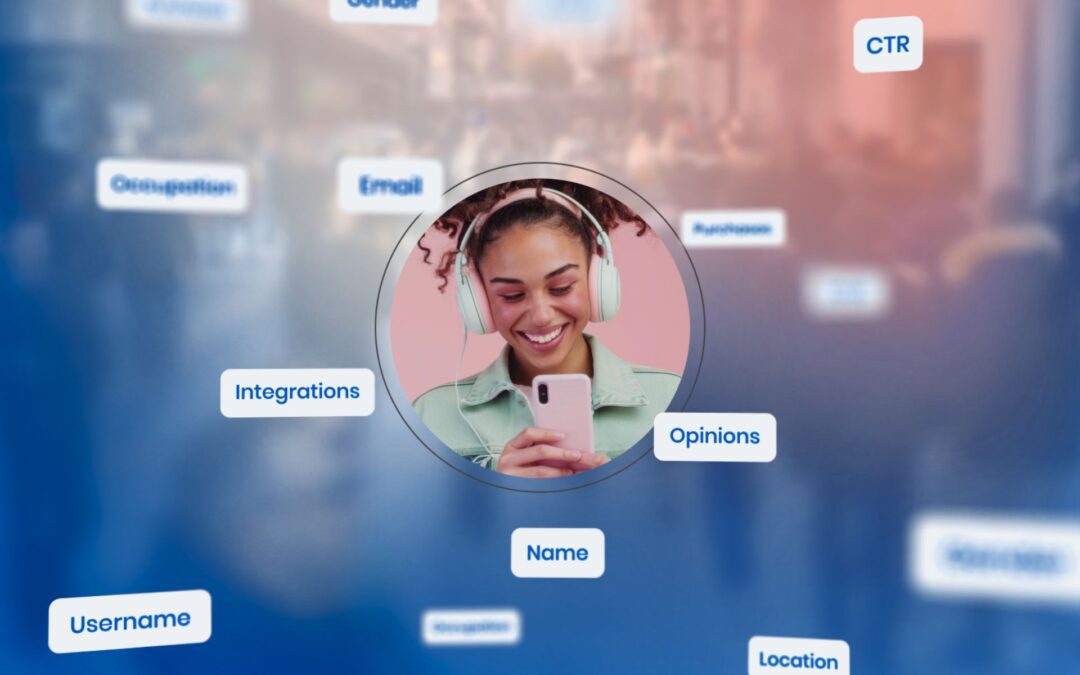
A 360 customer view is built from four core data types: behavioural data (browsing, clicks, app activity), transactional data (purchase history, order value, frequency), demographic data (age, location, preferences), and engagement data (email opens, SMS responses, loyalty interactions). Together, these layers form a single customer view that reflects who someone is, what they have done, and what they are likely to do next.
Each data type plays a distinct role. Transactional data tells you what a customer has bought and how often. Behavioural data reveals intent before a purchase is made. Demographic data adds the context needed for relevance. Engagement data shows how that customer prefers to interact with your brand across channels.
The most powerful profiles also include predictive signals. Indicators like recency, frequency, and monetary value (RFM) help you move beyond describing past behaviour and start anticipating future actions. This is where a Customer Data Platform becomes essential, unifying all of these data types in real time rather than leaving them scattered across disconnected systems.
How does a 360 customer view enable personalisation?
A complete customer view enables personalisation by giving your marketing automation platform the context it needs to trigger the right message, at the right time, through the right channel. Instead of sending the same campaign to your entire database, you can segment dynamically based on real behaviour and real intent, and deliver content that actually matches where each customer is in their lifecycle.
Practically, this means:
- Triggering cart abandonment emails based on browsing and purchase history combined
- Sending next-best-offer recommendations driven by what similar customers bought next
- Adjusting messaging frequency based on engagement signals to avoid fatigue
- Personalising content across email, SMS, push, and web from a single unified profile
For a travel brand, this could look like surfacing a loyalty reward offer the moment a customer checks availability for a destination they have visited before. For a retailer, it might mean a back-in-stock alert for a product category the customer has repeatedly browsed. The unified view makes these moments possible without manual intervention.
What happens to personalisation without a complete customer view?
Without a complete customer view, personalisation becomes surface-level at best and counterproductive at worst. Fragmented data means your segments are built on partial information, so you end up sending irrelevant messages, missing high-intent moments, and sometimes communicating with customers in ways that feel tone-deaf to their actual relationship with your brand.
The most common failure mode is channel siloing. A customer might receive a win-back email the same day they made a purchase through a different channel, simply because those two data sources were never connected. This erodes trust and increases unsubscribe rates.
There is also a significant commercial cost. When personalisation is generic, conversion rates drop. Customers who receive irrelevant recommendations or poorly timed messages are less likely to engage, and over time, less likely to stay loyal. The gap between what customers expect and what brands deliver widens quickly when the underlying data is incomplete.
What’s the difference between a CDP and a CRM for building customer views?
The key distinction in the customer data platform vs CRM debate is scope and activation. A CRM manages relationships and records interactions, typically focusing on sales pipelines and service history. A CDP unifies data from every source, including behavioural, transactional, and real-time signals, and makes that data immediately actionable for marketing campaigns across all channels.
A CRM is built around known contacts and manual data entry. A CDP ingests data automatically from web activity, apps, email engagement, purchase systems, and more, then builds dynamic profiles that update in real time. That distinction matters enormously for personalisation at scale.
In practice, the two tools serve different functions:
- CRM: Contact management, sales tracking, service history, manually updated fields
- CDP: Unified behavioural and transactional profiles, real-time segmentation, cross-channel activation, predictive modelling
Many organisations use both. The CRM manages the sales and service relationship; the CDP powers the marketing layer. When your marketing automation platform connects directly to your CDP, you can activate those unified profiles instantly without exporting data between systems.
How do you build a 360 customer view across channels?
Building a 360 customer view across channels requires three things: a single data ingestion layer that pulls from all your sources, a persistent customer identity that links records across touchpoints, and a real-time activation layer that makes those profiles usable in campaigns without delay.
Start by auditing your current data sources. Most brands hold useful data across email platforms, ecommerce systems, loyalty programmes, web analytics, and CRM tools, but rarely in one place. The first step is connecting those sources to a central platform that can resolve identities and merge records without duplication.
From there, focus on three practical priorities:
- Identity resolution: Match customer records across devices and channels using email address, loyalty ID, or cookie-based tracking
- Real-time data ingestion: Ensure behavioural signals (a browse, a click, an abandoned basket) update the profile immediately, not overnight
- Segment activation: Build dynamic segments that update automatically as profile data changes, so your campaigns always reflect current behaviour
The goal is a profile that your email marketing platform and other channels can read and act on in the moment, not one that requires a data team to export and refresh manually.
Which industries benefit most from 360-degree customer profiles?
Industries with long customer lifecycles, high purchase frequency, or complex multi-channel journeys benefit most from 360-degree customer profiles. Travel and leisure, retail and ecommerce, finance and insurance, and entertainment all see significant gains because their customers interact across many touchpoints before and after a conversion.
In travel, a unified profile lets you connect booking history, browsing behaviour, loyalty status, and post-trip engagement to deliver timely, relevant offers across the entire journey. A customer who has booked twice to the same region and recently browsed again is a high-intent prospect for a targeted campaign.
In retail and ecommerce, the 360 view powers everything from cart recovery to predictive replenishment. Knowing a customer’s average order value, preferred categories, and engagement frequency lets you time promotions and recommendations with precision rather than guesswork.
In finance and insurance, where trust and timing are everything, a complete customer view allows you to identify lifecycle moments (policy renewal, life event signals, product upgrade readiness) and respond with relevant, compliant messaging before a competitor does.
How Deployteq builds your 360 customer view
We built our Customer Data Platform specifically to solve the data fragmentation problem that holds back personalisation for high-volume B2C marketers. Here is what it does in practice:
- Unifies all customer data into intelligent, real-time profiles across every channel and touchpoint
- Applies intelligent modelling including RFM scoring, next-best-offer predictions, and full lifecycle insights directly within your campaigns
- Visually connects the dots to create a true single customer view, so your team can see the full picture without digging through multiple systems
- Activates directly into campaigns across email, SMS, WhatsApp, push, and web, with no manual data exports required
- Powers hyper-personalised campaigns that respond to real behaviour, not static lists
Whether you are in travel, retail, finance, or entertainment, our platform gives your marketing team the data foundation to deliver experiences that feel genuinely personal at every stage of the customer lifecycle. Want to see how it works for your brand? Book a personalised demo and we will show you exactly what your customer profiles could look like inside Deployteq.