A customer data platform (CDP) and a data management platform (DMP) both handle customer data, but they serve very different purposes. A CDP collects first-party data to build persistent, identified customer profiles for personalised marketing. A DMP primarily handles anonymous, third-party data to power audience targeting in paid advertising. Understanding which platform solves your problem depends on what you are trying to do with your data and who you are trying to reach.
Below, we break down the key differences between a CDP and a DMP so you can make a confident, informed decision for your marketing stack.
What types of data does each platform collect?
A CDP collects first-party data directly from your customers and prospects. This includes behavioural data from your website, email engagement, purchase history, CRM records, loyalty programme activity, and app interactions. Because this data is tied to real, identifiable individuals, it is durable, accurate, and increasingly valuable in a world moving away from third-party cookies.
A DMP, by contrast, is built around third-party and anonymous data. It ingests data from ad exchanges, data brokers, and cookie-based tracking to build audience segments for programmatic advertising. These profiles are typically anonymous, short-lived, and tied to cookie IDs rather than real customer identities.
The practical implication is significant. First-party data from a CDP gets richer over time as customers interact with your brand. Third-party data from a DMP depreciates quickly and becomes less reliable as privacy regulations tighten and browsers phase out tracking cookies.
How does a CDP identify and unify customer profiles?
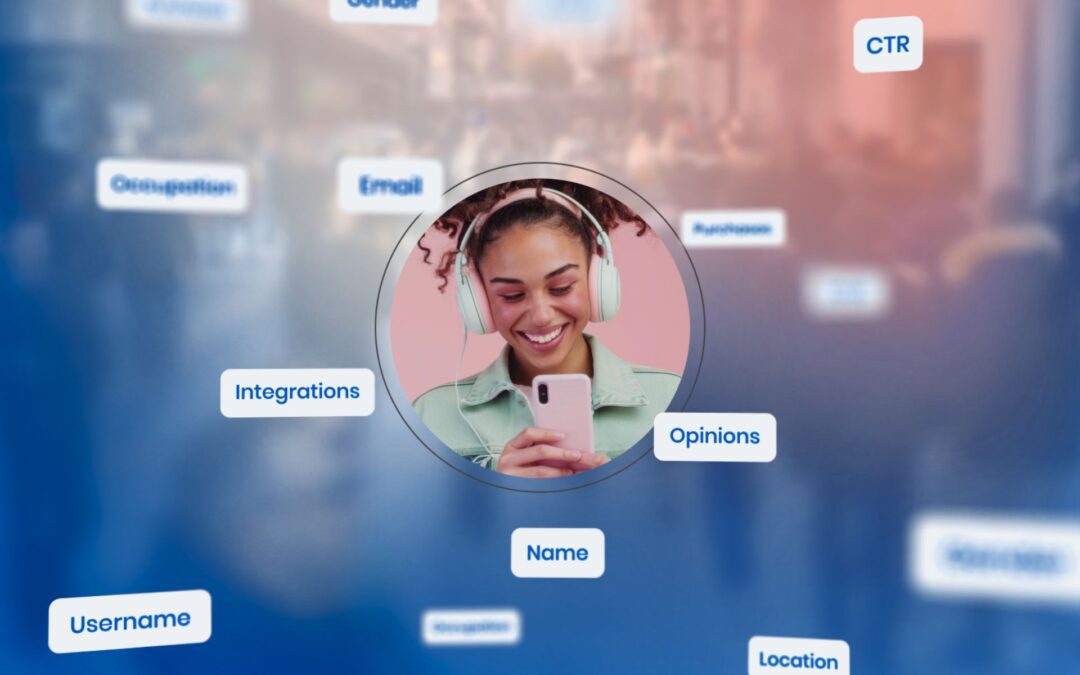
A CDP identifies customers by stitching together data from multiple touchpoints into a single, persistent customer profile. It uses deterministic matching (such as email addresses or customer IDs) and sometimes probabilistic matching to resolve multiple identities into one unified record. The result is a 360-degree single customer view that updates in real time as new interactions occur.
This identity resolution process is what separates a CDP from simpler data tools. When a customer browses your site anonymously, then logs in and completes a purchase, and later opens an email, a CDP links all three interactions to the same individual. Marketers can then use that unified profile to trigger highly relevant, timely communications across every channel.
For sectors like retail, travel, and finance, where customers interact across many touchpoints over long lifecycles, this kind of persistent profile is essential. It powers intelligent modelling like RFM scoring, next-best-offer recommendations, and predictive lifecycle insights that simply are not possible with fragmented data.
What is a DMP primarily used for?
A DMP is primarily used for paid media targeting and audience extension. It helps advertisers build broad audience segments based on behavioural and demographic signals, then activates those segments across programmatic ad networks, display campaigns, and social platforms.
Common DMP use cases include:
- Building lookalike audiences for prospecting campaigns
- Suppressing existing customers from acquisition ads
- Retargeting anonymous site visitors with display advertising
- Enriching audience segments with third-party demographic data
Because DMP profiles are largely anonymous and cookie-dependent, they are less useful for personalising owned channels like email, SMS, or push notifications. A DMP tells you something about an anonymous browser; it cannot tell you much about your actual customer.
Which platform is better for email and cross-channel marketing?
For email and cross-channel marketing, a CDP is the clear choice. Email marketing depends on identified, consented contacts with rich behavioural history. A CDP provides exactly that, enabling advanced segmentation, real-time triggers, and personalised content based on what each customer has actually done and is likely to do next.
A DMP has no meaningful role in email marketing because it does not hold identified customer records or email addresses. Its anonymous audience segments cannot be directly activated in owned channels without first resolving identities, which is precisely what a CDP does.
For cross-channel campaigns spanning email, SMS, WhatsApp, push, and web personalisation, a CDP acts as the data foundation. It ensures that every channel is working from the same unified customer profile, so your messaging is consistent, contextually relevant, and coordinated across the full customer journey. Explore how a customer data platform powers this kind of activation in practice.
Can a CDP and a DMP work together?
Yes, a CDP and a DMP can work together, and for larger organisations running both owned-channel marketing and significant paid media programmes, the combination can be powerful. The CDP handles identified, first-party data for personalising owned channels, while the DMP handles anonymous audience activation for paid advertising.
A practical integration looks like this: the CDP identifies your highest-value customer segments based on purchase behaviour and LTV. Those segments are then pushed to the DMP to build lookalike audiences for prospecting campaigns, or to suppress existing customers from acquisition spend. This reduces wasted ad budget and improves the quality of new customer acquisition.
That said, as third-party cookies continue to deprecate and privacy regulations tighten, the DMP’s role is narrowing. Many organisations are finding that a well-configured CDP, connected to a strong marketing automation platform, covers the majority of their data activation needs without requiring a separate DMP investment.
When should a business choose a CDP over a DMP?
Choose a CDP over a DMP when your priority is personalising the customer experience across owned channels. If your growth strategy relies on email, SMS, loyalty programmes, web personalisation, or any channel where you communicate directly with known customers, a CDP is the right foundation.
Specific signals that a CDP is the right investment:
- Your customer data is fragmented across multiple systems and you cannot build a complete view of any individual
- You want to personalise email or push content based on real-time behaviour, not just static segments
- You are building automated journeys that need to respond to lifecycle events like lapsed purchases or upcoming renewals
- You want to use predictive models like next-best-offer or churn propensity to drive campaign decisions
- You are moving away from third-party data dependencies and investing in first-party data strategy
A DMP makes more sense when your primary goal is scaling paid media reach through programmatic advertising and audience extension. For most B2C marketers focused on retention, loyalty, and cross-channel engagement, a CDP delivers far more actionable value. You can learn more about building smarter campaigns with an email marketing platform that connects directly to your customer data.
How Deployteq helps with customer data management
We built our Customer Data Platform to give marketers exactly what a CDP promises: a single, unified view of every customer, ready to activate across every channel without switching tools or waiting on data teams.
Here is what our CDP delivers in practice:
- Unified customer profiles: All your first-party data, from email engagement to purchase history to web behaviour, resolved into one persistent, real-time profile per customer
- Intelligent modelling built in: RFM scoring, next-best-offer recommendations, and predictive lifecycle insights are available directly within your campaign workflows
- Direct cross-channel activation: Segments built in the CDP activate instantly across email, SMS, WhatsApp, push, and web personalisation without manual exports or integrations
- 360-degree customer view: A visual, connected view of the full customer lifecycle so you can spot opportunities, prevent churn, and personalise at scale
- No data science degree required: The platform is designed for marketers, not just data engineers, so your team can build and act on intelligent segments independently
If you are ready to see what a fully unified customer data strategy looks like in action, do a self-guided demo and explore how Deployteq’s CDP can power your next campaign.