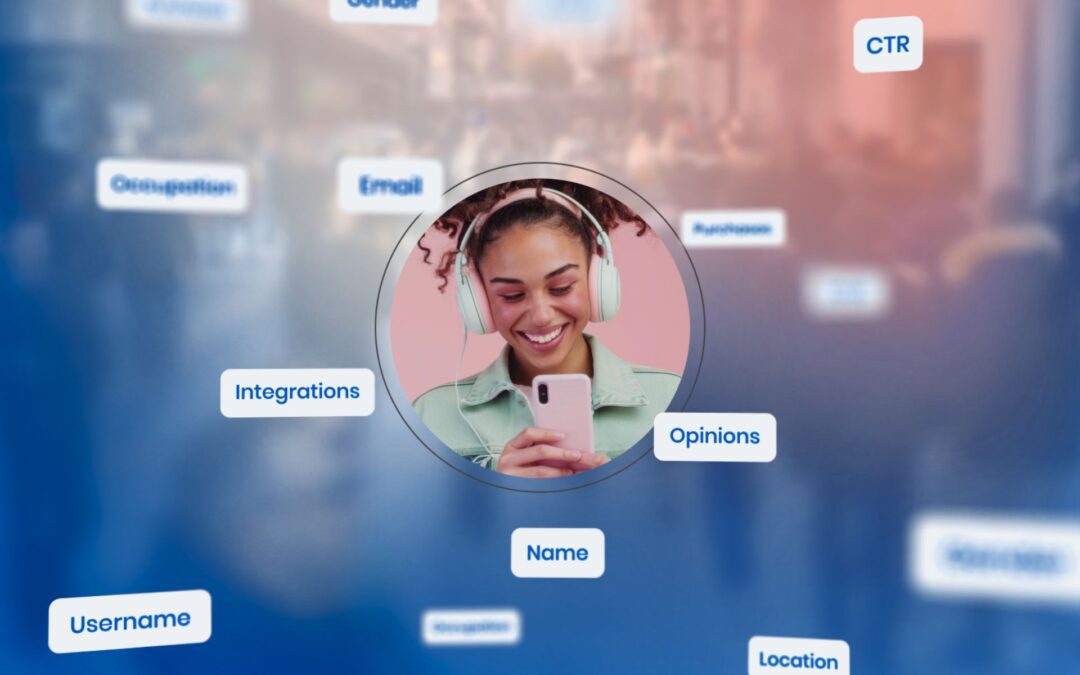
A CDP, or Customer Data Platform, is used in marketing to unify all customer data from every source into a single, persistent profile for each individual. It then makes that unified data available to other marketing tools in real time. Marketers use CDPs to power smarter segmentation, personalised cross-channel campaigns, and predictive modelling across the full customer lifecycle. Below, we unpack the most common questions marketers ask before investing in one.
How does a CDP differ from a CRM or DMP?
A CDP, CRM, and DMP all handle customer data, but they serve fundamentally different purposes. A CRM manages known customer relationships and sales interactions. A DMP handles anonymous, cookie-based audience data primarily for paid advertising. A CDP unifies both known and unknown data from every touchpoint into persistent, individual profiles that any marketing system can activate.
The CDP vs DMP difference is especially important to understand. A DMP is built for short-term, anonymous targeting. The data is largely third-party, cookie-dependent, and expires quickly. A CDP ingests first-party data from your own channels, such as your website, email platform, CRM, loyalty programme, and point of sale, and builds durable profiles that persist over time.
A CRM, meanwhile, focuses on managing the sales relationship. It holds contact records, deal stages, and service history. It is not designed to ingest high-volume behavioural data or to power real-time personalisation across multiple marketing channels. A CDP does exactly that, sitting between your data sources and your activation tools to make unified profiles available wherever you need them.
What data does a CDP collect and unify?
A CDP collects and unifies first-party data from every channel and system a customer interacts with. This includes behavioural data from your website and app, transactional data from your ecommerce or POS system, email engagement data, CRM records, loyalty programme activity, and customer service interactions. The result is a single, continuously updated customer profile.
This process is often called building a 360-degree single customer view. Rather than data sitting in separate silos, the CDP resolves identities across devices and channels, connecting an anonymous website visit to a known email subscriber, for example, once that person converts or logs in.
The types of data a CDP typically unifies include:
- Identity data: Names, email addresses, phone numbers, loyalty IDs
- Behavioural data: Pages visited, products browsed, content consumed
- Transactional data: Purchase history, order value, frequency
- Engagement data: Email opens, clicks, SMS responses, push interactions
- Contextual data: Device type, location, channel preference
With all of this unified, marketers can build segments and triggers based on the full picture of who a customer is, not just the last thing they clicked.
What are the main use cases for a CDP in marketing?
The main use cases for a CDP in marketing are real-time segmentation, personalised campaign activation, predictive modelling, suppression and exclusion logic, and lifecycle marketing automation. CDPs turn raw data into actionable audiences that marketers can deploy across every channel without manual data wrangling.
Here are the most common practical applications:
- RFM modelling: Segment customers by Recency, Frequency, and Monetary value to identify your best customers and those at risk of churning
- Next-best-offer: Use purchase and browsing history to serve the most relevant product recommendation at the right moment
- Cart and browse abandonment: Trigger personalised recovery emails or SMS messages based on real-time behavioural signals
- Lifecycle stage targeting: Send different messages to new subscribers, active buyers, lapsed customers, and loyal advocates automatically
- Suppression logic: Exclude recent purchasers from acquisition campaigns to protect LTV and reduce wasted spend
- Predictive churn prevention: Identify customers showing early signs of disengagement and trigger retention flows before they leave
For a travel brand, this might look like triggering a loyalty reward email to a customer who has booked three times in twelve months, while simultaneously suppressing them from a “first booking” discount campaign. That kind of precision is only possible with unified data powering your marketing automation.
How does a CDP improve cross-channel personalisation?
A CDP improves cross-channel personalisation by ensuring every channel, whether email, SMS, push, or web, draws from the same unified customer profile. Without a CDP, each channel operates on its own data, leading to inconsistent messaging, repeated offers, and a fragmented customer experience. With a CDP, every touchpoint reflects the same real-time understanding of who the customer is.
Consider a retail customer who browses a product on your website, opens an email about it, but does not purchase. Without a CDP, your SMS platform may not know that interaction happened. With a CDP, that behavioural signal is available across all channels, so your SMS, push notification, and retargeting ads can all reflect the same context rather than firing independently.
This consistency drives better results in several ways:
- Customers receive relevant messages rather than generic broadcasts
- Channel frequency is managed centrally, reducing fatigue and unsubscribes
- Personalisation goes beyond first-name tokens to reflect actual behaviour and preferences
- Campaign timing aligns with where the customer is in their journey, not just when a scheduler fires
The outcome is a customer experience that feels coherent and considered, which is increasingly what customers expect from brands they engage with regularly. You can explore how this works in practice through a well-built email marketing platform that connects directly to your customer data layer.
When should a business invest in a CDP?
A business should invest in a CDP when fragmented data is limiting the quality of its marketing decisions. Specific signals include: customer data living in multiple disconnected tools, an inability to personalise beyond basic segments, difficulty suppressing or targeting customers accurately across channels, or a growing gap between the data you collect and the data you can actually use.
You do not need to be an enterprise to benefit from a CDP. The right time to invest is when the cost of poor personalisation, wasted spend, or manual data management outweighs the cost of the platform itself.
Practical indicators that you are ready include:
- Your CRM, email platform, and ecommerce system hold different versions of the same customer record
- Your team spends significant time manually exporting and merging data before campaigns
- You cannot trigger campaigns based on real-time behaviour across channels
- Your personalisation is limited to name, location, or last purchase rather than full lifecycle context
- You are scaling into new channels like SMS, WhatsApp, or push and need a single data layer to power them all
For businesses in sectors like retail, travel, or finance where customer journeys are complex and high-value, the case for a CDP becomes compelling much earlier than many teams realise.
What should you look for in a CDP for marketing automation?
When evaluating a CDP for marketing automation, prioritise native activation, real-time data ingestion, identity resolution quality, and ease of use for marketing teams. A CDP that requires heavy IT involvement to activate segments is not built for marketing velocity. The best platforms let marketers build, activate, and iterate without waiting for data engineering support.
Key criteria to evaluate include:
- Native channel activation: Can you activate CDP segments directly into email, SMS, push, and web campaigns without exporting data?
- Real-time updates: Are customer profiles updated instantly as new behavioural data comes in, or on a batch schedule?
- Identity resolution: How well does the platform stitch together anonymous and known data across devices and sessions?
- Predictive modelling: Does it offer built-in models like RFM, churn probability, or next-best-offer, or do you need a data science team to build these?
- Marketer-friendly interface: Can your CRM team build and manage segments without SQL or developer support?
- Compliance and data governance: Does the platform support your GDPR obligations and give you control over consent and data retention?
Alternatives like Tealium and Segment are well-known in the CDP space and are worth understanding as benchmarks. However, many marketing teams find that standalone CDPs require significant integration work before they deliver value. A CDP that is natively embedded within your marketing platform eliminates that complexity entirely.
How Deployteq powers your CDP strategy
We built our Customer Data Platform to give marketing teams real data they can actually use, without the overhead of a separate tech stack. Here is what that looks like in practice:
- Unified customer profiles: All your data sources connect into a single, persistent 360-degree view of each customer
- Native activation: Segments built in the CDP activate directly into email, SMS, WhatsApp, push, and web campaigns with no export required
- Built-in intelligent modelling: RFM analysis, next-best-offer, and predictive lifecycle insights are available out of the box
- Real-time triggers: Behavioural signals update profiles instantly, so your journeys respond to customers at the right moment
- Marketer-first design: No data science team required. Your CRM and email marketers can build, activate, and optimise without IT dependency
Whether you are upgrading from a simpler platform or consolidating a fragmented data stack, Deployteq gives you the infrastructure to personalise at scale across every channel. Ready to see it in action? Book a demo and we will show you exactly how it works for your sector.