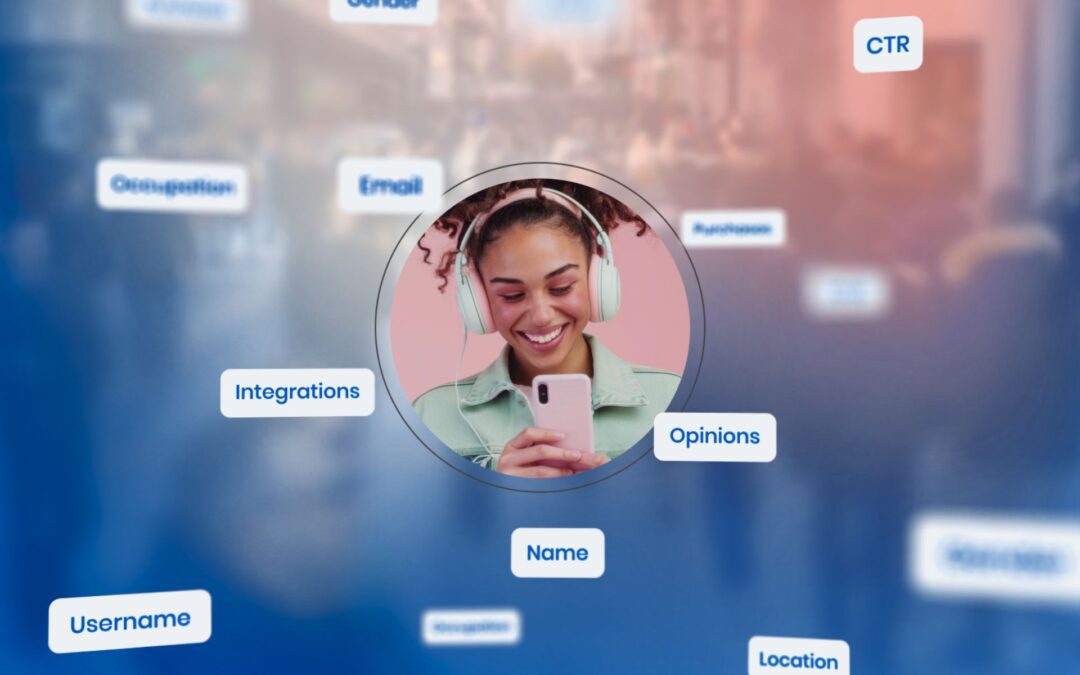
A Customer Data Platform (CDP) is a centralised system that collects, unifies, and activates customer data from multiple sources into a single, persistent customer profile. Unlike point solutions that store data in silos, a CDP connects behavioural, transactional, and demographic data in real time, giving marketers a complete picture of every individual customer. Below, we unpack how CDPs work, how they compare to CRMs and DMPs, and how to know whether one is right for your business.
How does a CDP collect and unify customer data?
A CDP collects customer data by ingesting information from every touchpoint, including your website, email platform, CRM, POS system, mobile app, and third-party sources, and stitching it together under a single customer profile using identity resolution. The result is a 360-degree view of each individual, updated in real time as new interactions occur.
The collection process typically works in three stages:
- Data ingestion: The CDP pulls in structured and unstructured data via APIs, SDKs, and native integrations. This includes clicks, purchases, support tickets, loyalty points, and more.
- Identity resolution: The platform matches data points across devices and channels to a single person, resolving anonymous and known identities into one unified profile.
- Profile enrichment: Once unified, profiles are enriched with behavioural signals, predictive scores, and segmentation attributes that marketers can act on immediately.
The key differentiator is persistence. A CDP does not just aggregate data for a single campaign. It maintains and continuously updates each profile over time, making it the most reliable source of truth for customer intelligence across your entire organisation.
What’s the difference between a CDP, a CRM, and a DMP?
The core distinction is this: a CRM manages relationships with known customers, a DMP handles anonymous, third-party audience data for advertising, and a CDP unifies all first-party customer data into persistent profiles for activation across any channel. The CDP vs DMP difference, in particular, is one of the most misunderstood comparisons in marketing technology.
CDP vs CRM
A CRM is built around managing sales pipelines, contact records, and customer service interactions. It is primarily used by sales and support teams. A CDP, by contrast, is built for marketers. It captures real-time behavioural data that a CRM never sees, such as anonymous browsing sessions, email engagement, and in-app activity, and uses that data to power segmentation and personalisation at scale.
CDP vs DMP
A DMP aggregates third-party and anonymous cookie-based data, primarily to build audience segments for paid media. It is designed for short-term ad targeting and does not store persistent individual profiles. A CDP works with first-party, consented data and builds durable profiles that persist beyond a single campaign. With third-party cookies increasingly restricted, the CDP vs DMP difference is becoming more commercially significant. CDPs are built for a privacy-first world; DMPs are not.
If you are evaluating tools like Tealium or Segment as potential CDP solutions, it is worth noting that both sit in the data infrastructure space and require significant technical resources to operate. A Tealium vs Segment alternative that is natively connected to your marketing execution layer, rather than just your data layer, will typically deliver faster time to value for marketing teams.
What can marketers actually do with a CDP?
With a CDP, marketers can build hyper-personalised campaigns based on real behaviour, trigger communications at exactly the right moment, and model future customer actions using predictive intelligence. It moves marketing from reactive batch-and-blast to proactive, data-led engagement.
Practical use cases include:
- RFM modelling: Segment customers by Recency, Frequency, and Monetary value to prioritise your highest-value audiences and re-engage at-risk ones.
- Next-best-offer: Use predictive signals to serve the most relevant product or content recommendation to each individual, whether via email, SMS, or web personalisation.
- Lifecycle triggers: Automatically activate campaigns when a customer moves between lifecycle stages, from first purchase to loyalty tier upgrade to lapse risk.
- Cross-channel consistency: Ensure a customer who browses a holiday package on your website receives a relevant follow-up via email and push, with no duplication or conflicting messages.
- Suppression and compliance: Use unified profiles to suppress customers who have already converted or opted out, reducing waste and protecting your sender reputation.
For a retail brand, this could look like triggering a personalised restock alert via SMS the moment a previously browsed item comes back into inventory, informed by browsing history, past purchase data, and a predictive LTV score, all from a single unified profile.
Who should use a CDP and when does it make sense?
A CDP makes sense for any organisation that holds significant volumes of first-party customer data across multiple channels and is struggling to activate that data in a joined-up way. It is most valuable when fragmented data is causing missed personalisation opportunities, inconsistent customer experiences, or unreliable segmentation.
You are likely ready for a CDP if:
- Your customer data lives in three or more disconnected systems (CRM, ESP, ecommerce platform, loyalty programme)
- Your marketing team cannot build real-time segments without relying on the data or IT team
- You are sending the same message to customers who have already converted
- Your personalisation is limited to name fields and basic email preferences
- You are operating across email, SMS, push, and web but cannot connect the customer journey across those channels
Sectors where CDPs deliver the most immediate impact include travel and leisure, where booking intent signals are time-sensitive; retail and e-commerce, where purchase frequency and basket behaviour drive LTV; and finance, where complex customer lifecycles demand precise, compliant communication. If your data is already clean and centralised, you may not need a full CDP yet. But if you are making decisions based on incomplete or stale customer data, the cost of inaction compounds quickly.
How do you choose the right CDP for your business?
The right CDP for your business depends on three factors: how closely it integrates with your existing marketing execution tools, how much technical resource it requires to operate, and whether it supports the activation use cases your team actually needs today, not just in theory.
When evaluating CDP options, ask these questions:
- Is it natively connected to your campaign channels? A CDP that requires a separate activation layer adds complexity and slows time to value. Look for a solution where unified profiles feed directly into email, SMS, push, and web personalisation without additional middleware.
- Can your marketing team use it without engineering support? Some CDPs, including enterprise platforms like Tealium and Segment, are built for data engineers first. If your marketing team cannot build and activate segments independently, the CDP becomes a bottleneck rather than an enabler.
- Does it support predictive modelling out of the box? RFM analysis, churn prediction, and next-best-offer capabilities should be accessible to marketers, not locked behind a data science team.
- How does it handle identity resolution? Understand whether the platform can match anonymous and known profiles across devices, and how it manages consent and data governance.
- What does the implementation timeline look like? A CDP that takes 12 months to deploy is not the right fit for a team that needs results this quarter.
The best CDP is the one your team will actually use. Prioritise usability and native connectivity over feature volume, and always pressure-test the activation workflow before committing.
How Deployteq’s CDP turns unified data into real campaign results
We built our Customer Data Platform to solve exactly the challenges described above, and to do it in a way that marketers can own end to end, without waiting on data teams or developers.
Here is what that looks like in practice:
- Single customer view: All your first-party data, from email engagement to purchase history to web behaviour, is unified into intelligent customer profiles that update in real time.
- Built-in predictive modelling: RFM scoring, next-best-offer, and full lifecycle insights are available directly within the platform, with no data science resources required.
- Native activation: Unified profiles feed directly into campaigns across email, SMS, WhatsApp, push, and web personalisation, with no additional middleware.
- Smart segmentation: Build hyper-personalised segments based on real behaviour and predictive signals, and activate them instantly across every channel.
- 360-degree visibility: Visualise the complete customer lifecycle, from first touch to loyalty, and identify exactly where to intervene with the right message.
If you are ready to stop working around fragmented data and start activating it, book a demo and we will show you what your customer data can actually do.