CDP stands for Customer Data Platform. A CDP is software that collects, unifies, and activates customer data from multiple sources into a single, persistent customer profile. It is designed specifically for marketers, giving teams direct access to clean, actionable data without relying on engineering support for every query or campaign.
Unlike older data tools, CDP software is built to serve real-time marketing use cases. It connects behavioural, transactional, and demographic data in one place, then makes that data immediately usable for segmentation, personalisation, and cross-channel campaign delivery.
Below, we answer the most common questions marketers ask before investing in a CDP, from how it actually works to what to look for when choosing one.
What does a customer data platform actually do?
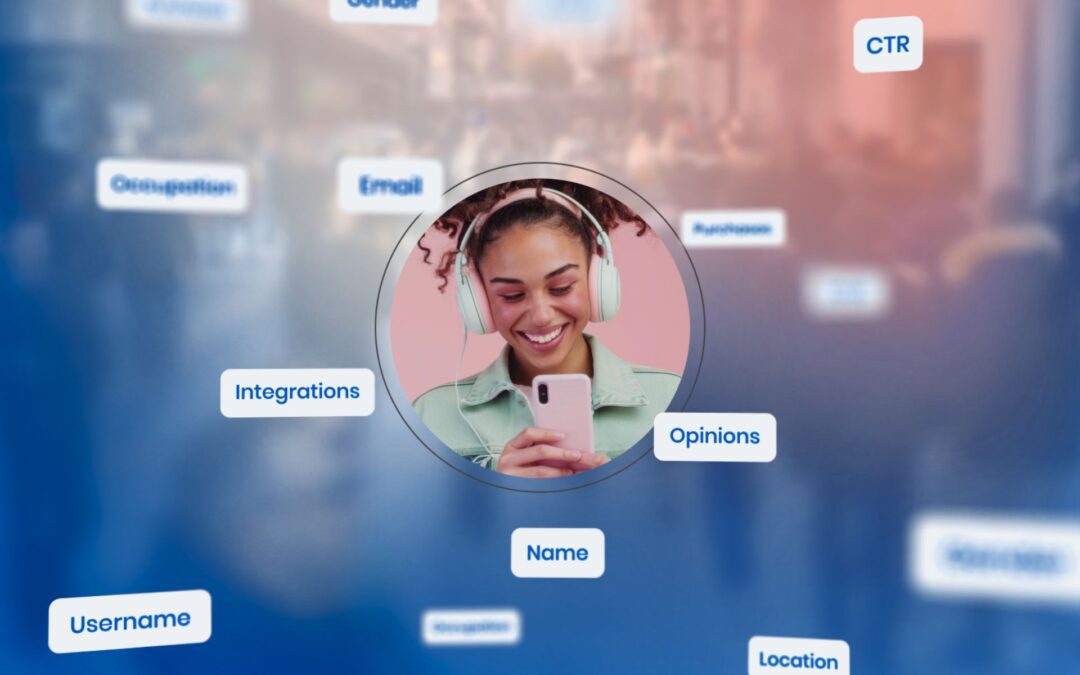
A customer data platform collects data from every touchpoint a customer has with your brand, whether that is a website visit, an email open, a purchase, or a loyalty programme interaction, and stitches it into a unified, continuously updated customer profile. That profile is then made available to marketing tools for segmentation and activation in real time.
The key word here is activation. A CDP does not just store data. It makes data usable. Marketers can build precise audience segments, trigger personalised journeys, and run predictive models like RFM scoring or next-best-offer recommendations, all without waiting for a data analyst to pull a report.
For a retail brand, this might mean automatically identifying customers who have lapsed after three months of no purchases and triggering a win-back sequence the moment that threshold is hit. For a travel brand, it could mean surfacing a destination offer based on a customer’s browsing history from last week. The CDP is what makes that kind of real-time personalisation possible at scale.
How is a CDP different from a CRM or DMP?
A CDP, CRM, and DMP all handle customer data, but they serve fundamentally different purposes. A CRM manages relationships and sales interactions, typically focused on known contacts and pipeline management. A DMP handles anonymous, third-party audience data for advertising. A CDP unifies first-party data across all channels into persistent, identity-resolved profiles built for marketing activation.
The distinction matters in practice. CRMs are excellent for sales teams tracking deals and conversations. They are not built to ingest real-time behavioural data from your website or app, and they rarely power automated marketing journeys at scale. DMPs are being phased out as third-party cookies disappear, because they rely on anonymous data that is increasingly unavailable.
CDP software sits in a different lane entirely. It is built around your own first-party data, resolves identities across devices and channels, and keeps profiles updated in real time. That makes it the most durable and marketing-relevant of the three, especially as data privacy regulations tighten and brands need to do more with the data they actually own.
What types of data does a CDP collect and unify?
A CDP collects and unifies first-party data from every source your brand controls. This includes behavioural data such as website visits, app interactions, and email engagement; transactional data such as purchases, returns, and subscription activity; demographic and profile data from sign-up forms and CRM records; and service data from support interactions or loyalty programmes.
The power of a CDP is not in any single data type. It is in the connection between them. When a customer browses a product category, opens an email about that category, and then abandons a cart, a CDP links those three events to the same individual and makes that complete picture available to your marketing platform instantly.
This is what creates a genuine 360-degree customer view. Rather than siloed data sitting in your email tool, your e-commerce platform, and your loyalty system separately, a CDP resolves all of it to a single profile. Marketers can then segment on any combination of those data points, for example, customers who have purchased twice in the last 90 days, opened at least one email, and have not yet joined the loyalty programme.
How does a CDP improve marketing personalisation?
A CDP improves marketing personalisation by giving you accurate, complete, and real-time data to act on. Personalisation fails when it is based on incomplete profiles, stale data, or disconnected systems. A CDP removes those barriers by ensuring every segment and trigger reflects the customer’s most current behaviour across all channels.
With a unified profile, you can move beyond basic personalisation like first-name fields and into genuinely relevant experiences. A finance brand can send a timely alert based on a customer’s product holding and recent app activity. An entertainment platform can recommend content based on viewing history and purchase behaviour combined. A travel brand can trigger a loyalty reward email the moment a customer hits a booking milestone.
Intelligent modelling makes this even sharper. RFM scoring (Recency, Frequency, Monetary value) lets you identify your most valuable customers and treat them accordingly. Next-best-offer models predict what a customer is most likely to respond to next, based on their history. These are not theoretical capabilities. They are practical tools that marketing automation teams can deploy directly within campaigns when the underlying data is clean and unified.
When does a business actually need a CDP?
A business needs a CDP when fragmented data is limiting its ability to personalise, automate, or measure effectively. If your customer data lives in four different platforms, your segments are based on incomplete profiles, or your team spends hours manually pulling lists for campaigns, a CDP solves a real operational problem, not just a theoretical one.
Specific signals that you are ready for CDP software include:
- You are running campaigns across email, SMS, push, and web but cannot connect customer behaviour across those channels
- Your personalisation is limited to basic fields because you cannot easily combine data from multiple sources
- You are losing revenue to poor timing, for example, sending a win-back email two weeks after a customer has already churned
- Your data team is a bottleneck for every segmentation request
- You are scaling your customer base and your current tools cannot keep up with the volume or complexity
Brands that are upgrading from simpler platforms often hit this ceiling first. The tools that work well at lower volumes start to show their limits when you need real-time triggers, cross-channel identity resolution, or predictive modelling. That is the moment a CDP becomes a practical necessity rather than a nice-to-have.
What should you look for in a CDP?
When evaluating CDP software, prioritise platforms that offer real-time data ingestion, identity resolution across devices and channels, native integration with your existing marketing stack, and marketer-friendly interfaces that do not require engineering support for day-to-day use. The best CDPs are ones your team can actually operate without raising a ticket every time you need a new segment.
Beyond the core features, look for:
- Activation built in: Can you use the CDP to trigger campaigns directly, or does it just export data to other tools? Native activation reduces latency and complexity.
- Intelligent modelling: Does the platform support predictive capabilities like RFM, churn scoring, or next-best-offer out of the box, or do you need to build those models yourself?
- Data governance and compliance: Especially important in regulated sectors like finance and insurance. The CDP should support consent management and GDPR-compliant data handling.
- Scalability: Can it handle your current data volume and grow with you? Check how the platform performs with high-frequency events and large customer bases.
- Ease of use for marketers: If only your data team can operate it, you have not solved the problem. Look for visual profile builders, drag-and-drop segment tools, and clear dashboards.
The right CDP should make your marketing team faster and more confident, not more dependent on technical resources.
How Deployteq’s CDP puts your data to work
We built our Customer Data Platform specifically for marketers who need to move fast without compromising on data quality. Here is what that looks like in practice:
- Unified customer profiles: We consolidate all your first-party data into a single, continuously updated 360-degree view of every customer.
- Intelligent modelling built in: RFM scoring, next-best-offer predictions, and full lifecycle insights are available directly within the platform, no data science team required.
- Native cross-channel activation: Trigger personalised campaigns across email, SMS, WhatsApp, push, and web from one place, using the same unified profile.
- Marketer-first design: Visual tools let your team build segments, connect data sources, and launch journeys without engineering support.
- Hyper-personalisation at scale: Deliver content that is genuinely relevant at every stage of the customer lifecycle, not just at the first touchpoint.
If you are ready to stop working around your data and start activating it, book a personalised demo and we will show you exactly how it works for your sector and use case.