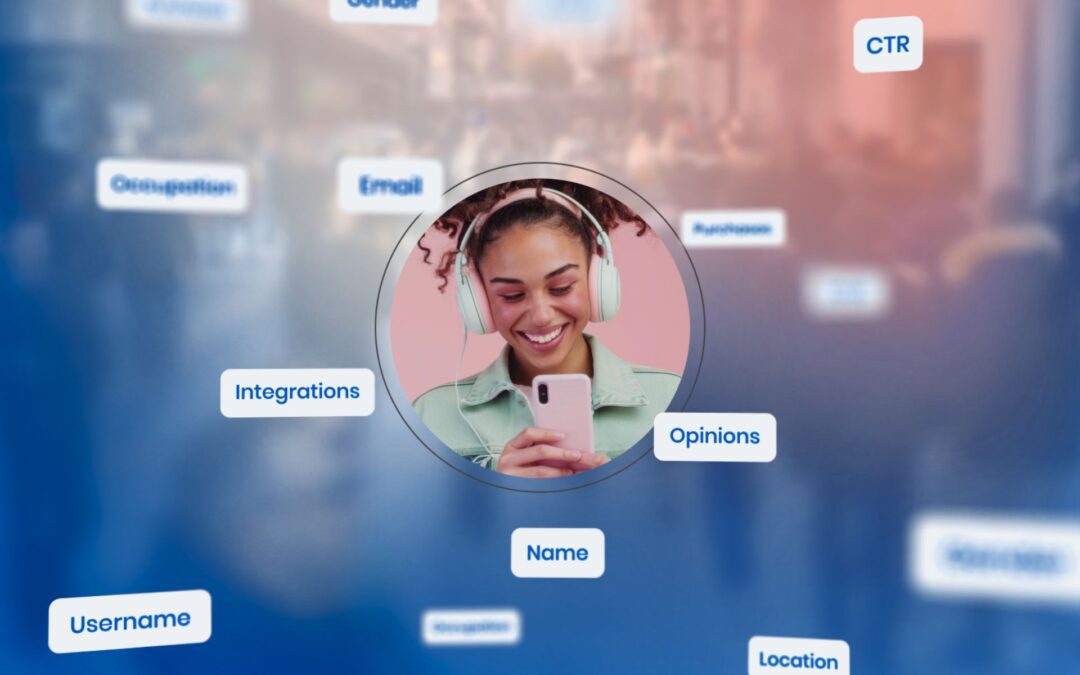
A customer data platform unifies data from every system that captures customer behaviour, transactions, and identity, including your website, email platform, CRM, POS, mobile app, and offline touchpoints. The result is a single, persistent customer profile that updates in real time. For B2C marketers managing high-volume, multi-channel programmes, this unified view is the foundation of every personalisation and automation decision you make. Below, we unpack the most common questions marketers ask about CDP data sources and how they drive better campaign outcomes.
What types of data does a CDP bring together?
A CDP brings together four core data types: behavioural data (clicks, page views, app sessions), transactional data (purchases, returns, subscription events), demographic and identity data (name, email, preferences), and contextual data (device type, location, channel preference). Together, these inputs build a complete, actionable picture of each individual customer across their full lifecycle.
Most marketing teams already hold all four data types. The problem is that they live in separate systems, are updated at different speeds, and rarely talk to each other. A CDP resolves this by ingesting structured and unstructured data from multiple sources simultaneously and resolving it into a single unified profile.
Here is a quick breakdown of what falls into each category:
- Behavioural: Website events, email opens and clicks, app interactions, search queries
- Transactional: Order history, basket value, refund patterns, loyalty points
- Identity: Email address, phone number, account ID, cookie and device IDs
- Contextual: Time of engagement, preferred channel, geo-location, device type
When these data types are unified, you move from knowing who your customer is to understanding how they behave, what they value, and when they are most likely to act.
How does a CDP connect online and offline data sources?
A CDP connects online and offline data sources through a process called identity resolution, which matches records from different systems to the same individual using shared identifiers such as an email address, loyalty ID, or phone number. This means a customer who browses online, buys in-store, and contacts your support team is recognised as one person, not three separate records.
Online sources typically feed into a CDP via API integrations, JavaScript tracking pixels, or direct platform connectors. These cover your website, email platform, mobile app, paid media channels, and social touchpoints.
Offline sources require a different approach. Common methods include:
- POS system exports matched to loyalty programme IDs
- In-store Wi-Fi login data linked to a known email address
- Call centre interaction logs tagged with a customer account number
- Event attendance records from ticketing or registration platforms
For retail and travel brands in particular, the gap between online intent and offline action is where a huge amount of revenue insight gets lost. Connecting these sources gives you the full picture, not just the digital half of it.
What is the difference between a CDP, a CRM, and a DMP?
The key distinction is purpose and data depth. A CRM manages known customer relationships, primarily for sales and service teams. A DMP (Data Management Platform) handles anonymous, cookie-based audience data for paid advertising. A CDP builds persistent, unified profiles of known individuals across all channels, designed specifically for real-time marketing activation.
Understanding the customer data platform vs CRM difference matters when you are deciding where to invest. A CRM is excellent at managing contact records, deal stages, and service history. But it was not built to ingest real-time behavioural signals or power automated cross-channel triggers at scale.
A DMP operates almost entirely on anonymous third-party data, which makes it useful for prospecting and display advertising but unsuitable for personalising the experience of your existing customers.
Here is how the three compare side by side:
- CRM: Known contacts, relationship management, sales and service focus, updated manually or through integrations
- DMP: Anonymous audiences, third-party data, short data retention, advertising focus
- CDP: Known individuals, first-party data, persistent profiles, real-time activation across email, SMS, push, and web
For CRM and email marketers running complex lifecycle programmes, a CDP fills the gap between what your CRM knows and what your customers are actually doing right now. You can explore how this works in practice on our Customer Data Platform page.
Which data sources have the biggest impact on personalisation?
The data sources with the greatest personalisation impact are transactional history, real-time behavioural signals, and channel engagement patterns. These three inputs tell you what a customer has bought, what they are doing right now, and how they prefer to be communicated with, which is everything you need to deliver a relevant message at the right moment.
Transactional data powers models like RFM (Recency, Frequency, Monetary value), which segments customers by how recently and how often they buy, and how much they spend. This is one of the most reliable ways to predict future behaviour and prioritise your highest-value segments.
Real-time behavioural signals, such as a product page view or an abandoned basket, are the triggers that allow you to act on intent while it is still live. A customer browsing ski holidays on a Tuesday evening is telling you something specific. If your data is unified and your automation is connected, you can respond within minutes.
Channel engagement patterns, including which emails a customer opens, which push notifications they tap, and whether they prefer SMS to email, allow you to route messages through the channel most likely to convert. This alone can significantly lift campaign performance without changing a single word of your copy.
For a retail or e-commerce brand, combining these three sources means you can build a 360 customer view that drives hyper-personalised recommendations, timely re-engagement, and smarter send-time optimisation, all from data you already own.
How does unified data improve cross-channel marketing campaigns?
Unified data improves cross-channel campaigns by ensuring every channel, whether email, SMS, push, or web, draws from the same customer profile. This eliminates inconsistencies, prevents duplicate messaging, and allows you to coordinate touchpoints across a single journey rather than running isolated, channel-specific campaigns that contradict each other.
Without a single customer view, cross-channel marketing often produces friction instead of flow. A customer who buys on Saturday should not receive a discount offer on Sunday. A lapsed subscriber who re-engages via push notification should not receive a generic reactivation email the same afternoon. These are the kinds of disconnects that erode trust and waste budget.
With unified data powering your campaigns, you can build journeys that respond to what a customer has actually done, across every channel, not just what they did within a single platform. This means:
- Suppressing email sends when a customer has already converted via another channel
- Escalating from email to SMS when a high-value customer has not opened in a defined window
- Personalising web content based on email engagement history
- Triggering loyalty communications based on in-store purchase events
The impact on campaign performance is direct. Relevant, well-timed messages consistently outperform generic broadcasts, and unified data is what makes relevance possible at scale. If you are running email marketing campaigns alongside other channels, the ability to coordinate them from one data source is one of the highest-leverage improvements you can make to your programme.
How Deployteq helps you unify customer data
We built our Customer Data Platform specifically for marketers who need data they can actually use, not just store. Here is what it does in practice:
- Unified customer profiles: Every data source, online and offline, resolves into a single persistent profile that updates in real time
- Intelligent modelling built in: RFM scoring, next-best-offer predictions, and full lifecycle insights are available directly within your campaign workflows, with no data science team required
- 360 customer view, visually mapped: See the complete picture of each customer’s behaviour, preferences, and history in one place
- Direct activation across every channel: Email, SMS, WhatsApp, push, and web personalisation all draw from the same unified data, so your campaigns are consistent, coordinated, and relevant
- Smart segmentation at speed: Build hyper-personalised segments using real-time behavioural and transactional signals, then deploy them instantly
Whether you are a CRM specialist managing complex lifecycle journeys or a CMO looking to close the gap between data and revenue, our platform gives you the control to act on your data, not just collect it. Book a demo and see how a unified data foundation changes what your campaigns can do.