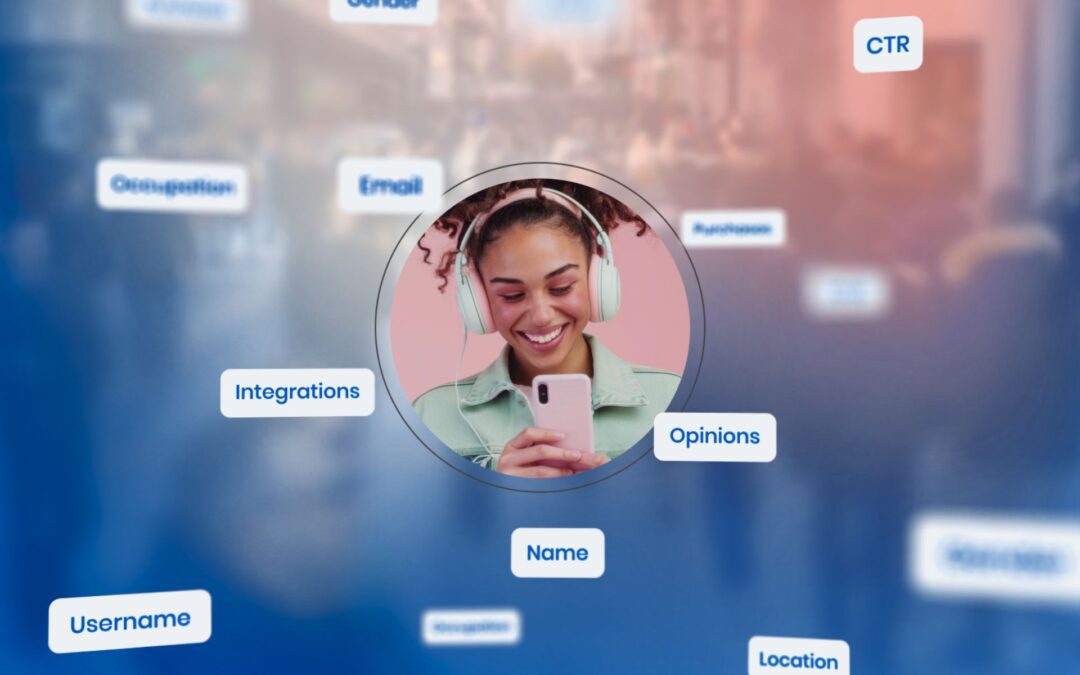
A CDP unifies every data point a customer generates across all your channels into a single, persistent profile. That means behavioural data, transactional records, demographic attributes, and real-time interactions all live in one place, tied to one identity. The sections below break down exactly what gets pulled in, how it all fits together, and how that unified data powers genuinely personalised marketing.
What types of data get pulled into a CDP?
A CDP pulls in four core data types: behavioural data (what customers do), transactional data (what they buy), demographic data (who they are), and contextual data (where and when they engage). Together, these data types form a complete picture of each customer across every touchpoint, online and offline.
- Behavioural data: page views, email opens, click-through paths, app sessions, and on-site search queries
- Transactional data: purchase history, order values, return rates, and loyalty point activity
- Demographic data: name, location, age, language preference, and account details
- Contextual data: device type, session timing, channel preference, and campaign responses
The real value is not in any single data type. It is in the combination. A retail brand knowing that a customer browsed winter coats three times, opened a discount email but did not convert, and typically buys on a Saturday morning has far more to work with than any one signal alone could provide.
How does a CDP merge data from different sources into one profile?
A CDP merges data from different sources through a process called identity resolution. It matches records across systems using persistent identifiers such as email addresses, customer IDs, loyalty numbers, or device fingerprints, then stitches those records into a single, deduplicated customer profile that updates continuously as new data arrives.
This is where a CDP differs fundamentally from a data warehouse or a CRM. A data warehouse stores raw data for analysis but does not create real-time, actionable profiles. A CRM manages relationships but typically only captures data from direct interactions. The CDP sits between your data infrastructure and your activation channels, doing the heavy lifting of unification so marketers can act on clean, complete profiles rather than fragmented records.
For a travel brand, this might mean connecting a booking engine, a loyalty app, a web analytics tool, and an email platform. The CDP resolves that a user who booked via desktop, browsed destinations on mobile, and opened a loyalty email is the same person, then builds one profile that reflects all of it.
What is the difference between first-party, second-party, and third-party data in a CDP?
In a CDP, first-party data is data you collect directly from your customers through your own channels. Second-party data is first-party data shared by a trusted partner. Third-party data is purchased or sourced from external providers with no direct relationship to your customers. First-party data is the most valuable and reliable type for CDP-driven personalisation.
First-party data
This is the foundation of any CDP. It includes everything your customers share with you directly: purchase history, email engagement, website behaviour, app activity, and preference centre inputs. Because you own it and collected it with consent, it is accurate, compliant, and deeply relevant.
Second-party and third-party data
Second-party data can enrich profiles when you have a formal data-sharing arrangement with a partner, such as a co-branded loyalty scheme or a media publisher. Third-party data, sourced from data brokers, has become increasingly unreliable and restricted due to privacy regulations and the deprecation of third-party cookies. Most enterprise CDP strategies now focus almost entirely on maximising first-party data quality rather than supplementing it with third-party sources.
What real-time data does a CDP capture?
A CDP captures real-time data through event streaming, meaning it records customer actions as they happen rather than in batch updates. This includes live website behaviour, in-app events, email engagement signals, and point-of-sale triggers. The CDP processes these events instantly and updates the customer profile in real time, enabling immediate, contextually relevant responses.
For an e-commerce brand, real-time capture means knowing the moment a high-LTV customer abandons a cart, and being able to trigger a personalised recovery message within minutes rather than hours. For a finance brand, it means detecting a customer who just visited a mortgage calculator page and surfacing the right follow-up content at exactly the right moment.
Real-time data is what separates a CDP from a static data warehouse. The profile is always current, which means your marketing automation is always working from the most accurate version of who your customer is right now, not who they were last week.
Which data sources can a CDP connect to?
A CDP can connect to virtually any system that generates customer data, provided it offers an API or a native connector. Common data sources include CRMs, e-commerce platforms, email marketing tools, mobile apps, web analytics platforms, POS systems, loyalty programmes, ad platforms, and data warehouses. The breadth of integrations determines how complete the unified profile becomes.
- CRM systems: Salesforce, HubSpot, Microsoft Dynamics
- E-commerce platforms: Shopify, Magento, WooCommerce
- Email and SMS platforms: existing marketing automation tools
- Analytics tools: Google Analytics, Adobe Analytics
- Advertising platforms: Meta, Google Ads, programmatic DSPs
- Offline sources: in-store POS, call centre records, loyalty card data
The more sources you connect, the richer each profile becomes. An entertainment brand connecting its ticketing platform, streaming app, and email engagement data will build profiles detailed enough to predict the next-best offer with genuine accuracy.
How is CDP data used to personalise marketing campaigns?
CDP data personalises marketing campaigns by enabling precise segmentation, predictive modelling, and real-time triggers based on a complete customer profile. Instead of sending the same message to a broad list, marketers can build segments based on actual behaviour, purchase history, and lifecycle stage, then activate those segments across every channel simultaneously.
Practical personalisation use cases powered by CDP data include:
- RFM segmentation: targeting customers by recency, frequency, and monetary value to prioritise your highest-potential audience
- Next-best-offer modelling: using purchase history and browsing behaviour to recommend the most relevant product or service at the right moment
- Lifecycle triggers: automating onboarding, win-back, and loyalty sequences based on where each customer sits in their journey
- Cross-channel consistency: ensuring a customer who receives an email also sees a consistent message via SMS, push, or web personalisation
For a hospitality brand, this might mean identifying guests who booked a spa break two years ago, have not returned since, and typically travel in spring, then triggering a personalised reactivation campaign in February with a relevant offer. That level of precision is only possible when your email marketing platform is working from a fully unified customer profile.
How Deployteq powers your CDP strategy
We built our Customer Data Platform to give marketers exactly what is described above, without the complexity that typically comes with enterprise CDP implementations. Here is what that looks like in practice:
- Unified customer profiles: all your data sources connected into a single 360-degree view, updated in real time
- Intelligent modelling built in: RFM analysis, next-best-offer, and predictive lifecycle insights available directly within your campaign workflows
- Direct activation across every channel: email, SMS, WhatsApp, push, and web personalisation all triggered from the same unified profile
- No data silos: your CDP and your marketing automation platform work as one, so there is no lag between insight and action
Whether you are a retail brand looking to reduce churn, a travel business building loyalty loops, or a finance team managing complex customer lifecycles, Deployteq gives you the data infrastructure and the activation tools in a single platform. Book a demo and see how unified customer data translates into campaigns that actually perform.