A CDP (Customer Data Platform) unifies customer data across channels by collecting raw data from every touchpoint, resolving it into a single customer profile, and making that profile available in real time for activation across your marketing stack. Unlike siloed tools that store data separately, a CDP creates one persistent, unified view of each customer that updates continuously as new interactions happen.
This matters most for B2C brands running campaigns across email, SMS, web, and mobile simultaneously, where fragmented data leads to inconsistent experiences and missed revenue. The sections below unpack exactly how a CDP works, what it handles, and when it makes sense to invest in one.
What does a CDP actually do with your data?
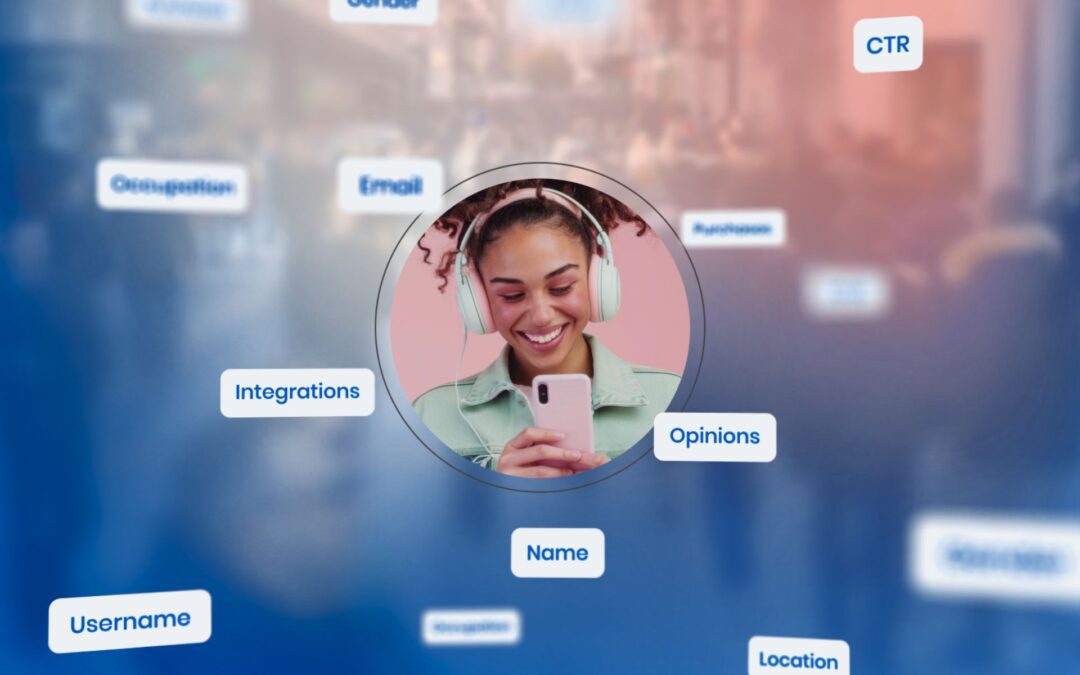
A CDP collects, cleans, and unifies customer data from multiple sources into a single, persistent customer profile. It ingests data via APIs, SDKs, and native integrations, then standardises it into a consistent schema, resolves identity across touchpoints, and makes the resulting profiles available for segmentation and activation in real time.
In practical terms, this means a customer who browses your site on mobile, opens an email on desktop, and calls your support line is recognised as the same person, with all three interactions stitched together. That unified profile becomes the foundation for every segment, trigger, and personalised message you send.
The key functions a CDP performs include:
- Data ingestion: Pulling in behavioural, transactional, and demographic data from web, app, CRM, POS, and third-party sources
- Data standardisation: Normalising inconsistent formats into a unified schema
- Identity resolution: Matching anonymous and known identifiers to a single customer record
- Profile activation: Pushing enriched segments and attributes into your campaign tools in real time
- Predictive modelling: Surfacing insights like RFM scores, next-best-offer, and churn propensity
The result is data you can actually use, not a warehouse of records that requires a data engineer to extract value from.
What types of customer data can a CDP unify?
A CDP can unify behavioural data, transactional data, demographic data, and contextual data from both online and offline sources. This includes website and app interactions, email engagement, purchase history, loyalty programme activity, customer service records, and third-party data feeds, all resolved into a single customer profile.
Most brands underestimate how many data sources they actually have. A retail brand, for example, might have data sitting in a web analytics platform, an email tool, a POS system, a loyalty app, and a returns management system, none of which talk to each other by default. A CDP connects these streams and makes the combined picture usable for marketing automation.
The four main data categories a CDP typically handles are:
- Behavioural data: Page views, product clicks, session depth, app events, and content interactions
- Transactional data: Purchase history, order value, return rates, and subscription status
- Demographic data: Name, location, age, preferences, and account details
- Contextual data: Device type, channel preference, recency, and real-time signals like cart abandonment
The richer the data inputs, the more precise your segments become, and the more relevant your campaigns feel to each individual customer.
How does a CDP resolve identity across different channels?
A CDP resolves identity by linking multiple identifiers, such as email addresses, device IDs, cookie IDs, loyalty numbers, and phone numbers, to a single customer profile using a process called identity stitching. This creates one persistent record that remains intact even as customers switch devices or interact through different channels.
Identity resolution works in two main ways. Deterministic matching uses known, exact identifiers, like a logged-in email address or a loyalty card number, to confirm a match with high confidence. Probabilistic matching uses behavioural signals and statistical modelling to infer that two anonymous sessions likely belong to the same person.
For marketers, this has direct commercial value. A travel brand can recognise that the anonymous visitor browsing city breaks on mobile is the same loyalty member who opened a promotional email that morning, and serve a personalised offer at exactly the right moment. Without identity resolution, that connection is invisible, and the opportunity is lost.
The quality of identity resolution is one of the most important factors separating a well-implemented CDP from a basic data warehouse. It determines how accurate your segments are and how relevant your cross-channel personalisation can be.
What’s the difference between a CDP, a CRM, and a DMP?
The key distinction is purpose and data type. A CRM manages known customer relationships and sales interactions. A DMP (Data Management Platform) handles anonymous, third-party audience data primarily for paid media targeting. A CDP unifies first-party data from all sources, both anonymous and known, into persistent customer profiles for real-time activation across owned channels.
Understanding the CDP vs DMP difference is especially important as third-party cookies continue to be deprecated. A DMP relies heavily on third-party data and cookie-based identifiers, which are becoming less reliable. A CDP, by contrast, is built on first-party data you own, making it far more durable and privacy-compliant.
Here is how the three tools compare directly:
- CRM: Stores known customer records, sales history, and support interactions. Strong on relationship management, limited on real-time behavioural data and anonymous profiles.
- DMP: Aggregates anonymous audience segments from third-party sources for programmatic ad targeting. Short data retention windows, no persistent identity, and declining effectiveness post-cookie.
- CDP: Unifies first-party behavioural, transactional, and demographic data into persistent profiles. Designed for real-time activation across owned channels like email, SMS, and web.
Many brands use all three, but the CDP sits at the centre as the master record of customer identity, feeding enriched segments into both the CRM and the campaign execution layer.
How does a CDP enable cross-channel personalisation?
A CDP enables cross-channel personalisation by making unified customer profiles available in real time to every channel in your marketing stack. Because each profile reflects the customer’s full history and current behaviour, every channel, whether email, SMS, push, or web, can serve content that is relevant to where that customer is in their lifecycle right now.
Without a CDP, personalisation is typically channel-specific. Your email tool knows what emails a customer opened. Your web platform knows what pages they visited. But neither knows what the other knows, which means your messages are based on partial pictures. A CDP closes that gap.
In practice, cross-channel personalisation powered by a CDP might look like this for a retail brand:
- A customer browses winter coats but does not purchase
- The CDP updates their profile with high purchase intent in outerwear
- An automated email triggers within the hour featuring the exact products they viewed
- If they do not open the email, an SMS follow-up fires the next morning
- When they return to the website, the homepage banner surfaces a personalised offer based on their browsing history
This level of coordination is only possible when all channels draw from the same unified profile in real time. The CDP is what makes that shared intelligence available at the point of execution.
When should a brand switch to a CDP?
A brand should consider switching to a CDP when fragmented customer data is limiting personalisation, causing inconsistent cross-channel experiences, or creating manual data work that slows campaign delivery. If your team is spending time reconciling data between tools rather than activating it, a CDP is the right next step.
Specific signals that indicate readiness for a CDP include:
- Customer data is spread across more than two or three disconnected platforms
- Personalisation is limited to single-channel logic rather than full lifecycle behaviour
- Real-time triggers are not possible because data updates are batched overnight
- Segments are built manually and require IT or data team support to refresh
- You cannot identify the same customer across web, email, and app without custom development
Brands upgrading from simpler email platforms often reach this inflection point when their customer base grows and their campaigns become more complex. What worked at lower volume becomes a bottleneck at scale. A CDP removes that ceiling by making unified, real-time data the default rather than the exception.
The investment is justified when the data complexity of your customer base outpaces what your current tools were designed to handle.
How Deployteq helps you unify customer data across channels
We built our Customer Data Platform to solve exactly the challenges outlined above. Launched in 2025, it gives marketing teams a single place to unify, model, and activate customer data without relying on separate tools or data engineering support.
Here is what our CDP delivers in practice:
- 360-degree customer profiles: Every interaction across email, SMS, WhatsApp, push, and web is unified into a single customer view that updates in real time
- Intelligent modelling built in: RFM scoring, next-best-offer recommendations, and predictive lifecycle insights are available directly within your campaign workflows
- Seamless campaign activation: Enriched segments activate instantly across all channels without data exports or manual syncing
- Hyper-personalised journeys: Build segments based on full behavioural and transactional history, not just last-click data
- No dependency on third-party data: Everything is built on first-party data you own and control
Whether you are in retail, travel, finance, or entertainment, our platform is built for the complexity of high-volume B2C marketing. If you are ready to stop reconciling data and start activating it, book a demo and see how it works for your specific use case.