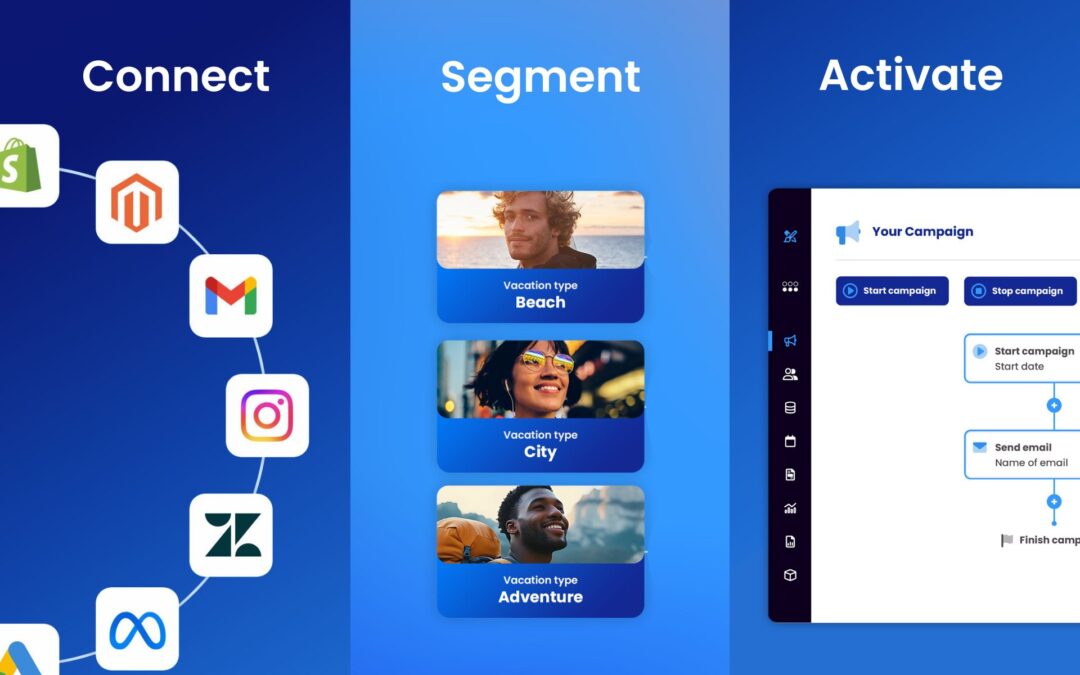
Email marketing attribution tracks how different touchpoints contribute to conversions throughout the customer journey. Multi-touch attribution reveals which email campaigns, channels, and interactions drive results, moving beyond simple last-click measurement. This comprehensive tracking enables data-driven optimization and accurate campaign performance assessment across all customer interactions.
What is email marketing attribution and why does it matter for your campaigns?
Email marketing attribution identifies which email touchpoints contribute to customer conversions and revenue. It maps the complete customer journey from first contact through purchase, showing how each email interaction influences buying decisions.
Traditional single-touch attribution models miss the bigger picture. A customer might receive a welcome email, browse products after a promotional message, abandon their cart, then convert after a recovery email. Multi-touch attribution reveals how each touchpoint contributes to the final conversion.
This visibility transforms campaign optimization. Instead of crediting only the last email before purchase, you understand which messages nurture prospects, which drive immediate action, and which support longer buying cycles. Travel brands see this clearly when destination inspiration emails start journeys that booking reminder emails complete weeks later.
Attribution data guides budget allocation and content strategy. You can identify high-performing email sequences, optimize send timing based on customer behavior patterns, and eliminate touchpoints that don’t contribute to conversions. Modern email marketing platforms make this tracking accessible for complex customer journeys.
How do you set up multi-touch attribution tracking for email campaigns?
Setting up multi-touch attribution requires consistent tracking parameters, conversion mapping, and data integration across all email touchpoints. Start with UTM parameter standardization, implement conversion tracking, then map customer journey stages for comprehensive measurement.
Begin with UTM parameter consistency. Create standardized naming conventions for campaigns, sources, and mediums. Use specific identifiers like “email-welcome-series” or “cart-recovery-day3” to track individual touchpoints. This consistency enables accurate attribution across different analytics platforms.
Conversion tracking setup connects email interactions to business outcomes. Install tracking pixels in emails and on conversion pages. Configure goal tracking in analytics platforms to capture micro-conversions (email opens, clicks, page visits) and macro-conversions (purchases, sign-ups, downloads).
Customer journey mapping identifies key touchpoints for tracking. Document typical paths from awareness through conversion. Include email types, timing, and expected actions at each stage. This framework guides attribution model selection and helps identify measurement gaps.
Technical integration requires connecting email platforms with analytics tools. Most systems offer API connections or built-in integrations. Ensure data flows consistently between platforms and test attribution reporting before launching campaigns.
What are the most effective attribution models for email marketing?
The most effective attribution model depends on your sales cycle and customer behavior patterns. Linear attribution works well for relationship-building campaigns, while time-decay models suit promotional sequences. Position-based attribution balances first-touch awareness with last-touch conversion credit.
First-touch attribution credits the initial email interaction completely. This model highlights awareness-building campaigns and top-of-funnel performance. Use this approach when measuring brand introduction effectiveness or content marketing impact on new subscribers.
Last-touch attribution assigns full credit to the final email before conversion. It is useful for direct-response campaigns and immediate purchase decisions. Retail brands often use this model for promotional emails and flash sales where the last message drives immediate action.
Linear attribution distributes credit equally across all touchpoints. This model suits relationship-building strategies where multiple interactions nurture prospects toward conversion. Financial services and B2B companies benefit from this approach during longer consideration periods.
Time-decay attribution gives more credit to recent interactions while acknowledging earlier touchpoints. It reflects natural customer behavior, where recent messages have a stronger influence on purchase decisions. This model works well for campaigns with clear progression sequences.
Position-based attribution allocates higher percentages to first and last interactions, with remaining credit distributed among middle touchpoints. It balances awareness creation with conversion completion, making it ideal for comprehensive email marketing strategies.
Which tools and platforms can track email attribution across multiple touchpoints?
Marketing automation platforms, analytics tools, and specialized attribution software provide multi-touch email tracking capabilities. Google Analytics, customer data platforms, and integrated email systems offer different attribution features suited to various business needs and technical requirements.
Google Analytics provides basic multi-channel attribution through its attribution modeling tools. It tracks email campaign performance alongside other channels, showing assisted conversions and path analysis. The platform handles UTM-tagged campaigns effectively and integrates with most email systems.
Marketing automation platforms offer built-in attribution tracking for email sequences. These systems track subscriber interactions across campaigns, showing journey progression and conversion paths. They excel at behavioral tracking and automated attribution reporting.
Customer data platforms provide comprehensive attribution by unifying data across all touchpoints. They create complete customer profiles showing email interactions alongside website behavior, purchase history, and other channel activities. This unified view enables sophisticated attribution analysis.
Specialized attribution software focuses specifically on multi-touch measurement. These tools offer advanced modeling options, custom attribution rules, and detailed conversion path analysis. They are valuable for businesses with complex customer journeys requiring precise attribution measurement.
When selecting attribution tools, consider integration capabilities with existing systems. Ensure the platform can track your specific email types and conversion goals. Data accuracy and reporting flexibility are crucial for actionable attribution insights.
How do you analyze and optimize campaigns using attribution data?
Attribution analysis identifies high-performing touchpoints, reveals optimization opportunities, and guides strategic campaign improvements. Focus on conversion path analysis, touchpoint performance comparison, and customer journey optimization based on attribution insights and behavioral patterns.
Start with conversion path analysis to understand typical customer journeys. Identify common email sequences that lead to conversions and paths that result in abandonment. Look for patterns in timing, content types, and interaction sequences that correlate with successful outcomes.
Compare touchpoint performance across different attribution models. An email that appears ineffective in last-touch analysis might show strong influence in linear attribution. This reveals nurturing emails that build toward conversion without directly triggering immediate action.
Customer journey optimization uses attribution data to improve email sequence effectiveness. Adjust send timing based on conversion path analysis. Modify content for underperforming touchpoints. Add or remove emails from sequences based on their attribution contribution.
Segment analysis reveals how attribution varies across different customer groups. New subscribers might respond differently than loyal customers. Geographic, demographic, or behavioral segments often show distinct attribution patterns requiring tailored optimization approaches.
Regular attribution reporting enables continuous improvement. Monitor changes in touchpoint performance over time. Test attribution model adjustments to find the most accurate representation of your customer behavior. Use insights to inform broader marketing strategy beyond email campaigns.
How Deployteq helps with email marketing attribution
Deployteq provides comprehensive attribution tracking solutions that integrate seamlessly with your existing marketing infrastructure. Our platform delivers the advanced capabilities needed to implement sophisticated multi-touch attribution measurement and optimization strategies.
Our attribution solution offers:
- Unified customer journey tracking – Complete visibility across all email touchpoints and interactions
- Advanced attribution modeling – Multiple attribution models including linear, time-decay, and position-based options
- Real-time analytics integration – Seamless connection with Google Analytics, CRM systems, and other marketing tools
- Automated reporting dashboards – Clear visualization of attribution performance and conversion paths
- Behavioral segmentation – Attribution analysis across different customer segments and journey types
Ready to transform your email marketing measurement with sophisticated attribution tracking? Contact us to discuss how Deployteq can enhance your attribution capabilities and drive better campaign optimization results.