Cross-sell campaigns represent one of the most effective ways to increase customer lifetime value, yet many businesses struggle to execute them consistently. When done manually, these campaigns often miss optimal timing, lack personalization, and consume valuable marketing resources that could be better allocated elsewhere.
Marketing automation transforms cross-selling from a reactive, one-size-fits-all approach into a strategic, data-driven system that identifies opportunities and delivers relevant offers at precisely the right moment. Let’s explore how to build cross-sell campaigns that actually drive results.
What are cross-sell campaigns and why should you automate them?
Cross-sell campaigns are targeted marketing efforts that promote complementary or related products to existing customers based on their purchase history, browsing behavior, or customer profile. These campaigns leverage customer data to identify relevant additional products that enhance the original purchase or meet related needs.
Automation transforms cross-selling from a manual, time-intensive process into a scalable system that operates 24/7. Automated cross-sell campaigns can process vast amounts of customer data in real time, identify optimal timing based on purchase patterns, and deliver personalized recommendations across multiple channels simultaneously. This approach typically generates 10–30% higher response rates than manual campaigns because it eliminates human delay and ensures consistent execution.
The strategic advantage lies in automation’s ability to act on behavioral triggers immediately. When a customer completes a purchase, browses specific categories, or reaches certain engagement thresholds, automated systems can instantly deploy relevant cross-sell offers while the intent signal remains strong.
How do you identify the best cross-sell opportunities?
The best cross-sell opportunities emerge from analyzing purchase patterns, product relationships, and customer behavior data to identify natural product combinations and optimal timing windows. Start by examining which products are frequently bought together and mapping the customer journey stages where additional purchases typically occur.
Customer segmentation reveals distinct opportunity patterns. High-value customers often respond well to premium add-ons, while price-sensitive segments prefer complementary products at similar price points. Purchase recency also matters significantly—customers who bought within the last 30–90 days typically show higher cross-sell receptivity than those with older purchase histories.
Product affinity analysis provides concrete direction for cross-sell strategies. Track which product combinations generate the highest conversion rates, average order values, and customer satisfaction scores. This data reveals both obvious pairings and unexpected opportunities that manual analysis might miss.
What triggers should you use for automated cross-sell campaigns?
Effective cross-sell triggers include purchase completion, browsing behavior, time-based intervals, and customer lifecycle milestones that indicate readiness for additional products. The most successful triggers combine behavioral signals with timing optimization to reach customers when they’re most receptive to additional offers.
Purchase-based triggers activate immediately after transaction completion or during specific post-purchase windows. A customer who buys a camera might receive lens recommendations within 24 hours, followed by accessory suggestions over the next two weeks. This approach capitalizes on immediate satisfaction and continued interest in the product category.
Behavioral triggers respond to engagement patterns like repeat website visits, email opens, or product page views. When customers browse complementary categories or spend extended time researching related products, these signals indicate cross-sell readiness. Time-based triggers work well for consumable products, sending replenishment offers based on typical usage cycles.
How do you segment customers for cross-sell automation?
Customer segmentation for cross-sell automation requires combining purchase history, engagement levels, demographic data, and behavioral patterns to create targeted groups that respond to specific product recommendations and messaging approaches. Effective segmentation goes beyond basic demographics to include purchase frequency, average order value, and product category preferences.
RFM analysis (Recency, Frequency, Monetary) provides a foundation for cross-sell segmentation. Recent, frequent buyers with high monetary value represent prime cross-sell opportunities and can handle more aggressive campaign frequencies. Customers with high frequency but lower monetary values might respond better to budget-friendly add-ons or bundle offers.
Product-based segmentation creates opportunities for category-specific cross-selling. Fashion retailers might segment by style preferences, while technology companies segment by product ecosystems. This approach ensures recommendations align with established customer preferences and increases relevance significantly.
What channels work best for automated cross-sell campaigns?
Email remains the most effective channel for automated cross-sell campaigns, delivering average conversion rates of 2–5% when properly personalized and timed. Email allows for detailed product presentations, customer testimonials, and compelling visual content that supports purchase decisions for complementary products.
SMS works exceptionally well for time-sensitive cross-sell offers and impulse purchases. The immediate nature of SMS makes it ideal for flash sales on complementary products or limited-time bundle offers. However, SMS requires careful frequency management to avoid customer fatigue.
Push notifications excel for mobile app users and can deliver contextual cross-sell offers based on app usage patterns. When customers view specific products or complete purchases within the app, push notifications can immediately surface relevant add-ons. Web personalization through on-site messaging captures visitors during active browsing sessions, presenting cross-sell opportunities when purchase intent is highest.
How do you measure cross-sell campaign effectiveness?
Cross-sell campaign effectiveness is measured through conversion rate, revenue per recipient, customer lifetime value increase, and cross-sell penetration rate across different customer segments. These metrics provide both immediate performance feedback and long-term strategic insights for campaign optimization.
Revenue attribution requires tracking not just immediate cross-sell purchases, but also the impact on overall customer value. Customers who engage with cross-sell campaigns often show higher retention rates and increased purchase frequency beyond the specific campaign products. This extended impact significantly amplifies the true campaign value.
Segment-specific performance analysis reveals which customer groups respond best to different cross-sell approaches. Compare conversion rates across segments, channels, and timing strategies to identify optimization opportunities. A/B testing different product recommendations, messaging approaches, and timing intervals provides concrete data for continuous improvement.
How Deployteq helps with cross-sell campaign automation
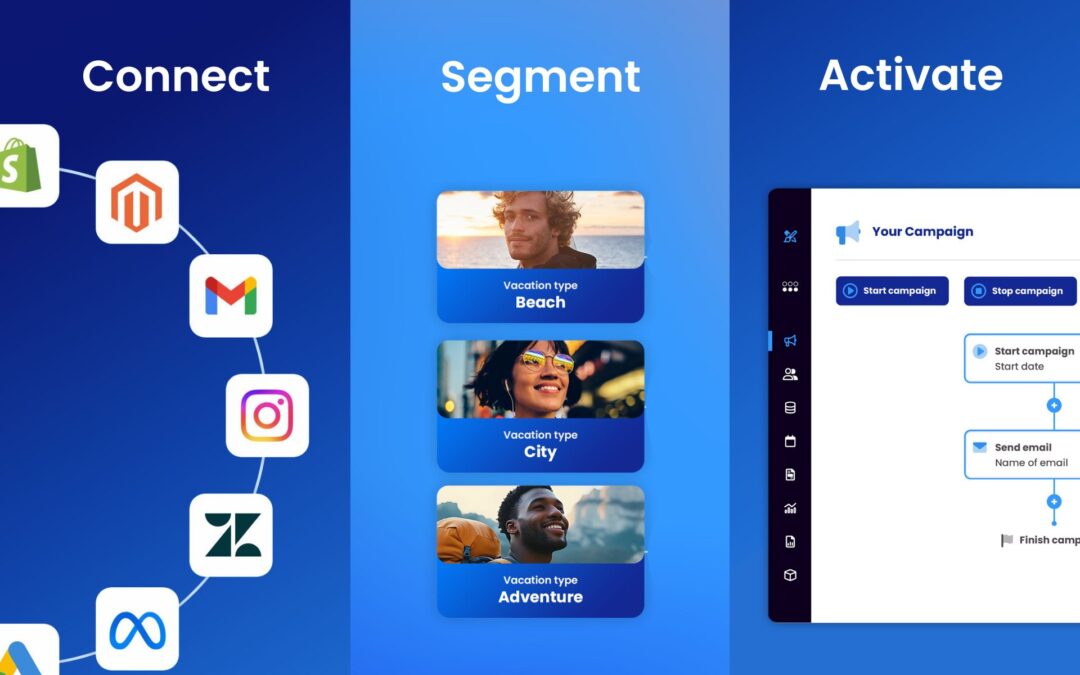
We built our marketing automation platform specifically to handle the complexity of cross-sell campaigns across multiple channels and customer segments. Our system combines advanced customer segmentation with real-time behavioral triggers to identify and act on cross-sell opportunities the moment they emerge.
Key capabilities that drive cross-sell success include:
- Unified customer data from our Customer Data Platform that tracks purchase history, browsing behavior, and engagement patterns
- Smart segmentation that automatically groups customers based on cross-sell potential and product affinity
- Cross-channel campaign delivery through email, SMS, WhatsApp, and push notifications
- Predictive modeling that identifies the next-best offer for each customer segment
- Real-time performance tracking with automated optimization recommendations
Ready to transform your cross-sell campaigns from manual guesswork into automated revenue drivers? Book a demo to see how our platform can identify and activate your highest-value cross-sell opportunities.