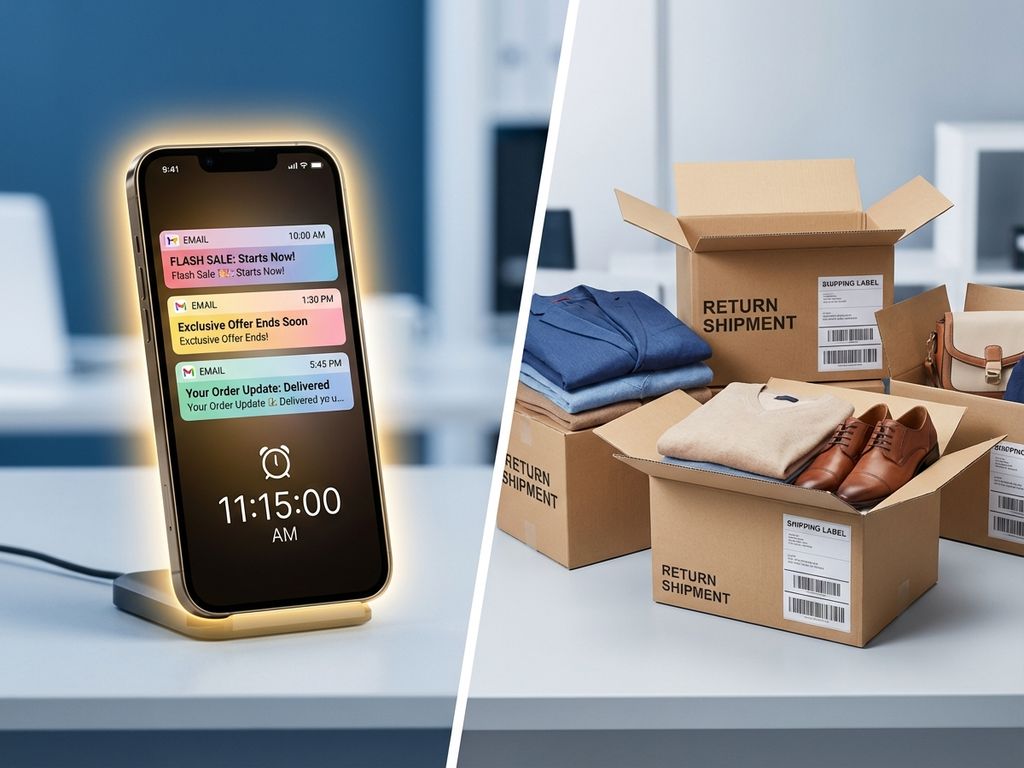
Fashion brands can significantly reduce return rates through strategic email timing by sending the right information at crucial decision-making moments. Well-timed emails that include sizing guides, styling suggestions, and product education help customers make confident purchases. This approach addresses the root causes of returns before they happen, improving customer satisfaction while reducing operational costs.
Why do fashion brands struggle with high return rates?
Fashion brands face return rates of 20–30% because customers cannot physically examine products before purchase. Sizing uncertainty, style mismatches, and unrealistic expectations drive most returns in fashion ecommerce.
The tactile nature of clothing creates inherent challenges for online retailers. Customers struggle to assess fabric quality, fit, and true colour through product images alone. Size variations between brands compound this problem, making customers hesitant about their selections.
Fashion purchases are highly personal and emotional. Customers often buy impulsively based on how they imagine the item will look and feel. When reality does not match expectations, returns become inevitable. The gap between product presentation and actual experience remains the biggest challenge for fashion retailers.
Customer expectations have also shifted dramatically. Fast fashion and easy return policies have created a “try before you buy” mentality where customers order multiple sizes or colours with the intention of returning unwanted items. This behaviour, while convenient for customers, creates significant operational costs for brands.
How does email timing impact customer purchase decisions in fashion?
Strategic email timing influences fashion purchases by delivering relevant information when customers are actively considering their options. Pre-purchase emails that address sizing concerns and styling questions increase purchase confidence and reduce hesitation that leads to returns.
The psychology of fashion buying involves multiple consideration phases. Customers typically browse, compare, seek validation, and then decide. Emails timed to coincide with these phases can provide the reassurance needed to make confident purchases.
Browse abandonment emails work particularly well in fashion because they can address specific concerns about items customers viewed. These messages can include size guides, styling suggestions, or customer photos that help visualise the product in real-world contexts.
Post-browse emails that arrive within 2–4 hours can capture customers while interest remains high. These messages should focus on removing barriers to purchase rather than simply promoting the product. Including fit information, care instructions, or styling ideas helps customers feel more confident about their potential purchase.
Timing also matters for different customer segments. New customers need more educational content and reassurance, while returning customers may respond better to personalised recommendations based on previous purchases. Understanding these patterns allows for more effective email sequences.
What are the most effective email timing strategies for reducing fashion returns?
The most effective strategies involve sending educational emails before purchase and confirmation sequences afterwards. Pre-purchase emails with sizing guides and styling tips sent within 24 hours of browsing significantly improve purchase confidence and reduce return likelihood.
Size guide reminder emails should trigger when customers view product pages multiple times or add items to their basket. These emails work best when they include brand-specific sizing information, measurement guides, and fit recommendations based on the specific item viewed.
Styling suggestion emails help customers visualise how to wear items, reducing the chance of style-related returns. These messages should include outfit ideas, seasonal styling tips, and suggestions for complementary pieces. Visual content performs particularly well for these campaigns.
Post-purchase confirmation sequences should focus on setting realistic expectations. Include care instructions, styling suggestions, and clear information about what to expect upon delivery. This helps align customer expectations with the actual product experience.
Consider implementing a comprehensive email marketing platform that can handle these complex timing requirements while maintaining personalisation at scale.
Cart abandonment emails in fashion should address common concerns rather than simply reminding customers about forgotten items. Include size charts, return policies, and customer service contact information to remove barriers to purchase completion.
How can fashion brands automate smart email sequences to prevent returns?
Fashion brands can automate return-prevention sequences using behavioural triggers and customer data. Automated workflows that deliver size guides, care instructions, and styling tips based on specific customer actions create personalised experiences that reduce return likelihood.
Set up browse abandonment triggers that activate when customers spend significant time viewing specific products. These automated emails should include detailed product information, size recommendations, and styling suggestions relevant to the viewed items.
Create segmented automation based on customer purchase history. First-time buyers need more educational content about sizing and brand fit, while repeat customers can receive personalised recommendations based on their previous purchases and preferences.
Implement post-purchase automation that sends care instructions, styling tips, and expectation-setting content immediately after purchase. This sequence should continue through delivery and initial wear periods to maximise customer satisfaction.
Use data from previous returns to inform automation triggers. Customers who have returned items for sizing issues should automatically receive more detailed size guidance in future communications. This personalised approach shows you understand their specific needs.
Consider behavioural targeting that identifies customers likely to return items based on browsing patterns or purchase history. These high-risk segments can receive additional support through automated sequences designed to address their specific concerns.
To implement these sophisticated automation strategies effectively, you may want to book a demo to explore how advanced marketing automation can transform your customer experience and reduce return rates.
Smart email timing represents a proactive approach to reducing fashion return rates by addressing customer concerns before they become problems. By delivering the right information at crucial decision moments, fashion brands can improve customer confidence, reduce operational costs, and create more satisfying shopping experiences. The key lies in understanding customer behaviour patterns and responding with helpful, timely communication that supports better purchase decisions.
How Deployteq helps reduce fashion return rates
Deployteq provides fashion brands with the advanced marketing automation tools needed to implement sophisticated email timing strategies that prevent returns before they happen. Our platform enables you to:
- Automate behavioural triggers that send size guides and styling tips based on specific customer browsing patterns
- Segment customers intelligently to deliver personalised content for first-time buyers versus repeat customers
- Track return patterns and automatically adjust email sequences for customers with specific sizing or style preferences
- Schedule multi-touch campaigns that deliver educational content from browse to post-purchase
- Personalise product recommendations using purchase history and browsing data to suggest better-fitting alternatives
With Deployteq’s comprehensive analytics and automation capabilities, fashion brands typically see 15-25% reductions in return rates within the first quarter of implementation. Contact us today to discover how our platform can transform your customer retention strategy and significantly reduce operational costs.