Yes, a CDP can significantly improve your marketing segmentation. By unifying all your customer data into a single, continuously updated profile, a CDP gives you a complete and accurate picture of each customer, which makes your segments sharper, more dynamic, and far more actionable than what most standard tools allow.
This matters most for brands managing high volumes of customer data across multiple touchpoints, where fragmented data leads to missed signals and blunt targeting. The questions below unpack exactly how a CDP transforms segmentation, from what it does to your data to when it makes sense to upgrade.
What does a CDP actually do to your customer data?
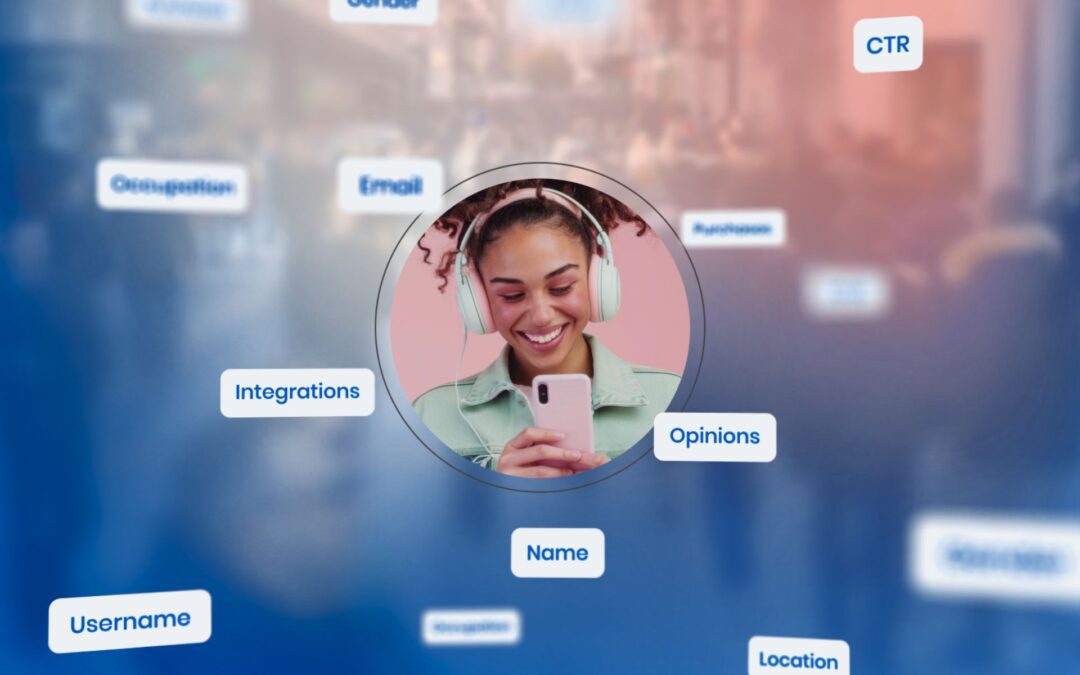
A CDP collects, unifies, and continuously updates customer data from every source into a single customer profile. It ingests data from your website, email platform, CRM, POS, app, and any other connected source, then resolves all of that into one persistent identity per customer. The result is a real-time, 360-degree view of each individual that updates as behaviour changes.
Unlike a data warehouse, a CDP is built for activation. The profiles it creates are not just stored for reporting. They are ready to power campaigns, triggers, and personalisation decisions the moment a customer takes an action.
This is what separates a CDP from simpler data tools. It does not just collect data. It connects the dots across sessions, devices, channels, and time, so your marketing team always works from a complete picture rather than a partial one.
How does a CDP improve marketing segmentation?
A CDP improves marketing segmentation by giving you real-time, unified data to build segments from, rather than static exports or siloed channel data. Because every customer profile is continuously updated, your segments reflect actual current behaviour, not a snapshot from last week’s data pull.
This has a direct impact on campaign performance. When a travel customer browses a destination but does not book, a CDP-powered segment can capture that intent signal immediately and trigger a relevant follow-up. With a basic email platform, that signal is often invisible.
CDP segmentation also supports predictive modelling. Techniques like RFM (Recency, Frequency, Monetary) scoring, next-best-offer modelling, and lifecycle stage prediction all depend on clean, unified data. A CDP provides exactly that, which means your segments can be built on what customers are likely to do next, not just what they have already done.
For CRM specialists and marketing managers running complex customer bases, this is a meaningful shift. You move from reactive segmentation to proactive targeting, which drives better engagement, higher LTV, and lower churn.
What types of segments can a CDP create that other tools can’t?
A CDP enables segments that other tools cannot because it combines real-time behavioural data, historical purchase data, predictive scores, and cross-channel signals into a single segmentation engine. This unlocks segment types that are simply out of reach for standalone CRMs, ESPs, or basic analytics platforms.
Some of the most powerful examples include:
- Predictive churn segments: Customers whose engagement patterns suggest they are about to lapse, identified before they actually do.
- Next-best-offer segments: Groups of customers who are statistically likely to respond to a specific product or promotion based on purchase history and browsing behaviour.
- Lifecycle-stage segments: Precise groupings based on where a customer sits in their journey, from first purchase through to high-value loyalty status.
- RFM-scored segments: Customers ranked by how recently they bought, how often they buy, and how much they spend, giving you a clear prioritisation framework for campaign targeting.
- Real-time intent segments: Customers who have just taken a specific action, such as viewing a product three times in 48 hours, and can be targeted within minutes.
A retailer using a CDP can, for example, build a segment of customers who purchased in the last 60 days, have browsed a new product category, and have an above-average order value. That level of specificity is not achievable with a standard email tool or a CRM that only holds transactional data.
How does CDP segmentation work across different marketing channels?
CDP segmentation works across channels by maintaining a single unified customer profile that all your channels draw from simultaneously. When a segment updates, that change is reflected across email, SMS, WhatsApp, push notifications, and web personalisation at the same time, ensuring every touchpoint delivers a consistent and relevant experience.
This is what makes cross-channel marketing automation genuinely powerful. Without a shared data layer, each channel operates with its own version of the customer, which leads to inconsistent messaging, duplicate sends, and missed suppression logic.
With a CDP feeding your channel execution, you can:
- Suppress email sends for customers who have already converted via web personalisation
- Trigger an SMS when a high-value customer abandons a cart after receiving an email
- Update a push notification audience in real time based on in-app behaviour
- Serve personalised website content to a segment of loyalty members who have not redeemed points in 90 days
For entertainment and travel brands managing high-frequency customer interactions, this kind of orchestration is essential. A customer researching a holiday should not receive a generic promotional email when their browsing data clearly signals a specific destination and travel window.
When should a brand upgrade from basic segmentation to a CDP?
A brand should upgrade to a CDP when its customer data is fragmented across multiple systems, when basic segmentation is producing diminishing returns, or when the team is spending significant time manually preparing data rather than acting on it. If you are running high volumes of customer interactions across more than two channels, a CDP is likely overdue.
Specific signals that indicate it is time to upgrade include:
- Your segments are based on static lists rather than real-time behaviour
- You cannot reliably identify the same customer across email, web, and app
- Your personalisation is limited to a first name and last purchase date
- You are manually exporting data from one tool to import into another
- Your team cannot act on behavioural signals quickly enough to be relevant
Brands upgrading from platforms like ActiveCampaign or Mailchimp often reach this point when their customer base grows beyond what simple list-based segmentation can handle. The email marketing capabilities that worked at lower volumes start to feel limiting once you need real-time triggers, predictive scoring, and cross-channel coordination.
What’s the difference between a CDP, a CRM, and a DMP for segmentation?
The key distinction is the type of data each tool holds and what it is designed to do with it. A CRM manages known customer relationships and transactional history. A DMP manages anonymous, third-party audience data for advertising. A CDP unifies all customer data, both known and behavioural, into persistent profiles built for real-time activation across marketing channels.
For segmentation specifically, the CDP vs DMP difference is significant. A DMP is built on cookie-based, anonymous data with a short shelf life, making it effective for paid media targeting but limited for personalised one-to-one marketing. A CDP holds first-party, identified data that persists over time, which makes it far more useful for segmentation across owned channels like email, SMS, and push.
A CRM holds valuable relationship data but is typically not designed for real-time behavioural segmentation. It tells you what a customer has done in the past. A CDP tells you what they are doing right now and what they are likely to do next.
Many brands use all three in combination. The CRM manages account data and sales relationships. The DMP supports paid acquisition. The CDP powers personalisation and segmentation across the full customer lifecycle. Thinking of them as competing tools is less useful than understanding where each one adds the most value in your stack. If you are evaluating options like Tealium or Segment as a starting point, it is worth assessing whether you need a standalone CDP or a platform that combines CDP functionality with campaign execution in one place.
How Deployteq powers smarter segmentation with its built-in CDP
We built our Customer Data Platform to solve exactly the challenges described above, without requiring a complex separate integration or a dedicated data engineering team to manage it.
Here is what our CDP delivers for segmentation and campaign activation:
- 360-degree customer profiles: All your customer data unified into a single view, updated in real time across every touchpoint.
- Intelligent modelling built in: RFM scoring, next-best-offer recommendations, and predictive lifecycle insights are available directly within your campaign setup, no third-party data science tool required.
- Seamless cross-channel activation: Segments built in the CDP activate instantly across email, SMS, WhatsApp, push, and web personalisation, all from within the same platform.
- Hyper-personalised campaigns: Use your unified data to build segments that reflect real intent and behaviour, not just demographic groupings or last-purchase dates.
- No data silos: Because the CDP sits inside Deployteq, your segmentation and your campaign execution always work from the same data, eliminating the sync delays and mismatches that come with stitching separate tools together.
If your current segmentation is holding your campaigns back, it is worth seeing what a unified approach looks like in practice. Book a demo and we will show you how it works for your specific data setup and channels.