A CDP is better than a DMP for personalised marketing because it works with first-party, persistent customer identities rather than anonymous, cookie-based audience segments. A DMP tells you about audience clusters. A CDP tells you about real people. For brands building long-term, cross-channel relationships, that distinction changes everything. Here is what that means in practice across email, SMS, and beyond.
What can a CDP do that a DMP simply can’t?
A CDP can build persistent, unified profiles for known individuals using first-party data, then activate those profiles in real time across every marketing channel. A DMP cannot do this. DMPs are built for anonymous, third-party audience segments used primarily in paid advertising. Once a cookie expires or a user opts out, the DMP loses the thread entirely.
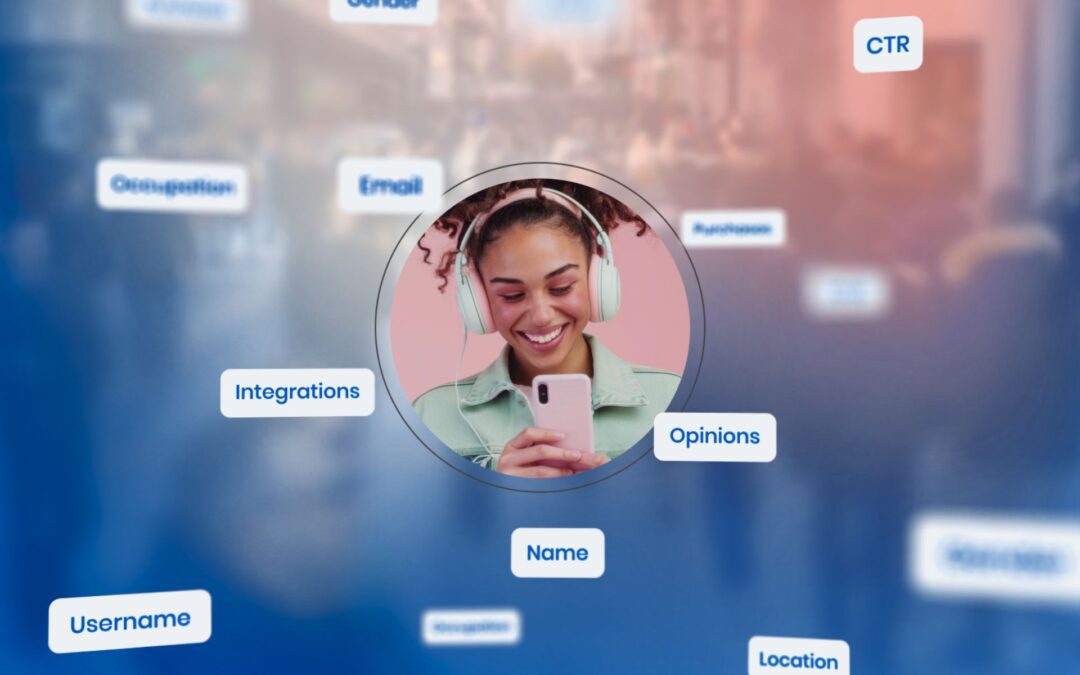
The practical difference is significant. A CDP connects a customer’s email address, purchase history, browsing behaviour, loyalty status, and support interactions into a single, living profile. That profile persists over time and updates with every new interaction. A DMP, by contrast, works with probabilistic audience buckets that have no memory of individual behaviour and no ability to power one-to-one communication.
For marketers running high-frequency, lifecycle-driven campaigns, this is not a minor technical detail. It is the foundation of whether personalisation is genuine or superficial. A DMP can tell an ad network, “show this to 35-44 year-old travel intenders.” A CDP can trigger a personalised email the moment a specific customer’s loyalty points are about to expire.
How does first-party data change the personalisation equation?
First-party data changes personalisation from audience-level inference to individual-level certainty. When you own the data relationship directly, because a customer has transacted with you, subscribed to your emails, or logged into your app, you can personalise based on what that person actually did, not what a similar anonymous profile suggests they might do.
This matters enormously in a world where third-party cookies are increasingly unreliable. Brands that built their personalisation strategy on DMP-driven cookie audiences are now facing a structural problem. First-party data does not have that fragility. It is consented, accurate, and actionable regardless of browser policy changes.
The richness of first-party data also enables more sophisticated modelling. RFM analysis (recency, frequency, monetary value), next-best-offer predictions, and churn propensity scoring all require longitudinal, individual-level data. A CDP provides exactly that. A DMP, working with anonymous segments and short data retention windows, simply cannot support these models at the same depth or reliability.
Which is better for email, SMS, and cross-channel campaigns?
A CDP is significantly better for email, SMS, and cross-channel campaigns. These channels require known identities, consent records, and behavioural context to work effectively. A DMP is designed for anonymous display advertising and has no native capability to power direct messaging channels where a customer identifier (email address, phone number) is required.
For email marketing, a CDP enables real-time segmentation based on live behavioural signals. A cart abandonment trigger, a post-purchase upsell sequence, or a re-engagement flow for lapsed customers all depend on knowing who the person is and what they have done. A DMP cannot provide that context.
For SMS and WhatsApp, the requirement for a consented phone number makes a DMP entirely irrelevant. These channels are built on first-party identity. A CDP not only stores and manages those identities but also ensures the right message reaches the right person at the right moment in their lifecycle, whether they are a first-time buyer or a high-LTV loyal customer.
Cross-channel consistency is where the CDP advantage compounds. When a customer browses a product on your website, opens an email, and then receives an SMS, a CDP ensures all three interactions are connected to the same profile. The experience feels coherent. Without that unified identity layer, cross-channel campaigns become fragmented and repetitive rather than progressive and personalised.
When should a brand switch from a DMP to a CDP?
A brand should consider moving from a DMP to a CDP when their growth strategy depends on owned channels, direct customer relationships, and personalisation at the individual level rather than anonymous audience targeting. If email, SMS, and lifecycle marketing are core to your revenue model, a DMP is not the right tool for the job.
Several signals indicate the time is right to make the switch:
- Your personalisation is limited to broad audience segments rather than individual behaviour
- You cannot connect online and offline customer data into a single view
- Your email or SMS campaigns rely on static lists rather than dynamic, real-time segments
- You are investing in loyalty programmes, LTV modelling, or predictive analytics but lack the data infrastructure to support them
- Third-party cookie deprecation is already affecting your targeting accuracy
The shift is also strategic. Brands in retail, travel, and entertainment with large, transactional customer bases gain the most from a CDP because they have the volume of first-party interactions needed to make individual-level modelling meaningful. A marketing automation strategy built on a CDP is built to last.
What data does a CDP unify that a DMP ignores?
A CDP unifies transactional data, behavioural data, CRM records, loyalty programme activity, offline interactions, and consent preferences into a single customer profile. A DMP ignores almost all of this because it is not designed to handle personally identifiable information or persistent first-party records.
Specifically, a CDP brings together data sources that a DMP cannot process:
- Purchase history: What a customer bought, when, at what value, and through which channel
- Email and SMS engagement: Opens, clicks, conversions, and unsubscribes tied to an individual identity
- Website behaviour: Pages visited, products viewed, time on site, and search queries linked to a known user
- App activity: In-app events, push notification responses, and session data
- Offline data: In-store purchases, call centre interactions, and loyalty card activity
- Consent and preference data: Opt-in status, communication preferences, and GDPR consent records
This breadth of unified data is what makes a CDP capable of powering genuine 360-degree customer profiles. A DMP works with behavioural signals from anonymous cookies, typically retained for only 30 to 90 days. The CDP vs DMP difference here is not incremental. It is architectural.
Does a CDP replace a DMP entirely?
For most B2C brands focused on owned-channel marketing, a CDP effectively replaces a DMP. If your primary goal is to personalise email, SMS, and web experiences for known customers, a CDP covers that ground more effectively and with greater long-term stability. However, if programmatic display advertising remains a significant part of your media mix, a DMP may still have a supporting role.
The honest answer is that for the majority of marketing teams in retail, travel, hospitality, and entertainment, the DMP’s use case has narrowed considerably. The deprecation of third-party cookies, the rise of consent-first data strategies, and the shift toward owned channels have all reduced the DMP’s relevance. A CDP, by contrast, becomes more powerful the more first-party data you accumulate.
Where brands do run both, the CDP typically sits at the centre of the data strategy, with the DMP used as a downstream tool for lookalike modelling in paid media. But the CDP vs DMP debate, for direct marketing purposes, is largely settled in the CDP’s favour.
How Deployteq’s CDP powers smarter personalisation
We built our Customer Data Platform to close the gap between data and activation. No exports, no waiting, no disconnected tools. Everything happens inside the platform you already use to run your campaigns.
Here is what that looks like in practice:
- Unified customer profiles: Every interaction across email, SMS, WhatsApp, push, and web is stitched into a single 360-degree view
- Intelligent modelling built in: RFM scoring, next-best-offer recommendations, and predictive lifecycle insights are ready to activate without a data science team
- Real-time segmentation: Build hyper-personalised segments based on live behaviour and trigger campaigns the moment a customer crosses a threshold
- Direct campaign activation: No middleware. Insights flow straight into your email, SMS, and cross-channel journeys
- Full consent and compliance management: First-party data handled correctly, with GDPR-ready preference management built in
Whether you are a retail brand recovering abandoned carts, a travel company managing booking windows, or a finance team building trust through timely lifecycle automation, Deployteq gives you the data infrastructure to do it properly. Ready to see it in action? Book a personalised demo and we will show you exactly how it works for your sector.