A CDP supports cross-channel campaign activation by unifying all customer data into a single profile and making that profile instantly actionable across every marketing channel. Rather than siloed data sitting in separate tools, a CDP creates one connected view of each customer, so the right message reaches the right person at the right moment, whether that is via email, SMS, push, or web. Below, we break down the key questions marketers are asking about CDP-driven campaign activation in 2026.
What channels can a CDP activate campaigns across?
A CDP can activate campaigns across email, SMS, WhatsApp, push notifications, web personalisation, paid social, and display advertising. The power is not in the number of channels but in the consistency of the data driving them. Every channel pulls from the same unified customer profile, so messaging stays coherent and personalised regardless of where a customer engages.
This matters because customers do not experience your brand as separate channels. They experience it as one brand. When a retail customer browses a product on your website, abandons a cart, and later opens an SMS, a CDP ensures each of those touchpoints reflects the same context. No repeated messages, no missed signals, no disconnected experience.
- Email: Triggered campaigns based on real-time behaviour and lifecycle stage
- SMS and WhatsApp: Time-sensitive alerts, booking confirmations, and loyalty updates
- Push notifications: App-based triggers tied to in-session or post-session behaviour
- Web personalisation: Dynamic content blocks that adapt to the visitor’s profile
- Paid media: Audience syncing to platforms like Meta or Google based on CRM segments
The more channels you activate from a single CDP, the more each one benefits. Suppression lists stay accurate, frequency caps work across channels, and attribution becomes cleaner.
How does a CDP unify customer data from multiple sources?
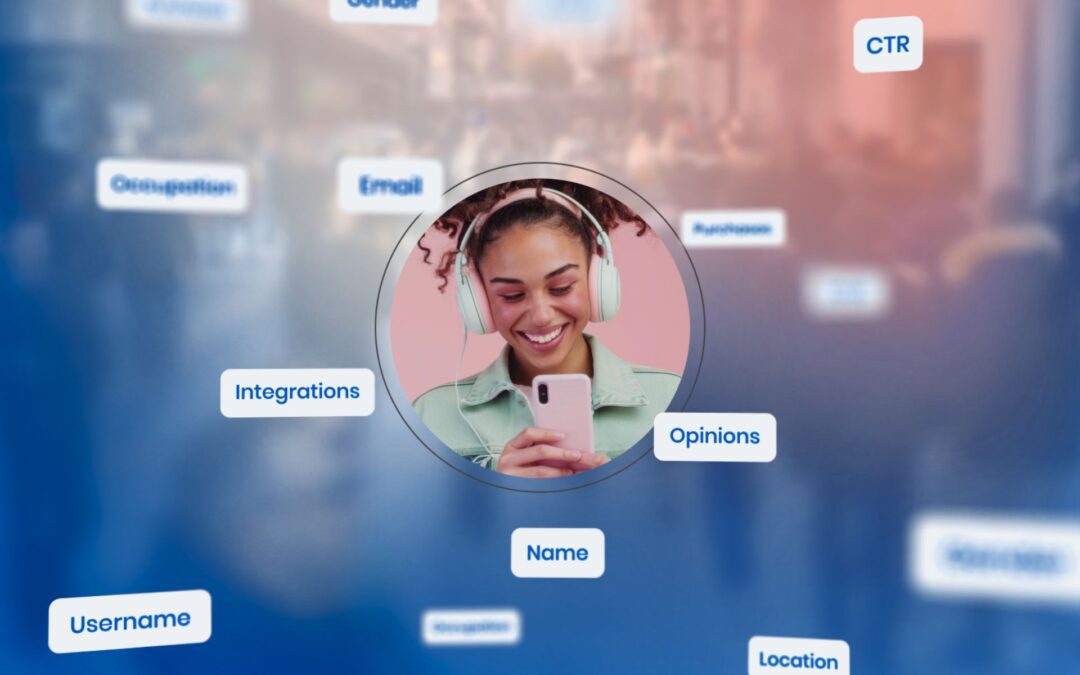
A CDP unifies customer data by ingesting data from multiple sources, resolving identities across those sources, and stitching everything into a single persistent customer profile. Sources typically include your CRM, website behaviour, transactional data, loyalty systems, and offline touchpoints. The CDP matches records using deterministic identifiers like an email address or customer ID, and probabilistic matching where exact matches are unavailable.
The result is a 360-degree single customer view that updates in real time. When a customer books a flight, that event immediately enriches their profile. When they open a follow-up email, that engagement is recorded. When they visit the website three days later, the profile reflects all of it.
This is fundamentally different from a data warehouse or a CRM. A warehouse stores data for analysis. A CRM manages relationships. A CDP does both and adds real-time activation on top. The data is not just stored; it is ready to trigger a campaign the moment a condition is met.
For brands in travel, finance, or retail managing millions of customer records across multiple systems, this kind of unified customer data infrastructure is what separates reactive marketing from genuinely predictive engagement.
What’s the difference between a CDP and a standard marketing automation platform?
The key difference between a CDP and a standard marketing automation platform is data depth and identity resolution. A marketing automation platform executes campaigns using the data you give it. A CDP collects, cleans, and unifies data from across your entire tech stack before any campaign logic is applied. A CDP feeds the automation platform; it does not replace it.
Standard marketing automation platforms are excellent at campaign execution: building journeys, sending emails, managing triggers. But they typically work with a single data source or a limited view of the customer. If your customer data lives across five systems, a standard platform only sees what has been pushed to it.
A CDP solves the upstream problem. It handles:
- Identity resolution: Matching the same customer across devices, channels, and systems
- Data ingestion: Pulling from APIs, data lakes, offline files, and real-time event streams
- Profile enrichment: Building predictive attributes like RFM scores, next-best-offer, and churn probability
- Audience activation: Pushing ready-to-use segments into your campaigns and paid channels
This is also where the CDP vs DMP difference becomes relevant. A Data Management Platform (DMP) was built for anonymous, third-party audience data used in programmatic advertising. A CDP is built around known, first-party customer data. As third-party cookies have declined, DMPs have lost their core use case. CDPs have become the more durable and privacy-compliant foundation for personalised marketing.
Brands evaluating tools like Tealium or Segment as a CDP alternative should look closely at whether the platform offers native campaign activation or requires additional tooling to execute. A fully integrated CDP within a marketing automation platform removes that friction entirely.
How does a CDP improve segmentation for personalised campaigns?
A CDP improves segmentation by making it dynamic, predictive, and based on a complete customer picture rather than a snapshot. Instead of segmenting on a single field like “last purchase date,” a CDP lets you build segments using any combination of behavioural, transactional, demographic, and predictive attributes, updated in real time as customer data changes.
The practical impact is significant. A travel brand can build a segment of customers who have booked a city break in the last 12 months, have a high LTV score, and have not yet engaged with the current summer campaign. That segment did not exist in a spreadsheet. It emerged from connected data.
Intelligent modelling within a CDP takes this further:
- RFM scoring: Recency, frequency, and monetary value combined into a single customer tier
- Next-best-offer modelling: Predicting which product or service a customer is most likely to respond to next
- Predictive lifecycle insights: Identifying customers approaching churn before they disengage
These models turn segmentation from a manual exercise into a continuously updating intelligence layer. Campaigns become more relevant, response rates improve, and suppression becomes smarter so you are not wasting budget on customers who are already converting.
When should a brand upgrade to a CDP for campaign activation?
A brand should upgrade to a CDP when its customer data is fragmented across multiple systems and that fragmentation is limiting campaign relevance or speed. If your team is manually exporting lists, reconciling customer records between platforms, or struggling to trigger campaigns based on real-time behaviour, a CDP directly solves those problems.
Specific signals that indicate readiness for a CDP include:
- Customer data living in three or more disconnected systems (CRM, ecommerce platform, loyalty tool, etc.)
- Inability to personalise beyond basic fields like first name or last purchase category
- Campaign suppression lists that are always slightly out of date
- No ability to trigger campaigns based on real-time web or app behaviour
- Paid media audiences that do not reflect your actual CRM segments
Brands upgrading from simpler platforms often reach this point when their customer base grows or their channel mix expands. A tool that worked well for email-only campaigns starts showing gaps the moment you add SMS, push, and web personalisation to the mix.
The question is not whether your brand will need a CDP eventually. For any brand managing complex customer lifecycles across multiple channels, it is a matter of when, not if.
How Deployteq’s CDP powers cross-channel activation
We built our Customer Data Platform to sit natively inside the Deployteq platform, which means there is no separate tool to manage and no integration gap between your data and your campaigns. Everything is connected from the moment a customer profile is created.
Here is what that looks like in practice:
- 360-degree single customer view: All data sources unified into one visual profile, ready to act on
- Intelligent modelling built in: RFM scoring, next-best-offer, and full lifecycle insights without needing a data science team
- Native cross-channel activation: Deploy campaigns across email, SMS, WhatsApp, push, and web directly from the same platform
- Real-time segmentation: Build hyper-personalised audiences that update as customer behaviour changes
- Predictive insights: Surface churn risk, purchase probability, and content affinity at the profile level
Trusted by brands like Wickes, Virgin Media, and Center Parcs, we give marketing teams the data control and campaign speed they need to deliver experiences that actually convert. Ready to see it in action? Book a demo and we will walk you through what CDP-powered activation looks like for your specific channels and customer base.