A customer data platform collects, unifies, and activates customer data from multiple sources into a single, persistent customer profile. Unlike point solutions that silo data by channel, a CDP gives marketers a real-time, 360-degree view of every customer, making it possible to personalise at scale across email, SMS, web, and beyond. Below, we unpack the key questions marketers ask before investing in one.
How does a customer data platform collect and unify data?
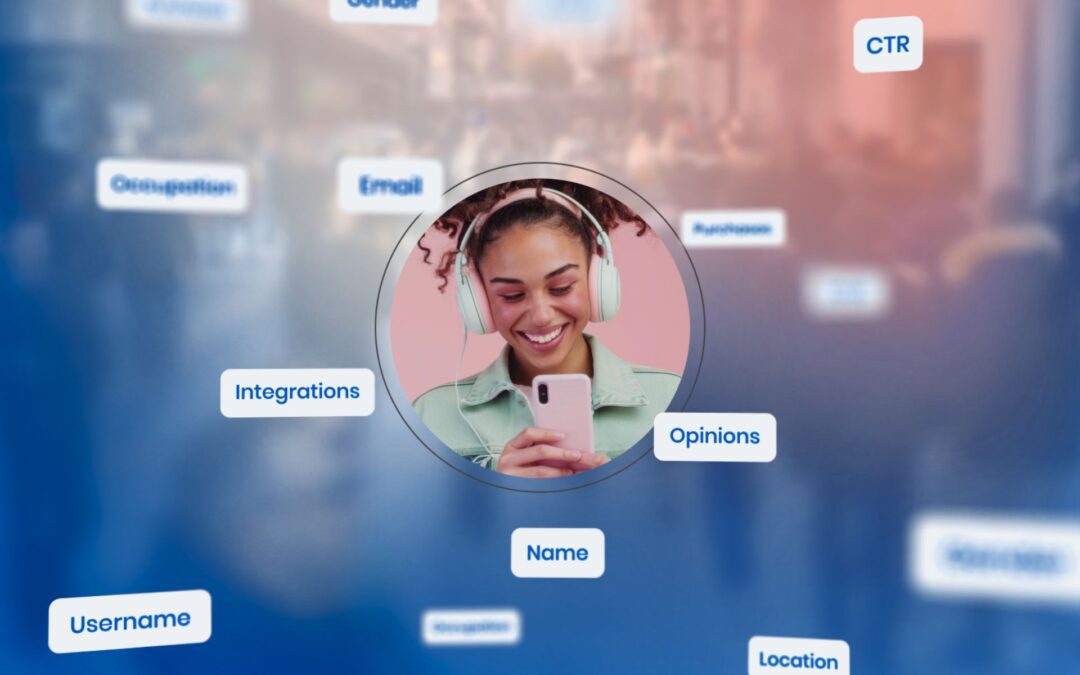
A CDP collects data from every touchpoint a customer interacts with, including your website, app, email campaigns, CRM, POS system, and third-party tools, then stitches those signals together into a single, persistent customer profile. The unification process uses identity resolution to match records across devices and channels, so one customer is always one customer, not five fragmented records.
Data ingestion typically happens through three routes:
- API connections that pull structured data from your existing tech stack in real time
- Batch imports for historical data from CRMs, data warehouses, or legacy platforms
- Event tracking that captures behavioural signals like page views, clicks, and purchases as they happen
Once unified, the data is continuously updated. When a customer books a flight, opens a loyalty email, or abandons a cart, the profile reflects that instantly. This is what separates a CDP from a static database: the profiles are living, actionable, and always current.
What’s the difference between a CDP, CRM, and DMP?
The key distinction is this: a CRM manages known customer relationships and sales interactions, a DMP handles anonymous, third-party audience data primarily for advertising, and a CDP unifies first-party data across all channels into persistent profiles for real-time activation. They serve different purposes and, in many stacks, complement each other.
CRM vs CDP
A CRM is built around sales and service workflows. It tracks contacts, deals, and support tickets. It is powerful for account management but was not designed to ingest real-time behavioural data or trigger automated marketing journeys. A CDP fills that gap by capturing the full customer behaviour picture, not just the transactional record.
DMP vs CDP
A DMP aggregates anonymous, cookie-based audience segments, mostly for programmatic advertising. The CDP vs DMP difference comes down to data permanence and identity: DMPs work with short-lived, anonymised data, while CDPs build long-term, identified profiles rooted in first-party data. As third-party cookies continue to phase out, the DMP’s utility narrows significantly, making CDPs a more future-proof investment.
If you have been evaluating tools like Tealium or Segment as a Tealium vs Segment alternative, it is worth noting that both are primarily data infrastructure layers. A marketing-native CDP goes further by connecting those unified profiles directly to campaign execution, without additional middleware.
What can marketers actually do with a CDP?
A CDP transforms raw data into campaign-ready intelligence. Marketers can build hyper-personalised segments, trigger automated journeys based on real-time behaviour, and apply predictive models like RFM scoring or next-best-offer to prioritise who to contact, when, and with what message.
In practice, this means:
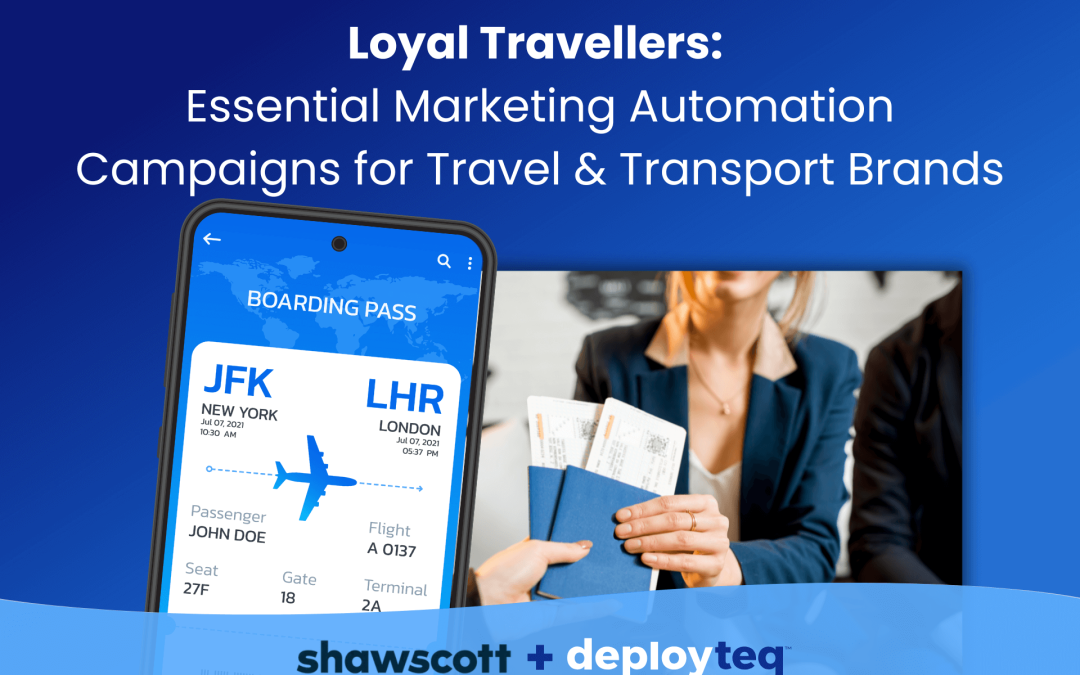
- A travel brand can identify customers in an active booking window and serve personalised destination offers across email and push simultaneously
- A retailer can trigger a cart recovery sequence the moment a high-LTV customer drops off, with product recommendations drawn from their full browse history
- A finance brand can suppress recent converters from acquisition campaigns automatically, reducing wasted spend and improving customer experience
The real power is in activation speed. Because the unified profile already exists, marketers do not need to wait for data teams to build audiences. They can automate faster and respond to customer behaviour in the moment it matters.
When does a business actually need a CDP?
A business needs a CDP when fragmented data is visibly costing it revenue or relevance. If your marketing team is manually stitching together audience lists from multiple platforms, sending the same message to customers who have already converted, or unable to personalise beyond a first name, a CDP is the structural fix.
Specific signals that you are ready for a CDP:
- You have customer data in more than two or three disconnected systems
- Your personalisation is limited to basic merge tags rather than behavioural triggers
- Your team spends significant time on data prep instead of campaign strategy
- You are scaling volume but your relevance scores and engagement rates are declining
- You are moving away from simpler platforms and need a solution that matches your data complexity
For brands in retail, travel, or entertainment managing high-frequency customer interactions, the case is especially strong. The more touchpoints a customer has, the more value a unified profile delivers.
How does a CDP improve customer segmentation?
A CDP improves segmentation by replacing static, manually built lists with dynamic, real-time audiences drawn from unified behavioural and transactional data. Instead of segmenting by demographic fields alone, marketers can segment by recent actions, predicted intent, lifecycle stage, and cross-channel engagement simultaneously.
Smart segmentation powered by a CDP allows you to:
- Build segments that update automatically as customer behaviour changes
- Layer RFM scoring to identify your highest-value customers and those at risk of churning
- Apply predictive models to surface next-best-offer opportunities before the customer signals intent manually
- Suppress or re-engage customers based on real-time lifecycle signals rather than scheduled batch logic
This is a meaningful upgrade from the segment-and-blast approach that most email platforms support. The result is not just better open rates; it is smarter email targeting that drives measurable LTV improvement over time.
What should you look for in a CDP?
The most important criteria are data unification depth, activation speed, and native integration with your campaign channels. A CDP that requires heavy IT involvement to build audiences or push data to campaigns will slow your team down rather than accelerate it. Look for a platform that puts the marketer in control.
Key evaluation criteria:
- Identity resolution: Can it accurately merge profiles across devices, channels, and data sources?
- Real-time activation: How quickly can a behavioural event trigger a campaign action?
- Native channel support: Does it connect directly to email, SMS, push, and web without additional middleware?
- Intelligent modelling: Does it include built-in models like RFM, churn prediction, or next-best-offer, or do you need a data science team to build those?
- Ease of use: Can marketing teams build and activate segments without relying on engineering?
- Compliance and data governance: Does it support GDPR requirements and give you full control over your first-party data?
If you are evaluating a Tealium vs Segment alternative that also handles campaign execution natively, prioritise platforms where the CDP and the campaign engine are built together rather than bolted on.
How Deployteq powers your CDP strategy
We built our Customer Data Platform to do exactly what this article describes, without the complexity that slows most teams down. Here is what that looks like in practice:
- Unified customer profiles that consolidate data from every channel into a single 360-degree view
- Intelligent modelling including RFM scoring, next-best-offer, and full lifecycle insights, built in and ready to activate
- Direct campaign activation across email, SMS, WhatsApp, push, and web without needing additional tools or middleware
- Real-time segmentation that updates dynamically as customer behaviour changes, so your audiences are always current
- Marketer-first design so your team can build, test, and deploy without waiting on data or engineering
Whether you are upgrading from a simpler platform or consolidating a fragmented stack, we make it straightforward to go from scattered data to personalised, high-performing campaigns. Book a guided demo and see how the platform works with your data.