Scattered customer data is one of the most common blockers between a good campaign idea and a great campaign result. You have data in your CRM, your email platform, your web analytics, your loyalty programme, and probably a spreadsheet someone built three years ago. The result? Segments that do not reflect reality, personalisation that misses the mark, and campaigns that underperform despite genuine effort.
If you are looking for ways to unify customer data and turn that scattered mess into campaigns that actually convert, this guide walks you through seven practical steps to get there.
When messy data kills good campaign ideas
The problem with scattered customer data is rarely a lack of data. Most B2C marketers are sitting on more data than they know what to do with. The problem is that it lives in silos. A customer who browsed your website yesterday, opened your email this morning, and made a purchase last week might appear as three completely separate signals in three completely separate tools.
When your data is fragmented, your campaigns reflect that fragmentation. You send re-engagement emails to active buyers. You offer discounts to customers who were already about to convert at full price. You miss the window entirely on someone who was ready to book but needed one more nudge. A scattered customer data solution starts with acknowledging that the data problem is also a revenue problem.
1: Consolidate all data into one central profile
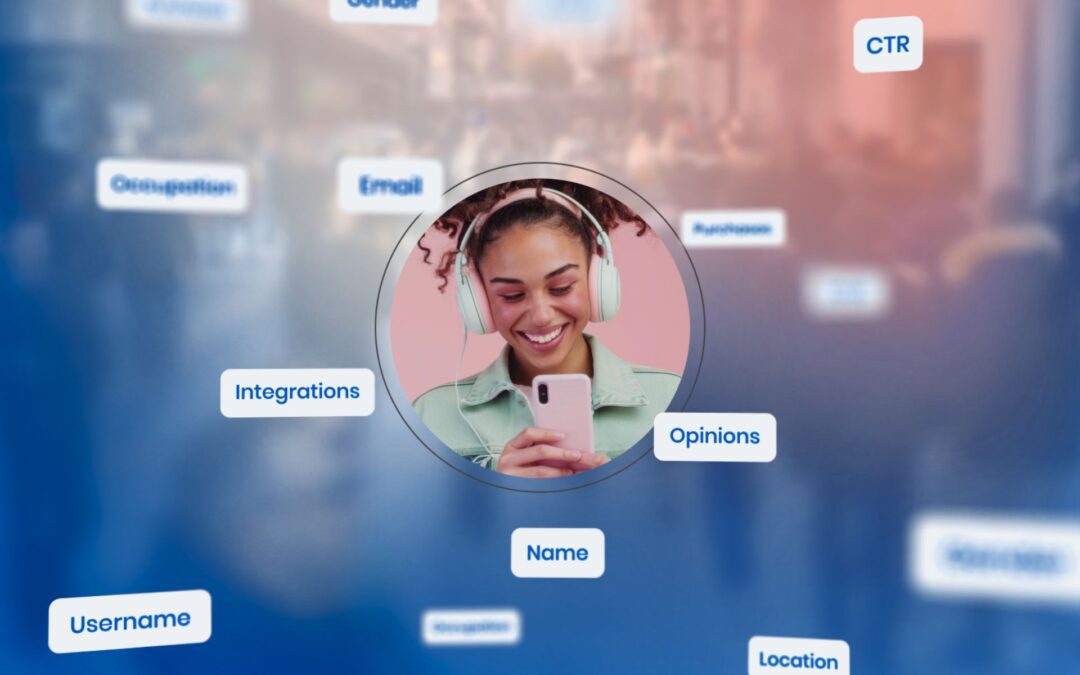
The foundation of smarter campaigns is a single, unified view of each customer. That means pulling together every touchpoint, every transaction, every behavioural signal, and every preference into one central profile that your marketing tools can actually use.
This is the core principle behind data unification: not just storing data in one place, but connecting it in a way that makes the relationships between data points visible and actionable. When a customer’s web behaviour, email engagement, and purchase history all live in the same profile, your segmentation immediately becomes more accurate.
Start by auditing every source of customer data your business generates. Map which systems hold what, and identify where the same customer might exist under different identifiers. That audit is the first step toward a genuinely unified profile.
2: Clean and deduplicate before you segment
Unifying data into one place only works if the data itself is reliable. Duplicate records, outdated contact details, and inconsistent formatting all undermine the quality of any segment you build on top of them.
Deduplication is not glamorous work, but it is essential. A customer who appears twice in your database with slightly different email addresses will skew your engagement metrics, distort your LTV calculations, and potentially receive the same campaign twice. Neither outcome is good for your brand or your numbers.
Build a regular data hygiene process into your operations. Set rules for how records are merged, how conflicts are resolved, and how new data is validated on entry. Clean data is the prerequisite for everything else on this list.
3: Map data to real customer behaviours
Raw data points only become useful when you connect them to actual customer behaviours. A timestamp means little on its own. A timestamp that tells you a customer always browses on Sunday evenings and converts on Monday mornings is a trigger waiting to happen.
Behaviour mapping means asking: what does this data tell me about how this customer actually moves through their journey? For a travel brand, that might mean identifying the gap between destination research and booking intent. For a retailer, it could mean spotting the browse-to-purchase pattern that signals a high likelihood of purchase.
When you map data to behaviour, you stop reacting to what customers did and start anticipating what they are likely to do next. That shift is where personalisation becomes genuinely useful rather than just cosmetic.
4: Use RFM modelling to prioritise your audience
Not all customers deserve the same campaign at the same time. RFM modelling, which stands for Recency, Frequency, and Monetary value, gives you a structured way to prioritise your audience based on how recently they engaged, how often they buy, and how much they spend.
An RFM model lets you quickly identify your highest-value customers, your at-risk lapsed buyers, and the mid-tier segment with real growth potential. Each group warrants a different message, a different offer, and a different level of investment from your marketing budget.
For a finance brand, this might mean identifying customers who have not logged in for 60 days and triggering a re-engagement sequence before they churn. For an entertainment platform, it could mean rewarding your top-frequency users with early access content before a major release. RFM turns a flat audience list into a prioritised, actionable strategy.
5: Build dynamic segments that update in real time
Static segments go stale fast. A customer who was in your “lapsed” segment last week might have made a purchase yesterday. If your segment has not updated, you are about to send them a win-back offer they do not need, which erodes trust and wastes budget.
Dynamic, real-time segments solve this by continuously evaluating customers against your defined criteria. As behaviour changes, segment membership changes with it. This means your campaigns always reflect the current state of your audience rather than a snapshot from last month’s data export.
Real-time segmentation is particularly powerful for high-frequency sectors like retail and entertainment, where customer behaviour can shift within hours. It is also essential for any triggered automation you want to run based on live signals like cart abandonment, stock alerts, or booking window activity.
6: Activate data across every campaign channel
Unified data only delivers value when it flows into the channels where your customers actually are. A single customer profile should power your email campaigns, your SMS sends, your push notifications, your WhatsApp messages, and your on-site personalisation, all from the same source of truth.
Cross-channel activation means a customer who clicks a product link in an email and then visits your website sees a consistent, contextually relevant experience rather than a disconnected one. It means your SMS follow-up references the same offer they saw in their inbox. Consistency across channels builds trust and increases conversion rates.
The practical challenge here is ensuring your data infrastructure can actually push unified profiles to each channel in real time. If your email platform and your SMS tool are pulling from different data sources, you will inevitably create inconsistencies. Channel activation is only as strong as the data layer beneath it.
7: What does predictive data actually add to campaigns?
Predictive modelling takes your historical customer data and uses it to forecast future behaviour. Next-best-offer models, churn propensity scores, and lifecycle stage predictions all fall into this category. The question worth asking is: what does this actually change about how you run campaigns?
The honest answer is that predictive data adds the most value when it informs decisions you were already making manually. If you were already trying to identify which customers are likely to churn, a predictive model does that at scale and with more accuracy than a rules-based approach. If you were already trying to personalise product recommendations, a next-best-offer model does it dynamically without requiring a human to update logic every week.
Predictive insights work best when they are embedded directly into your campaign workflows rather than sitting in a separate analytics tool. When a churn score automatically moves a customer into a retention journey, or a next-best-offer recommendation populates dynamically in an email template, that is when predictive data earns its place in your stack.
How Deployteq helps you unify scattered customer data
Everything covered in this article points toward the same underlying need: a platform that can consolidate, clean, model, and activate customer data without requiring your team to stitch together five different tools.
Our newly launched Customer Data Platform is built specifically to solve this. Here is what it does in practice:
- Unified customer profiles: All your customer data, from every source and channel, consolidated into a single 360-degree view.
- Built-in RFM and predictive modelling: Intelligent models including RFM, next-best-offer, and lifecycle insights run directly within the platform, with no separate data science tool required.
- Real-time dynamic segmentation: Segments update automatically as customer behaviour changes, so your campaigns always reflect current reality.
- Cross-channel activation: Data flows directly into email, SMS, WhatsApp, push, and web campaigns from the same unified profile.
- On-site personalisation: Use the same customer intelligence to personalise web experiences, not just outbound messages.
If fragmented data is slowing down your campaigns, we would love to show you what a unified approach looks like in practice. Book a demo and see how Deployteq turns scattered data into campaigns that consistently convert.
From data chaos to campaigns that consistently convert
The seven steps in this guide are not a one-time project. They are a framework for building a data infrastructure that makes every future campaign smarter than the last. Start with consolidation, get your data clean, map it to real behaviour, and build the modelling and segmentation layers on top of a solid foundation.
The marketers who consistently outperform their benchmarks are not the ones with the most data. They are the ones who have figured out how to unify customer data into something they can actually act on. That is the real scattered customer data solution: not more data, but better connected data that powers campaigns with genuine precision.