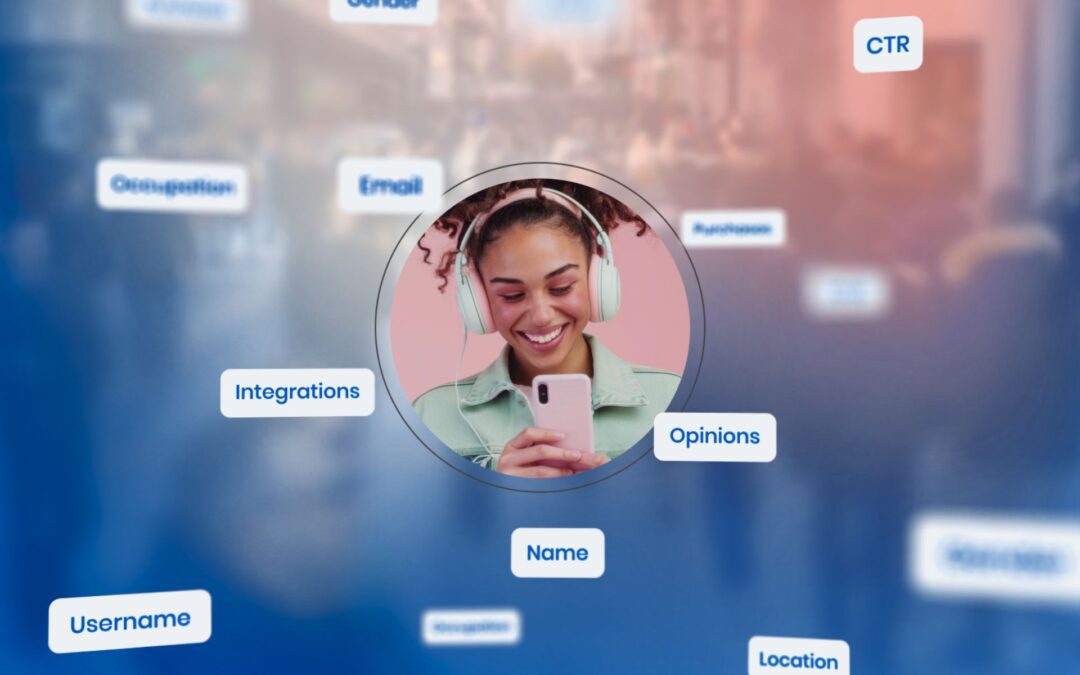
Scattered customer data is one of the most common blockers to effective personalisation. When your email platform, CRM, web analytics tool, and loyalty programme all hold different pieces of the same customer’s story, you end up with fragmented profiles, inconsistent messaging, and missed opportunities to engage at the right moment. In 2026, with customer expectations higher than ever, a scattered customer data solution is no longer optional. It is a strategic priority.
Data unification is not a one-time project. It is an ongoing discipline. These seven proven ways to unify customer data will help you build a foundation that supports smarter segmentation, faster automation, and genuinely personalised experiences across every channel.
The real cost of disconnected customer data
Before diving into the how-to, it is worth naming the actual damage. Disconnected data does not just slow your team down. It actively undermines your marketing performance.
When a customer browses your site, abandons a cart, and then calls your support team, those three interactions often live in three different systems. Your next email campaign has no idea any of it happened. The result is generic messaging that feels irrelevant, reduced conversion rates, and customers who feel like you do not know them at all.
The downstream effects compound quickly: wasted ad spend targeting customers who have already converted, loyalty programmes that miss key moments, and CRM data that is months out of date. Learning how to unify customer data properly is what separates brands that scale personalisation from those that are stuck sending batch-and-blast campaigns.
1: Audit every data source you currently own
Start with a full inventory. Before you can unify anything, you need to know what you are working with. Map every system that collects customer data, including your CRM, email platform, ecommerce engine, web analytics, mobile app, loyalty platform, and any third-party integrations.
For each source, document what data it captures, how often it updates, and who owns it internally. You will almost certainly find overlap, gaps, and inconsistencies. That is expected. The audit is not about finding a perfect picture. It is about understanding the real landscape so you can plan your unification strategy around actual data, not assumptions.
This step is especially critical for retail and travel brands managing high transaction volumes across multiple touchpoints. The more channels you operate across, the more important it is to know exactly where your data lives before you try to connect it.
2: Build a single customer identifier
A single customer identifier is the backbone of any data unification effort. Without one, you cannot reliably stitch together a customer’s behaviour across channels. The most common approach is to assign each customer a unique ID that persists across all your systems, whether they interact via email, app, web, or in-store.
This often means choosing a primary key, typically an email address or a hashed customer ID, and then mapping all other identifiers back to it. For customers who interact anonymously before logging in, probabilistic matching or deterministic matching at the point of authentication can help bridge the gap.
Getting this right requires cross-functional alignment between your marketing, data, and technology teams. It is not glamorous work, but it is foundational. Every advanced personalisation capability you want to build later depends on having this in place.
3: Centralise data with a CDP
A Customer Data Platform is purpose-built for exactly this challenge. Unlike a CRM, which is primarily sales-focused, or a DMP, which deals mainly in anonymous audience data, a CDP ingests data from every source, resolves it to individual profiles, and makes it available for activation in real time.
The key advantage of a CDP is that it creates a persistent, unified customer profile that updates continuously as new data flows in. That means your marketing campaigns are always working from the most current version of each customer’s history, preferences, and behaviour, not a static snapshot from last week’s export.
For teams managing complex cross-channel journeys, a CDP removes the manual effort of stitching data together before each campaign. It also enables real-time triggers that would be impossible without centralised, live data. If you are serious about solving your scattered customer data problem, centralising with a CDP is the structural fix that makes everything else work.
4: Standardise data formats across platforms
Even after you have identified all your data sources and chosen a centralisation layer, inconsistent data formats will cause problems. A date field formatted as DD/MM/YYYY in one system and MM-DD-YYYY in another is a small example of a very large category of issues that quietly corrupt your unified profiles.
Build a data dictionary that defines standard formats for every key field: dates, currencies, product categories, event names, and customer attributes. Apply this standard at the point of ingestion so that incoming data is normalised before it reaches your unified layer, not after.
This is particularly important when you are integrating data from third-party partners or legacy systems that were built without your current architecture in mind. Standardisation is not exciting, but it is what makes your segments reliable and your marketing automation predictable.
5: Sync behavioural and transactional data in real time
Historical data gives you context. Real-time data gives you the ability to act. Syncing behavioural signals, such as page views, product interactions, and search queries, alongside transactional data like purchases and returns, in real time is what enables genuinely responsive marketing.
Consider a travel customer who browses flight options to Barcelona three times in a week but does not book. That behavioural signal, combined with their previous purchase history, is a powerful trigger for a timely, relevant message. Without real-time sync, that window closes before you can act on it.
Real-time data sync requires a robust event-streaming infrastructure, typically built on APIs or webhooks that push data to your centralised platform as actions happen. The investment is significant, but the payoff in conversion rates and customer experience is equally significant for high-frequency engagement brands in retail, entertainment, and travel.
6: Apply intelligent models to unified profiles
Once your data is unified and flowing in real time, you can move beyond basic segmentation and start applying intelligent models that surface actionable insights. RFM analysis (Recency, Frequency, Monetary value) is a strong starting point. It lets you identify your most valuable customers, those at risk of churning, and those ready for an upsell, all from the same unified dataset.
Next-best-offer modelling takes this further by predicting which product, message, or incentive is most likely to resonate with each individual customer based on their full profile. Predictive churn models can flag customers showing early disengagement signals before they lapse entirely, giving your retention campaigns a much higher chance of success.
The critical point here is that these models are only as good as the data feeding them. Unified, clean, real-time data produces reliable model outputs. Fragmented, inconsistent data produces noise. This is why the earlier steps in this list are not optional prerequisites. They are what make intelligent modelling actually intelligent.
7: Govern data quality on an ongoing basis
Data unification is not a project with an end date. Customer data degrades over time. Email addresses change, preferences shift, and new data sources are added as your business evolves. Without active governance, your unified profiles will drift back toward the fragmented state you worked hard to fix.
Build data quality checks into your regular operations. Set up automated alerts for anomalies, such as a sudden spike in null values or a drop in match rates between systems. Schedule regular audits of your data dictionary to ensure new fields and sources conform to your standards. Assign clear ownership so there is always someone accountable for data health.
For teams in finance and insurance, where data accuracy has compliance implications, governance is not just a best practice. It is a requirement. But every sector benefits from treating data quality as a continuous discipline rather than a one-off cleanup exercise.
How Deployteq helps you unify customer data
We built our Customer Data Platform specifically to solve the challenges described in this article. Deployteq’s CDP brings every step of the data unification process into a single, marketer-friendly environment, so your team can act on unified data without waiting for a data engineering sprint every time you want to launch a campaign.
Here is what you get with Deployteq’s CDP:
- 360-degree customer profiles that consolidate behavioural, transactional, and demographic data into a single, persistent view of each customer
- Intelligent modelling built in, including RFM analysis, next-best-offer predictions, and full lifecycle insights, ready to activate directly within your campaigns
- Real-time activation across email, SMS, WhatsApp, push, and web, so your unified data drives timely, relevant messages rather than sitting in a database
- Visual data connections that let you see exactly how customer touchpoints link together, making it easier to spot gaps and optimise journeys
- Seamless integration with your existing tech stack, reducing the complexity of centralising data from multiple sources
Whether you are upgrading from a simpler platform or scaling up a complex cross-channel programme, we give you the tools to turn scattered customer data into hyper-personalised campaigns that deliver real results. Ready to see it in action? Book a demo and explore what unified data can do for your marketing.